huffpost Press
Now Comes The Hard Part For Graham Platner
Images
1 / 6

2 / 6

3 / 6

4 / 6

5 / 6

6 / 6
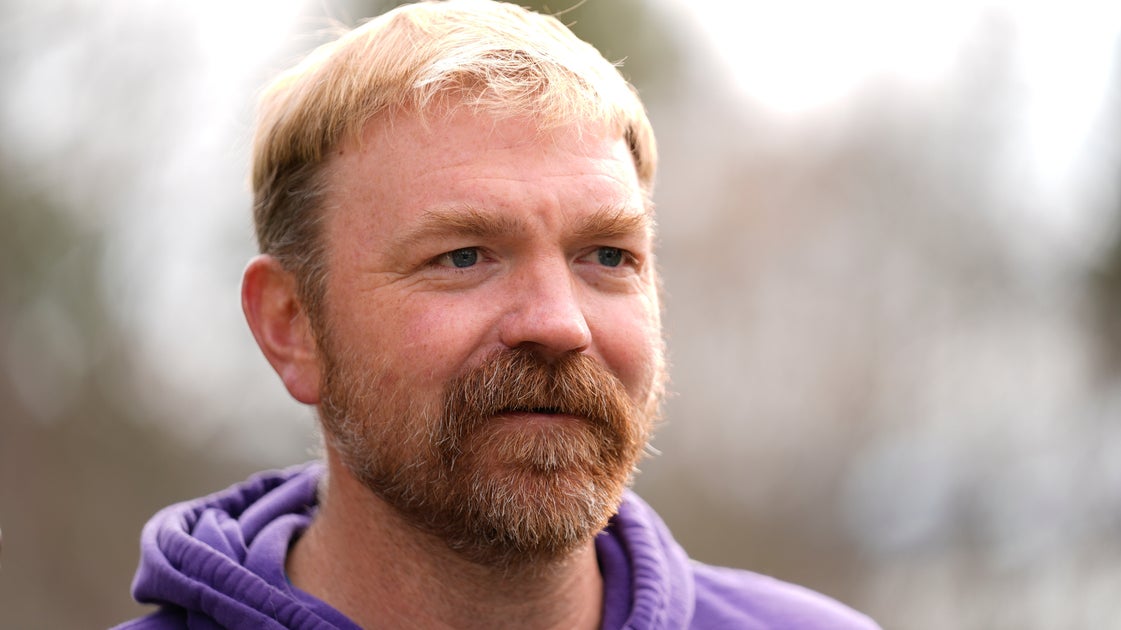
Graham Platner went from unknown to viral, survived a nearly unprecedented onslaught of negative stories highlighting his offensive internet posts, raised $12 million and just outlasted the two-term governor of his home state to win the Democratic nomination for Senate, becoming the first progressive insurgent to win a battleground Senate nomination in more than a decade.

Now comes the hard part.

Gov. Janet Mills’ decision on Thursday to drop out of the Maine Democratic Senate primary has given Platner a golden opportunity and a daunting assignment: He will be the party’s candidate, charged with defeating six-term incumbent GOP Sen. Susan Collins.

“Republicans are planning on running a scorched-earth campaign, and we’re ready for that,” Platner told reporters during a brief appearance on a conference call on Thursday, adding: “When we build something that Mainers can get behind, that is grounded in giving a voice and power to working Mainers, they show up. I am very, very confident that the movement we are building is going to fight back against that kind of politics.”

Collins has an aura of invincibility following her 2020 victory and the ability to brag about bringing home huge sums of federal dollars as chair of the Senate Appropriations Committee, but she is facing steep political headwinds, with both her and President Donald Trump’s approval ratings sinking as the political environment turns poisonous for the GOP. A slew of public polls in recent weeks have shown Platner leading Collins in general election matchups.

Ben Chin, Platner’s campaign manager, nonetheless acknowledged Collins’ strengths. “Susan Collins has survived tough cycles for 30 years,” he told reporters. “She has $10 million in the bank and has carefully maintained her brand.”

But he said the campaign’s strategy does not require a major pivot to the general election. The campaign has been airing ads attacking Collins for months.

“The issues that primary voters like are also the issues that general election voters like,” he said. “Everybody wants tax breaks for rich people to end, everybody wants universal health care, people don’t like the war in Iran. We are not going to stop talking about these issues.”

Many in the party, however, remain skeptical that Platner can win, even though they are less likely to air their doubts publicly now that he has locked up the nomination. They fear both his controversial online posts and liberal positions on issues like immigration and healthcare will provide plentiful fodder for the GOP.

If Platner’s nomination is a victory for leftist insurgents, the end of Mills’ campaign with a whimper is a clear defeat for Senate Minority Leader Chuck Schumer and Sen. Kirsten Gillibrand, the chair of the Democratic Senatorial Campaign Committee. The duo had brushed aside Platner’s nascent campaign and had a single-minded focus on recruiting the 78-year-old incumbent governor.

But Mills’ campaign almost immediately ran into trouble. She raised just $1 million on her first day on the trail, compared to the $3.5 million and $3.6 million raised by former North Carolina Gov. Roy Cooper and former Ohio Sen. Sherrod Brown, two similarly veteran politicians running for Senate.

She made a basic factual error in one of her first campaign appearances, and even though she kept a robust schedule compared to many other candidates, keeping up with 41-year-old Platner’s 61 town halls was next to impossible for an elected officeholder.

And Mills’ delayed campaign launch — she started running in November, five months after Platner started his bid — sent a message she was in the race reluctantly, which troubled Democratic voters who wanted a fighter.

“Chuck Schumer has always been excellent at recruiting his peers,” said one veteran Democratic strategist who requested anonymity to speak frankly about a party leader. “The problem is his peers are now all really old.”

Another Democrat involved in the race, who requested anonymity to speak frankly about intra-party disputes, pointed a finger at Schumer for failing to arrange outside help for Mills to counter Platner’s cash advantage.

“At the rate Platner was fundraising, she was going to need help from the second she got into the race,” the Democrat said. “She should not have had to go negative on her own. An outside group needs to handle those attacks.”

“We weren’t able to put forward a full-throated effort. It’s nothing compared to what he’s going to face in the fall.”

Beyond the broad national trends in the party working against her, some Maine Democrats said there was “Mills fatigue” among parts of the Democratic coalition, including those she had inevitably irritated during her time as governor. Platner successfully picked at some of these wounds, winning over many of the state’s labor unions and courting the Wabanaki Nations, a Native tribe Mills had clashed with in the past.

Still, Mills hit Platner hard in an area that could be a key vulnerability in the general election against Collins — his gross old Reddit posts that demeaned women. In a Mills campaign TV ad last month, a narrator asked, “Did you know Graham Platner wrote that women worried about rape need to quote, ‘Not get so [bleep] up they wind up having sex with someone they don’t mean to.’”

The ad showed a series of wealthy-looking older women disgustedly reacting to Platner’s words, and it showed an old video of a shirtless Platner, a reminder of a skull-and-crossbones tattoo he claimed he didn’t realize was a Nazi symbol. (Platner has since had the tattoo altered.)

But while many Democrats had hoped Mills’ attack ads would test Platner’s vulnerabilities ahead of a general election where Republicans have already reserved tens of millions’ worth of air time in Maine, her fundraising struggles meant she spent a comparatively paltry sum of $2 million attacking him.

“We weren’t able to put forward a full-throated effort,” said one Mills ally who requested anonymity to speak about the campaign’s shortcomings. “It’s nothing compared to what he’s going to face in the fall.”

The Mills ally noted Platner was able to spend more on his ad responding to the governor’s attacks than Mills could put behind the ads themselves.

Platner’s team attributed his resilience to the trust he built through relentless campaigning around the state. In an ad his campaign released earlier this week, Platner boasts about his town halls: “I’ve held dozens since launching this campaign, because the way to defeat Susan Collins is not with the same old playbook. But even more than that, it’s what’s needed to bring this state and this country back together.”

“There are many people who came to a Graham Platner town hall skeptical of him and left with a Graham Platner yard sign,” said Rebecca Katz, one of his campaign consultants.

And while Mills’ allies pushed the idea that Platner was a risky choice for the general election, public polling consistently showed him performing as well or better than she was against Collins. Even Mills’ attack ads didn’t affect internal polling, according to Platner allies. The campaign’s polling also found Democratic voters viewed Mills as a riskier choice to run in the general election.

Sen Bernie Sanders (I-Vt.), who endorsed Platner, suggested the oysterman would not be the only progressive candidate emerging from Democratic primaries this cycle.

“In my view, tinkering around the edges and maintaining the status quo is not only bad policy, it is failing politics,” Sanders told HuffPost. “So I think you’re going to see all over this country candidates like Platner gaining more and more support because of their willingness to fight for working families.”

Several Republicans highlighted Platner’s past commentary and body art on Thursday.

“Democrats are rallying behind a self-described Communist with a nazi tattoo in Maine. The party has lost its mind,” Sen. Tom Cotton (R-Ark.) said on X.

Collins, for her part, declined to comment on the general election but demonstrated her willingness to break with the Republican Party by becoming only the second Senate Republican to vote in favor of a resolution to end the Iran war.

Democrats in Maine and D.C. said it was in the interest of both Platner and the DSCC to quickly bury the hatchet, with Schumer putting out a somewhat tepid statement of support for Platner once he became the nominee. The two sides were in contact on Thursday, a source close to Platner said.

“Look, our North Star is taking back the Senate. We’re going to beat Susan Collins and take back the Senate,” Schumer told HuffPost.

The North Star, positioned in the night sky less than 1 degree from the north celestial pole, is a navigational tool that’s especially useful to people who are lost and have no other means of finding their way.

By entering your email and clicking Sign Up, you're agreeing to let us send you customized marketing messages about us and our advertising partners. You are also agreeing to our Terms of Service and Privacy Policy.