yahoo Press
It's not just about nudity warns actress - the complex reality of images and online abuse
Images

1 / 11

2 / 11

3 / 11

4 / 11

5 / 11
6 / 11
7 / 11
8 / 11

9 / 11

10 / 11

11 / 11
Social media companies and authorities are failing women by focusing on nudity rather than consent when dealing with image-based abuse, according to a new report by gender justice organisation Chayn.

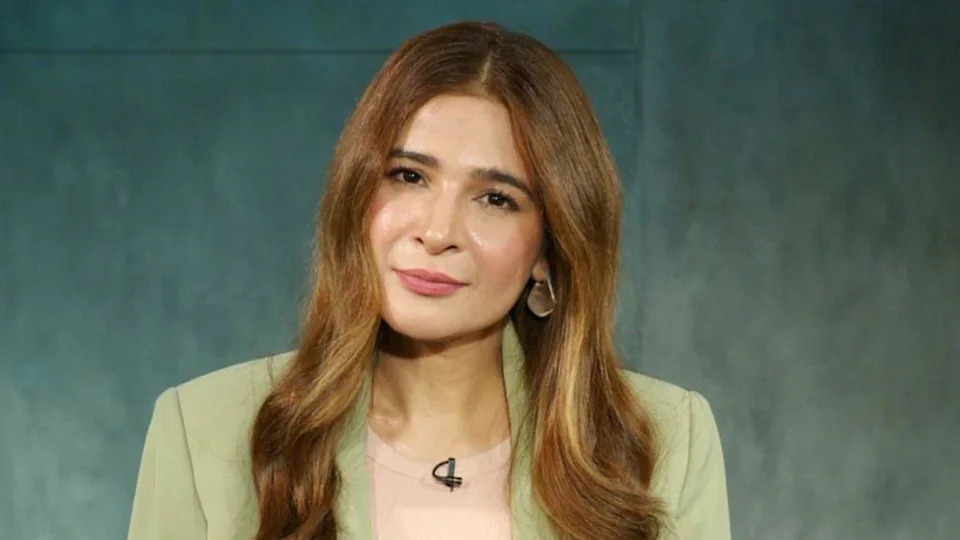
Its criticisms are backed by Pakistani actress Ayesha Omar, whose experiences, along with those of other women, are described in the findings.

One of the women at the centre of the report, whose name has been changed to Mahnoor to protect her privacy, explains that the images that changed her life were not nude. They were not sexually explicit. They showed a woman exposing her bare shoulders and wearing Western clothing.

The 32-year-old from Pakistan told BBC Global Women that she returned to her childhood home when her marriage broke down. She hoped for comfort and support from her family, but instead, she and her young daughter were met with iciness.

It's been over a year and her father and brothers still have not spoken to her. Colleagues at work who she has known for years will not look her in the eye.

Mahnoor had expected a difficult divorce. It had never been an easy marriage. She says her husband, to whom she was married in an arranged match, was both verbally and physically abusive throughout their relationship. But it was the exposure of her private world that cost her the most.

Like many young women, Mahnoor had saved lots of pictures of herself on her phone. She had taken photos of her everyday life - a nice dinner, a selfie when the lighting was particularly flattering. Many were years old. One was of her smiling after a new haircut. Another showed her on an overseas exchange programme with friends. Others were ordinary selfies, lying in bed, wearing a vest, with her eyes closed to show off her eyeliner.

None had ever been shared publicly. She rarely posted photos on social media, mindful of the conservative culture of her community in Pakistan.

According to Mahnoor, who is a university lecturer, her former husband gained access to her WhatsApp account and private images before distributing them to male relatives, colleagues and acquaintances.

Mahnoor says he also cropped images of her with a group of friends, to make it appear that she was standing with a single man, insinuating that they were having an affair.

The photographs, she says, were used to portray her as "a woman of bad character", an accusation that, in many communities, can carry life-altering and sometimes fatal consequences.

With her friends and family, as well as colleagues, barely engaging with her, Mahnoor says she has lost her social standing and the once powerful position she held in her community.

"I lost my voice," she told the BBC. "I no longer felt visible.

"My family once respected me, my brothers respected me. Having your voice respected by your parents is such a great thing," she says. They used to ask for her advice, but that is no longer the case.

Mahnoor's ex-husband has now remarried.

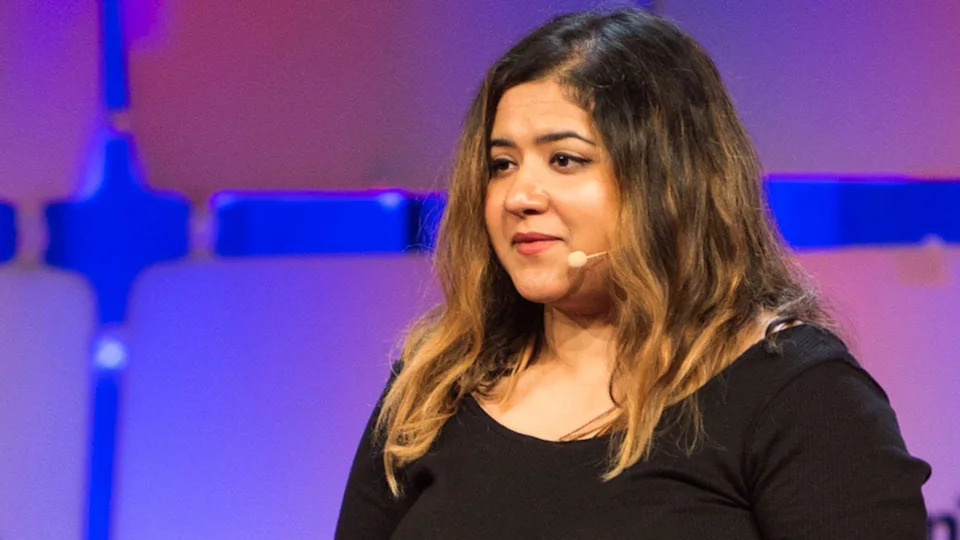
The report highlighting Mahnoor's story is by Chayn, a global non-profit organisation that examines gender-based violence. Chayn argues that image-based abuse is routinely misunderstood by both authorities and technology companies because they continue to define harm primarily through nudity.

Titled Explicit Harms of Non-Explicit Images, the report argues that for many women, a fully clothed image can have consequences every bit as devastating as an intimate photograph within their wider, and often conservative, communities.

"The image does not have to be nude for it to be harmful," says Hera Hussain, report author and founder of Chayn. "Sometimes it can be as harmful, even if not a single body part is bare.

"We want to reframe the conversation around image-based abuse away from nudity and towards consent."

For years, public conversations about image-based abuse have focused on so-called revenge pornography, deepfake nudes and sexually explicit content. But Chayn's research suggests that this framework misses how shame, reputation and social control operate in many communities.

A photograph that appears entirely ordinary to one person may carry severe consequences for another. A video clip showing a woman dancing at a wedding. A photograph of a woman at the beach. A selfie shared without permission.

The report argues that harm is often determined not by what the image contains, but by why it is shared, who receives it and what consequences follow.

Chayn conducted 64 interviews between July 2025 and February 2026 and participants spanned every major region of Pakistan as well as diaspora communities in the UK, Canada, Germany, Malaysia, the UAE and Kuwait.

The research catalogues the kinds of images women feared seeing shared: hair visible without a headscarf, Western or fitted clothing, a photograph taken beside a man who is not a relative, a screenshot of a fabricated conversation, or an image generated by AI from a single photo of someone's face. None contain nudity. All can be made to tell a damaging story.

For Ayesha Omar, the argument is not theoretical. The actress, who has worked in Pakistan's film and television industry for more than 20 years, says her own images were stolen and circulated long before social media made such exposure commonplace. Photographs taken on a holiday over a decade ago in Thailand with a female friend, on a beach, where she wore a one-piece swimsuit and shorts, were taken from a laptop without her knowledge and posted online.

"It was very damaging for my career," Ayesha says. "I lost ad campaigns. I lost some work stuff." She takes a pause before adding: "Because in my culture, you have to conform to a particular image, even if you're representing a brand or you're playing a character on TV. So it did damage me psychologically and emotionally a lot."

She says the experience left her "hypervigilant", constantly scanning her environment for people who may be filming her.

For Hera Hussain, society is asking the wrong questions when it comes to image-based abuse. Chayn's framework rests on three tests: the harm done to the person, the intent behind the sharing, and the absence of consent.

In Mahnoor's case, she says, all three are present. The same can be said for actress Ayesha Omar. The harm has consequences: lost relationships and lost income.

"The principle is respect, dignity, consent," Hussain says. "These are the things that matter."

That principle, the report argues, is precisely what tech companies and regulatory systems fail to apply. When Mahnoor took her case to Pakistan's Federal Investigation Agency, now operating as the National Cyber Crime Investigation Agency, she was told the images fell outside its remit because they were not nude or sexually explicit.

Her written complaint, seen by the BBC, was declined on those grounds. When she approached her mobile network provider, she says she was told nothing could be done unless she could produce the SIM registered to the offending account - a SIM her ex-husband had taken from her.

BBC Global Women approached Pakistan's National Cyber Crime Investigation Agency for comment and has not received a response.

Mahnoor says she also reported the images to a customer complaints email address for WhatsApp. She says that she was told they did not breach the platform's rules. As she no longer has the email exchange, it has not been possible to verify what was said.

WhatsApp declined to comment on Mahnoor's case but a spokesperson pointed the BBC to the platform's guidelines which "outline what is and isn't allowed".

The guidelines do not give a specific policy on image-based abuse but say WhatsApp deals with "abusive people" to prohibit "harmful conduct towards others". They also state they are "not obligated to control the actions or information (including content) of our users or other third-parties". WhatsApp uses end-to-end encryption so cannot proactively review images that people send.

In the context of sexually explicit and nude images, its parent company Meta says: "We are committed to making Facebook, Instagram, Messenger and Threads safe places. We remove content that could contribute to a risk of harm to the physical security of persons."

But Hera Hussain is worried that cultural sensitivities are not recognised by tech companies, where reported images are often first assessed by an AI moderation system trained largely to detect nudity. Identifying images that could be problematic is much more nuanced than spotting bare skin and Hussain says a user may need to be very persistent to make sure a human moderator reviews a picture.

There is concern that there is not enough human oversight as companies lean on cheaper automated tools and consolidate regional expertise into teams covering vast, diverse areas. For example, in a disclosure to the US Senate Judiciary Committee, the CEO of Snapchat revealed cuts to its trust and safety team - its safety and moderation headcount fell from a 2021 peak of just over 3,000 to about 2,226 in 2023 - a 27% reduction.

Campaigners want the logic reversed. At present, Hussain says, platforms investigate and then take down. She believes they should take down first, for 24 hours, pending review, and investigate after. "What are you going to lose?" she asks. In our interview, Hussain points to a case that came to light in 2017 where three sisters in Pakistan were killed after a video of them singing and clapping at a wedding was shared - three of their male relatives were given life sentences.

The reporting burden, meanwhile, falls almost entirely on the victim, who must locate the images, view them repeatedly, and submit each one, with no simple mechanism to remove copies in bulk.

"You go through all that retraumatisation," Hussain says, "and then you might not even get a response."

That distinction matters most, the report concludes, because the harm is rarely contained to the woman in the frame. It details how a leaked image lands on her whole family, fathers unable to face work, sisters whose marriages collapse, households watched "in a shameful manner". Honour is collective, and the threat of collective shame is itself a tool of control.

For Mahnoor, the cost is measured in the people who no longer speak to her. Her daughter, who is three-and-a-half years old, has begun to notice that the relatives upstairs do not greet her mother. The images that took her voice were, by any platform's definition, harmless.

Some countries do treat the sharing of images as a question of privacy. France has long recognised a "right to one's own image": under Article 9 of its Civil Code, every person, public figure or private citizen, has an exclusive right over how their image is used, subject to exceptions for news and matters of genuine public interest. A minister on holiday, however, retains a right to privacy.

The UAE goes further still, criminalising the photographing of people without consent even in public places, with no broad public-interest exemption.

"Image-based abuse is bigger and wider than nudes" and there is "systemic failure" concludes Hera Hussain.

She says the police, courts and tech platforms "can all do so much better in supporting survivors", adding that "if you're experiencing image-abuse know that it is not your fault, you are not alone and there are organisations like Chayn that are here to support you".

This is part of the Global Women series from the BBC World Service, sharing untold and important stories from around the globe