yahoo Press
Democratic states scramble to prevent potential Trump administration interference in their elections
Images
1 / 8
2 / 8

3 / 8

4 / 8
5 / 8
6 / 8

7 / 8

8 / 8
Democratic-led states are racing to safeguard November’s midterm elections against potential interference from the Trump administration and its allies, passing new laws that restrict the presence of law enforcement at polling places or seek to thwart the federal government’s efforts to obtain sensitive election material.

Five states – California, Colorado, Connecticut, Maryland and Washington state — have recently enacted legislation to shield their elections from federal actions, according to the Voting Rights Lab, which tracks election-related legislation, and CNN’s research.

Sponsors say they are responding to President Donald Trump’s continued rhetoric about fraud in voting and the administration’s increasingly aggressive moves to reshape how voting is conducted. The US Constitution gives states the primary task of running elections and Congress the power to set the ground rules for federal contests.

“It’s infuriating that the Trump administration believes they can ignore the Constitution of the United States and try to take over our elections,” said Maryland state Sen. Cynthia Kagan, a Democrat who co-sponsored a new law aimed at maintaining the state’s deadline for counting mail-in ballots that are received after Election Day.

Since returning to the White House last year, the president has repeatedly tried to single handedly change election procedures as his attempts to muscle through new voting restrictions have faltered in Congress.

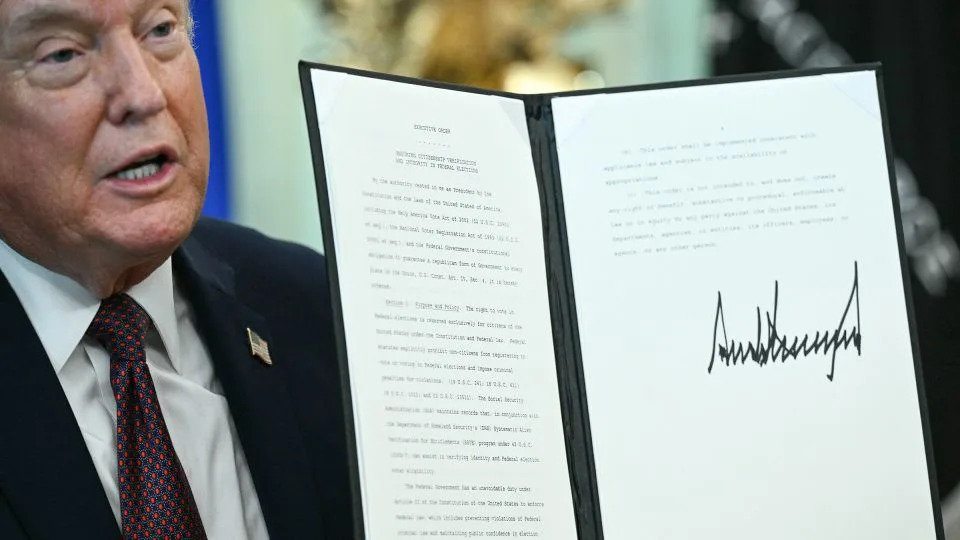
He has signed executive orders aimed at cracking down on mail-in voting, which he has baselessly cast as rife with fraud. His administration has taken records related to the 2020 election he lost from the largest counties in Georgia and Arizona. And his Department of Justice is fighting in court to gain access to multiple states’ voter rolls as it searches for proof of ineligible individuals, including noncitizens, casting ballots.

Additionally, asked last month whether he would send Immigration and Customs Enforcement officers or National Guard troops to the polls, Trump responded he would do “anything necessary to make sure we have honest elections.” Other administration officials have declined to rule out the idea publicly.

That’s set off fresh alarms among some Democratic lawmakers and election officials about potential federal law enforcement action at polling places this fall.

In Connecticut, a new provision of state law that goes into effect July 1 seeks to largely bar law enforcement from being within 250 feet of a polling location, ballot dropbox or vote-counting site without the permission of election officials, according to state Rep. Matt Blumenthal, a Democrat who chairs his chamber’s government administration and election committee and is a lead sponsor of the new law.

“The reason why we’ve entertained these steps is because of the shocking and unprecedented statements and actions that Donald Trump and his allies, including in government, have undertaken to threaten and attack our elections,” he told CNN.

Responding to the recent moves by Democratic states, White House spokeswoman Abigail Jackson said in a statement that Trump “is committed to ensuring that Americans have full confidence in the administration of elections, and that includes totally accurate and up-to-date voter rolls free of errors and unlawfully registered non-citizen voters.”

“This campaign pledge from the President is why millions of Americans sent him back to the White House,” she added.

When asked about Trump’s remarks on deploying federal officers to the polls, the White House pointed to press secretary Karoline Leavitt telling reporters that she had not heard the president “discuss any formal plans to put ICE outside of polling locations.”

Some of these state laws could set up legal clashes with the federal government. Court disputes have already erupted between the Trump administration and states such as California and Connecticut over statutes that seek to prohibit ICE officers from wearing masks while operating within the states’ borders.

But legal experts say states are likely on firmer ground when it comes to the new batch of laws that spell out how state and local officials should respond to any federal overreach on elections.

Here’s a look at how states are changing their laws to confront potential federal action:

In California, Democratic Gov. Gavin Newsom last month signed legislation that prohibits election officials from providing unauthorized access to voter rolls or voting machines without a court order. It also makes it a crime to knowingly take voted ballots from election officials without a valid warrant.

In Colorado, a law signed earlier this month by Democratic Gov. Jared Polis prohibits interfering with voting within a newly established 100-foot buffer zone around ballot drop boxes and polling locations. It also gives the governor, with input from an advisory committee, the power to declare an emergency to allow elections to proceed in the event of any disruption.

Connecticut’s new law also requires municipal officials or election workers who receive a subpoena or warrant to notify the attorney general and secretary of state within 36 hours.

In Maryland, a statute enacted in May allows the state to continue to count votes for local and state elections on mail ballots received after Election Day – even if the federal government ends the post-election grace period for presidential and congressional contests.

In Washington state, a law enacted in March makes it a felony, punishable by up to five years in prison, to disclose personal information contained in the voter registration file to people other than state and local election officials without the permission of the secretary of state. The measure’s sponsor, Democratic state Sen. Marcus Riccelli, said it doesn’t bar a government entity from requesting the information and potentially obtaining it. But the request “has to go through our secretary of state who manages our statewide voter registration database,” he said.

During the signing ceremony, Newsom described California’s law as needed “to address the legitimate anxiety” about the administration’s moves.

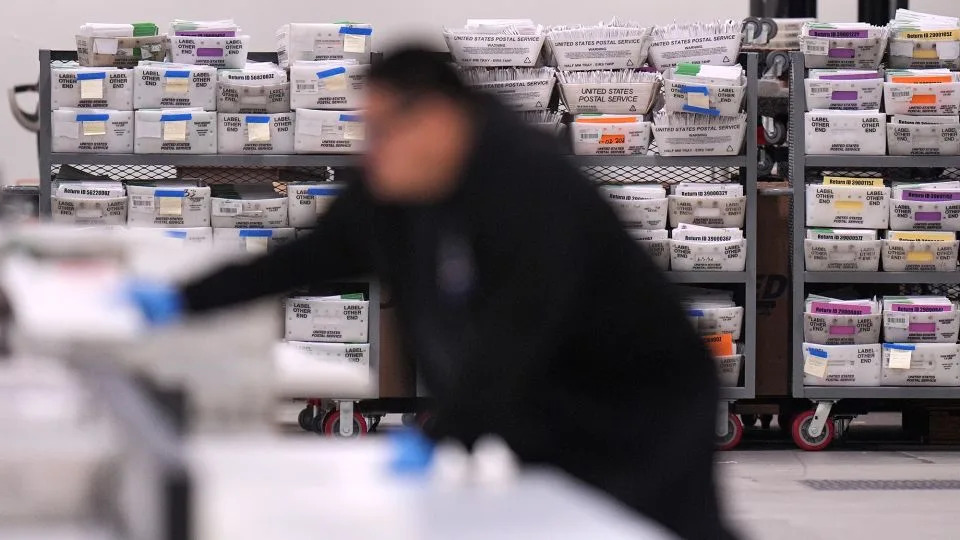
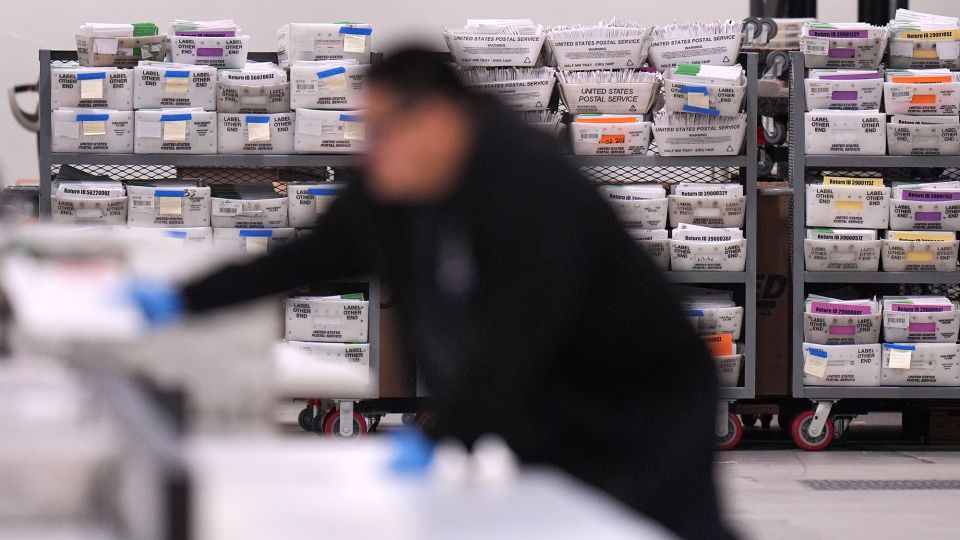
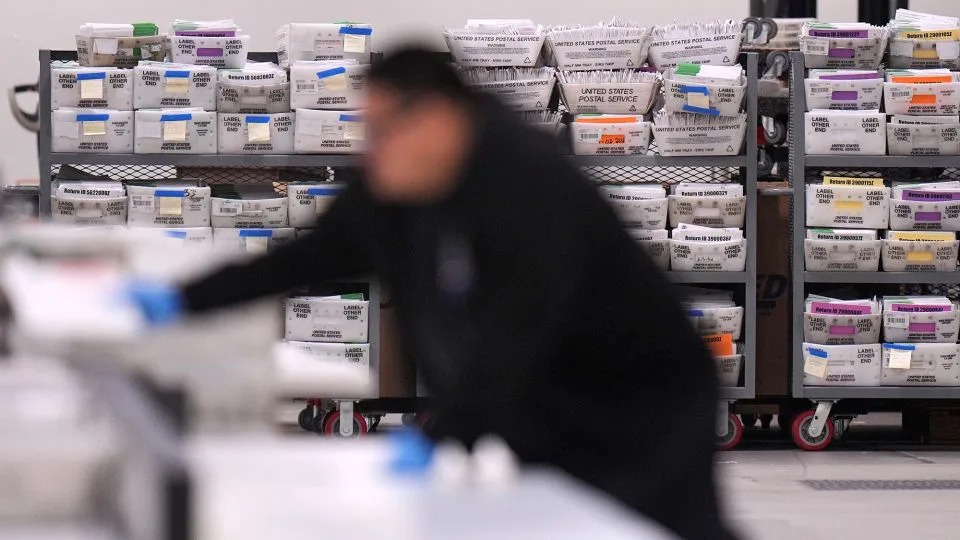
He also referred to the high-profile seizure of 650,000 ballots cast in last year’s special election from Riverside County, California, by the county’s sheriff Chad Bianco, a Republican who was running for governor. A local judge had signed a warrant for what Bianco called a “fact-finding mission” into potential election fraud.

Earlier this year, the state Supreme Court halted the probe and ordered the seized ballots preserved. The justices have asked both sides to prepare briefs on how the new state law that tries to restrict such ballot seizures might affect the case.

Blumenthal, the lead sponsor of Connecticut’s new law, pointed to the FBI’s January 28 seizure of 2020 election records in Fulton County, Georgia. An affidavit unsealed after a legal challenge from local officials showed that claims from 2020 election deniers were used to justify the FBI’s warrant.

The Connecticut law wouldn’t necessarily prevent federal agents from obtaining election material in circumstances similar to those in Fulton County, but it tries to give state officials the opportunity to intervene in court before ballots or machines are seized under a warrant, Blumenthal said.

“We want to ensure that some judicial authority has heard both sides of the story and also ensure, that if it is executed, it’s done in a way that doesn’t interfere with our elections,” he said.

In Maryland, Democratic lawmakers have objected to the president’s repeated efforts to curb mail-in voting. The Trump administration is backing a push by the Republican National Committee before the US Supreme Court that seeks to stop the counting of ballots in federal elections that arrive after Election Day. A decision from the high court is expected soon.

Maryland is one of 14 states, along with the District of Columbia, which counts mail ballots received after Election Day, according to the National Conference of State Legislatures. (Additional states have extended ballot receipt deadlines for overseas and military voters.) Maryland has a10-day grace period as long as ballots are postmarked on or before Election Day.

Some Republican lawmakers argue that Democrats are trying to interfere with legitimate scrutiny of elections by the federal government.

California state Sen. Tony Strickland, a Republican who opposes the new law in his state, said he expects a legal challenge to it on grounds that it could violate the Constitution’s Supremacy Clause, which prohibits states from regulating the federal government.

A federal appeals court cited the clause earlier this year when it blocked a California law that attempted to force ICE agents to display identification while operating in the state.

“I think that we should have the ability at all levels of government to be able to monitor elections to make sure elections are done properly,” Strickland told CNN. “What do you have to hide?”

However, Richard Pildes, the co-director of the Democracy Project at New York University’s Law School, said new laws in places such as Washington state that create criminal penalties for local officials who share sensitive data may survive challenges on constitutional grounds because they do not attempt to police federal actions.

“They are designed to tell their election officials not to voluntarily give the information over if it’s requested,” he said. “They’re regulating their own election officials. They’re not telling federal officials how to conduct their responsibilities.”

Justin Levitt, a Loyola Law School professor who served as a White House adviser on voting during the Biden administration, said states have had legal skirmishes with the federal government over election rules in the recent past but most centered on changes enacted by Congress.

“What is different now is that the president is trying to act outside federal law and his powers,” Levitt said. Still, he said he believes that this fall’s elections will not face serious disruption.

For one thing, he said, the controversy over the high-profile seizures in Georgia and California, has sensitized judges around the country to the need to carefully scrutinize any future demands for voting materials, particularly once an election is underway.

“States themselves are in charge of the process,” Levitt added. “And when the president orders stuff to get done, the states just don’t have to listen.”

For more CNN news and newsletters create an account at CNN.com