yahoo Press
Sunday shows preview: Will Trump greenlight a new Iran deal?
Images
1 / 6

2 / 6

3 / 6
4 / 6

5 / 6

6 / 6
All eyes are on an emerging deal between the U.S. and Iran that would extend the current ceasefire and reopen the Strait of Hormuz, but it remains unclear when — or if — President Trump and Tehran will ultimately sign off.

The two sides reached a tentative agreement this week that, if approved, would mark the biggest breakthrough toward a permanent peace deal since the conflict began just over 90 days ago.

Trump emerged from a two-hour meeting in the Situation Room on Friday without any update on the state of negotiations despite promising earlier in the day that a “final determination” would be made.

While U.S. and Iranian officials maintain that the exact terms of the memorandum of understanding (MOU) are still being negotiated, it would broadly extend a temporary ceasefire by 60 days, restore unrestricted navigation through the Strait of Hormuz and launch further talks on Iran’s nuclear program.

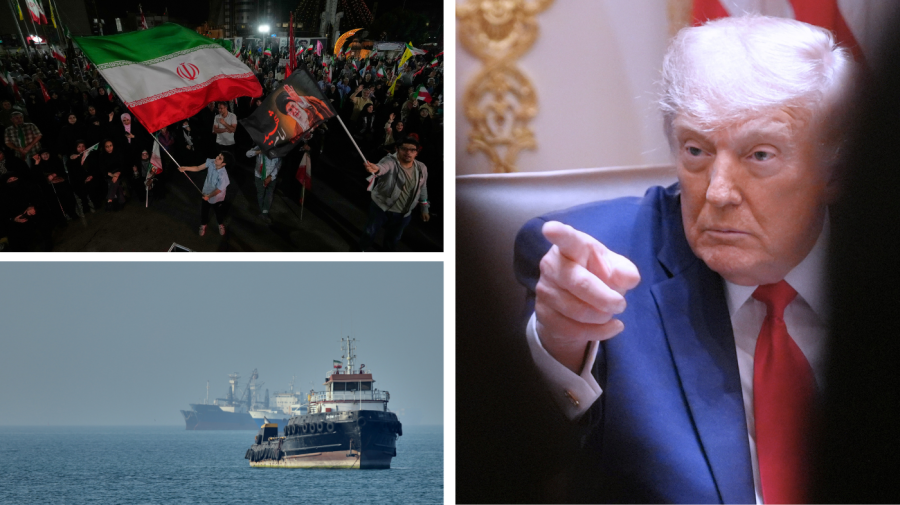
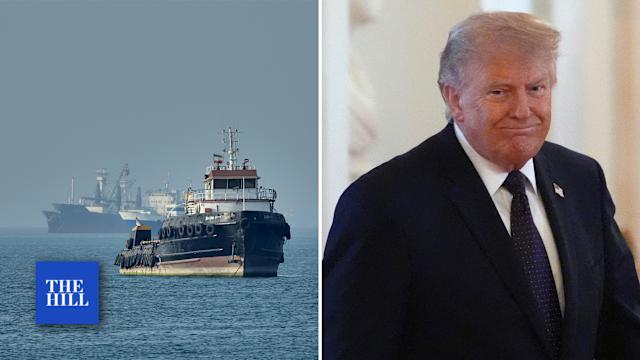
The flow of shipping traffic through the Strait of Hormuz, a critical energy corridor in the Gulf through which about one-fifth of the world’s oil supply passes daily, has been a central dispute in the conflict.

Iran locked off the strait as one of its first retaliatory acts in the war, implementing a de facto blockade that has been enforced through a combination of military threats, naval mines and demands for tolls. The U.S. has had its own naval blockade in place since mid-April in an attempt to exert economic pressure on Iran by not allowing its oil out.

The standoff has sent shockwaves through global supply chains, sending prices of goods like oil and fertilizer soaring. The pressure has caused problems for Trump and Republicans back home, where voters are becoming increasingly anxious about the state of the domestic economy.

News of a diplomatic movement this week caused oil prices to dip to their lowest level in multiple weeks, with international benchmark Brent crude trading around $91 per barrel as of Saturday afternoon.

Kevin Hassett, the director of the National Economic Council, is set to appear on ABC’s “This Week” and Fox News’s “Fox News Sunday” and will likely face questions about rising gas prices and falling consumer sentiment.

The latest agreement would see Tehran loosen its grip on the strait in exchange for the gradual lifting of the U.S. blockade. It would allow ships to pass unimpeded through the strait, include a pledge from Iran not to impose tolls and require them to remove all remaining mines from the water within 30 days, according to Axios.

“It will be an open strait, a toll-free strait that the entire world can use, which is the way it should be,” Defense Secretary Pete Hegseth told reporters on Saturday in Singapore, where he attended the Shangri-La Dialogue security summit.

Tensions in the Gulf escalated again this week following a spike in hostilities that saw the U.S. launch what it called “defensive strikes” in southern Iran and Tehran target Kuwait with ballistic missiles. Each side subsequently accused the other of violating the ceasefire.

U.S. Central Command (Centcom) said on Monday that the U.S. strikes were aimed at missile launch sites and Iranian boats attempting to lay mines in the water. The attack prompted warnings from Ayatollah Mojtaba Khamenei that regional allies would “no longer serve as shields for American bases.”

A U.S. official told The Hill late Wednesday that U.S. forces had intercepted and shot down four Iranian one-way attack drones and struck a ground control station in Bandar Abbas that was preparing to launch a fifth drone.

Kuwaiti forces also intercepted an incoming ballistic missile attack from Iran on Wednesday night, according to Centcom.

While the reported MOU is expected to outline specific terms for reopening the strait and other conditions for ending the war, one issue that may not be explicitly addressed is what will happen with Iran’s nuclear program and its stockpile of highly enriched uranium.

Proponents of the war, including Trump and his administration, have held that the military operation was necessary to prevent Tehran from obtaining a nuclear weapon.

It has long been a sticking point in stalled negotiations, and Vice President Vance told reporters on Thursday that the sides were “still going back and forth” on that.

Trump said in a Truth Social post on Monday that the “nuclear dust” could either be turned over to the U.S. or destroyed “at another acceptable location.”

Iranian state media, meanwhile, have denied that the “nuclear issue” is part of the discussions, according to Iran International. The outlet also noted that the Islamic Republic has said the status of billions of dollars in frozen assets must be addressed before it will agree to a deal.

Treasury Secretary Scott Bessent, who is scheduled to appear on Fox News’s “Sunday Morning Futures,” said on Thursday that there would be no sanctions relief until “Iranians agree that they have to turn over the highly enriched uranium.”

The prospect of a deal has received mixed reaction from lawmakers since Trump shared last Saturday that one had been “largely negotiated,” and Capitol Hill is likely to be abuzz with questions about it when Congress returns from its Memorial Day recess next week.

The reception from more hawkish Republicans, such as Sens. Ted Cruz (R-Texas) and Roger Wicker (R-Miss.), has been lukewarm, with concerns raised that any deal allowing the current regime to remain intact and in control could undermine the successes of the U.S. military operation.

Others, including Sen. Rand Paul (R-Ky.), have urged their colleagues to be patient and allow the president time to iron out the details. Paul has been an outspoken critic of the war, joining Democrats on several votes designed to curb Trump’s ability to carry out further military action in Iran.

House Republicans abruptly canceled another vote on a Democratic led war powers resolution before leaving for recess amid reported concerns about more potential GOP defections.

A $72 million reconciliation bill funding Immigration and Customs Enforcement (ICE) and Border Patrol through 2029 will also be closely watched as lawmakers return to Washington.

A planned vote on the measure was shelved late last week due to intense intraparty disagreement over the Trump administration’s proposal to create a $1.776 billion “anti-weaponization” fund for individuals who believe they were wronged by previous administrations.

The disagreement centered around concerns that the fund could be used to compensate individuals who stormed the U.S. Capitol on Jan. 6, 2021, including those who were convicted of violent crimes against police officers.

Meanwhile, the races for California governor and Texas Senate are heating up as the November midterms draw nearer.

Democrat Xavier Becerra, who served as Health and Human Services secretary under former President Biden, is currently leading the gubernatorial field with 23 percent support heading to Tuesday’s primary, according to a survey released Wednesday by the Public Policy Institute of California. Steve Hilton, a Republican and former Fox News commentator, trailed close behind with 20 percent support.

California uses a “jungle primary” system in which all candidates run on the same ballot, regardless of party affiliation. The top two vote-getters on Tuesday night will advance to the general election for a chance to succeed Gov. Gavin Newsom (D), who is term-limited.

In Texas, Trump once again proved he still holds tremendous influence over the Republican Party after state Attorney General Ken Paxton (R) — with Trump’s last-minute backing—walloped incumbent Sen. John Cornyn (R-Texas) in the GOP primary runoff this week.

The outcome sets up what is expected to be a bitter, expensive general election cycle between Paxton and Democratic nominee James Talarico, a state representative.

The gloves quickly came off, with Paxton calling Talarico “a threat to everything we hold dear in this state and in this country” in his victory speech. Talarico shot back in an interview on MS NOW, saying Paxton embodies “extremism and this corruption.”

Democrats are cautiously optimistic about their chances in the deep red state due to Paxton’s controversial record, with many having viewed the attorney general as the weaker candidate compared to Cornyn.

The nonpartisan Cook Political Report shifted its rating of the race from “likely Republican to “lean Republican” after Paxton’s win.

See the full list of guests on the Sunday morning news shows below:

NewsNation’s “The Hill Sunday”: Rep. Rick Crawford (R-Ark.), Rep. Ami Bera (D-Calif.), Republican National Committee Chairman Joe Gruters, Democratic strategist Dan Kanninen

Fox News’s “Fox News Sunday”: National Economic Council Director Kevin Hassett, Sen. Chris Coons (D-Del.), Sen. Bill Hagerty (R-Tenn.)

Fox News’s “Sunday Morning Futures”: Treasury Secretary Scott Bessent, Florida Gov. Ron DeSantis (R)

CNN’s “State of the Union”: Interior Secretary Doug Burgum, Sen. Andy Kim (D-N.J.)

CBS News’s “Face the Nation”: Former Vice President Mike Pence, Ukrainian President Volodymyr Zelensky, Sen. Chris Murphy (D-Conn.), Executive Director of World Food Programme Cindy McCain

ABC’s “This Week”: National Economic Council Director Kevin Hassett, Sen. Cory Booker (D-N.J.)

NBC News’s “Meet the Press”: Former Vice President Mike Pence, Kentucky Gov. Andy Beshear (D)

Copyright 2026 Nexstar Media, Inc. All rights reserved. This material may not be published, broadcast, rewritten, or redistributed.

For the latest news, weather, sports, and streaming video, head to The Hill.