yahoo Press
Infamous disaster scenario can rapidly unfold, study finds
Images
1 / 8
2 / 8

3 / 8

4 / 8
5 / 8

6 / 8

7 / 8

8 / 8
Add another study to the pile of research raising alarms about a looming climate disaster.

Scientists have been closely watching the Atlantic Meridional Overturning Circulation (AMOC) for years. In April, two studies noted the critical current is in danger of weakening or even collapsing due to climate change, which could impact the climate and weather for hundreds of millions of people.

If you missed those studies, you might still know the current from the movie "The Day After Tomorrow," which took quite a few liberties in its depiction of what would happen if the current suddenly collapsed due to climate change.

Now, a new study released April 29 says the AMOC has changed rapidly in the past, due to "violent volcanic eruptions" that eventually cooled the entire planet.

The current threat to the AMOC isn't volcanoes, but excess carbon dioxide in the atmosphere from human-caused climate change. According to the lead author of the new study, Lucien Nana Yobo of Texas A&M, his research "shows how sensitive the AMOC is to climate disturbances."

"The Atlantic Meridional Overturning Circulation really is one of our planet’s key circulation systems," said Niklas Boers from the Potsdam Institute for Climate Impact Research in Germany, the author of a previous study on the topic.

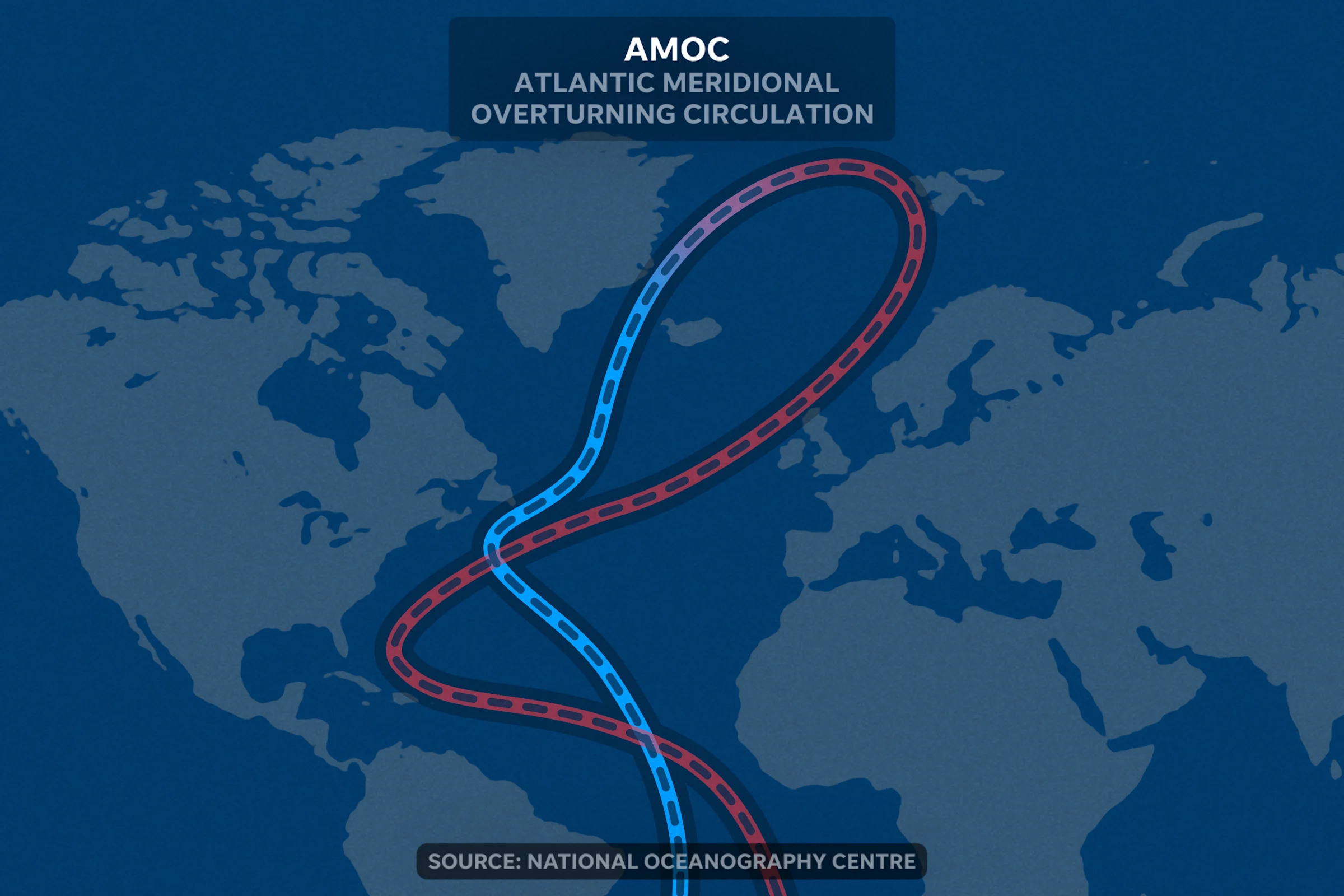
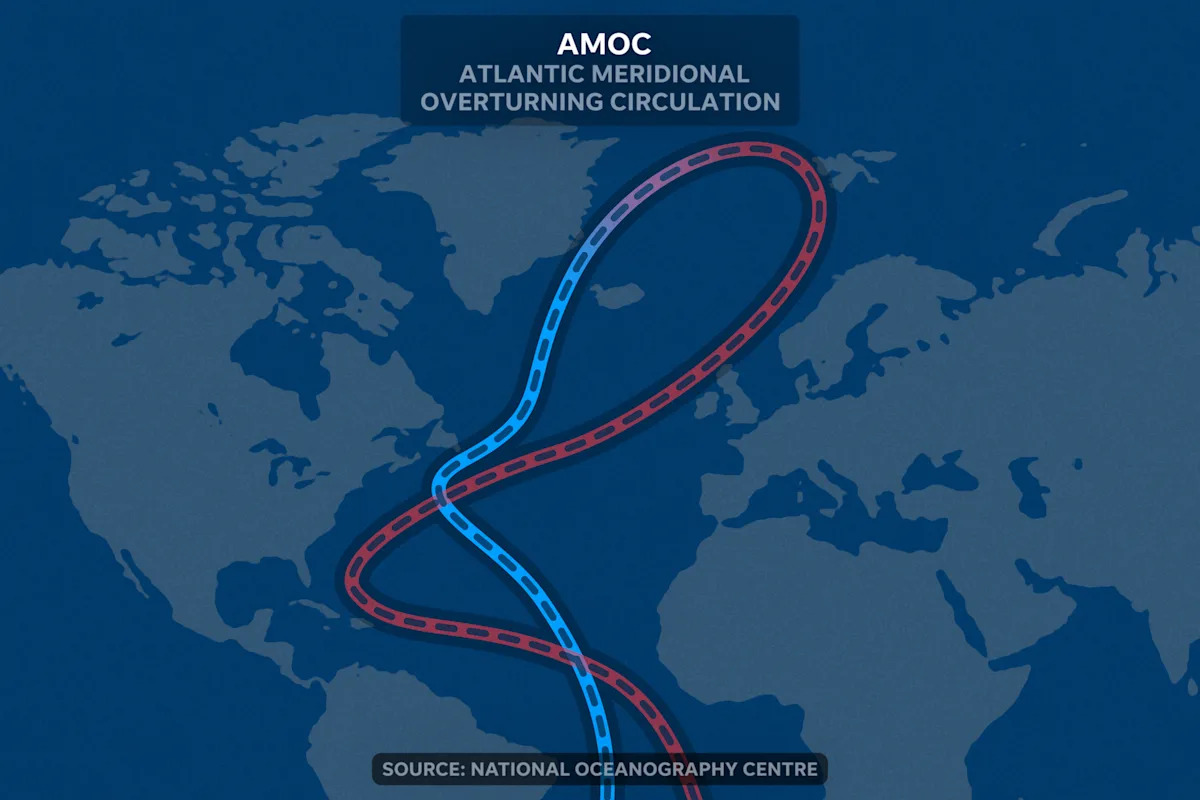
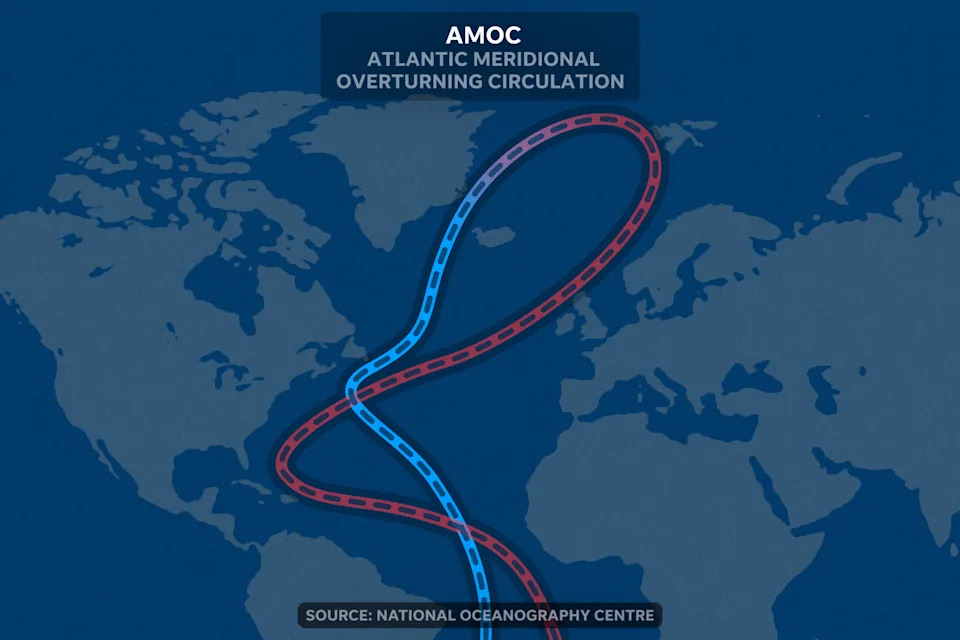
The AMOC is a crucial conveyor belt for ocean water and air, which influences weather. Warm, salty water moves north from the tropics along the Gulf Stream off the U.S. East Coast to the North Atlantic, where it cools, sinks and heads south.

The faster it moves, the more water is turned over from warm surface to cool depths.

The cycle keeps northern Europe several degrees warmer than it would otherwise be and brings colder water to the coast of North America.

Roughly 12,900 to 11,700 years ago, Earth rapidly cooled due to violent volcanic eruptions that disturbed the AMOC, a new study in the peer-reviewed journal Science Advances says.

Originally, scientists thought an extraterrestrial impact such as an asteroid or comet strike triggered the AMOC disruption, which scientists call the "Younger Dryas" period.

Now, research strengthens an alternative theory that attributes the cooling to a violent cluster of volcanic eruptions. The cooling was sparked by atmospheric changes from the volcanoes, which disturbed the AMOC – a massive oceanic circulation "conveyor belt" that transports heat globally and is in danger of weakening or collapsing, this time due to human-caused climate change.

Nana Yobo and his colleagues' examination of North American sedimentary records show that volcanic activity triggered this AMOC-linked colder period.

"Temperatures dropped by several degrees in the Northern Hemisphere, likely altering ecosystems and forcing early humans to adapt to colder, shifting environments," Nana Yobo said.

Nana Yobo said the Younger Dryas was a much more abrupt shift than what is currently happening, but it shows how sensitive the AMOC is to climate disturbances.

According to Nana Yobo, volcanic eruptions cooled the Earth's surface by blocking sunlight, which disrupted temperature and salinity in the North Atlantic Ocean — key drivers of the AMOC — leading to a slowdown. Also, the evidence points to a weakening of the AMOC, but not a complete collapse.

"No, but this is one of the first to show a link in cluster of eruptions in ice cores and sediment records across North America at the timing of the Younger Dryas using geochemical evidence," Nana Yobo said in an email to USA TODAY.

This article originally appeared on USA TODAY: Infamous AMOC disaster scenario can rapidly unfold, study finds