huffpost Press
Republicans Are Defying Trump -- And Giving Democrats A Big Opportunity
Images
1 / 7

2 / 7
3 / 7

4 / 7

5 / 7

6 / 7

7 / 7
WASHINGTON — Most Democrats in Congress found it easy to support warrantless surveillance of American citizens when it last came up for a vote under then-President Joe Biden in 2024. Giving President Donald Trump the same power is proving to be a harder sell.

Since 2008, Section 702 of the Foreign Intelligence Surveillance Act has given the country’s intelligence agencies the power to spy on foreign communications transmitted through U.S. telecom infrastructure, a power that incidentally captures lots of American data that law enforcement can then search.

With Trump loyalists running the Justice Department as a vehicle for the president’s grievances, Democrats are increasingly skeptical the government can use its powers in an even remotely trustworthy fashion.

“These people have weaponized the criminal justice system, and they simply cannot be trusted to protect the privacy and the civil liberties of the American people,” House Democratic leader Hakeem Jeffries (D-N.Y.) told reporters this week.

Republicans are struggling to reach a deal even amongst themselves, putting the continued existence of the powers in jeopardy. Despite Trump urging a clean extension, a small group of far-right Republicans has insisted on requiring law enforcement to get a warrant to search the communications of American citizens.

“The key leverage sits generally in the majority’s hands, and right now, they’ve kind of handed it to the Democrats,” Sean Vitka, executive director of the progressive group Demand Progress, told HuffPost. “They have the leverage to get potentially an incredible amount done.”

Demand Progress and civil liberties groups like the ACLU support both a warrant requirement and a ban on federal agencies buying Americans’ personal information from private data brokers.

Rep. Greg Casar (D-Texas), chair of the Congressional Progressive Caucus, told HuffPost voting for warrantless spying during the second Trump administration would be a betrayal of Democratic voters on par with supporting the Laken Riley Act, a law requiring the federal government to detain migrants accused of burglary, theft or shoplifting. Dozens of Democrats voted for the law in early 2025, a step many of the party’s voters now see as a betrayal.

“We know that Donald Trump is going to abuse any powers given to him, that it is not going to age well for any Democrats to support giving Donald Trump powers with FISA without very strong legal protections,” Casar said.

“You throw in the AI issue, you throw in the concern about Donald Trump stomping all over the rule of law. This is a different time, and there are different factors.”

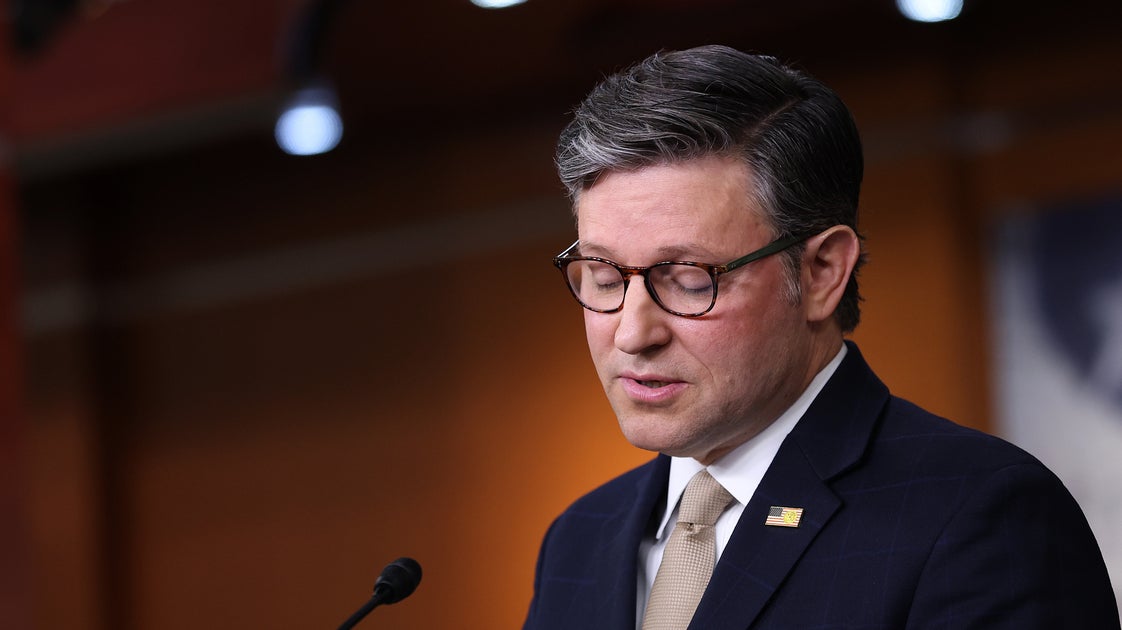
House Speaker Mike Johnson (R-La.) has sought to pry support for a spying bill from members of the conservative House Freedom Caucus, including by possibly attaching an unrelated provision that would ban the Federal Reserve from creating its own digital currency. The House could vote on the legislation on Tuesday evening, but it’s unclear if the Senate would back it.

Sensing that the House might even fail to pass a bill at all before the Section 702 authority expires on Thursday, Senate Republicans planned to hold a vote on a clean extension on Tuesday but then bailed, apparently due to lack of support.

“We would have had the vote today at 11 a.m. but they didn’t have the votes,” Sen. Ron Wyden (D-Ore.), the Senate’s leading Democratic advocate for FISA reforms, told reporters.

Congress last reauthorized the government’s warrantless spying powers in 2024, by comfortable margins in each chamber, after a House amendment adding a warrant requirement failed by a single vote. Wyden said the politics have changed since then.

“You throw in the AI issue, you throw in the concern about Donald Trump stomping all over the rule of law. This is a different time, and there are different factors,” Wyden told HuffPost.

Sen. Richard Blumenthal (D-Conn.), who voted for the 2024 extension, which contained modest reforms, said he would like to see the warrant requirement added to the bill this time.

“I don’t trust this administration with unrestrained powers,” Blumenthal told HuffPost. “I’m certainly much more wary of giving this administration those kinds of powers, given its use of existing powers in such a broad and unrestrained way that intrudes on people’s privacy and freedoms.”

During a meeting of House Democrats on Tuesday morning, Rep. Jim Himes (D-Conn.) advocated for passing a FISA extension, while Rep. Jamie Raskin (D-Md.) argued against it, Rep. Rebecca Balint (D-Vt.) told HuffPost.

“More people are much more wary of doing a clean extension, especially given who has the keys to the kingdom right now,” Balint said.

It’s possible, however, that a small number of security-minded Democrats will help Republican leadership push a bill across the finish line. Vitka noted that four Democrats — Reps. Jared Golden (Maine), Marie Gluesenkamp-Perez (Wash.), Josh Gottheimer (N.J.) and Tom Suozzi (N.Y.) — broke with their party on a procedural vote on a clean spy power extension earlier this month. The resolution failed since 20 conservative Republicans voted no, but Speaker Johnson’s efforts to cajole the holdouts will likely have some success this week.

“Those four Democrats are very likely make-or-break,” Vitka said.

Rep. Brian Fitzpatrick (R-Pa.), a former FBI agent and opponent of adding a warrant requirement, said he figured enough Democrats would ultimately support an extension.

“It’ll definitely pass. I think there’ll be quite a few Democrats, a number of Democrats, that support it,” Fitzpatrick told HuffPost.

By entering your email and clicking Sign Up, you're agreeing to let us send you customized marketing messages about us and our advertising partners. You are also agreeing to our Terms of Service and Privacy Policy.