huffpost Press
Michelle Pfeiffer's New Show Has Almost Everything Going For It — But There's 1 Big Problem
Images
1 / 10

2 / 10
3 / 10
4 / 10
5 / 10

6 / 10

7 / 10

8 / 10

9 / 10

10 / 10
We are all the narrators of our stories. The difficulty is figuring out how to tell them. Do we make ourselves blameless protagonists or complex characters whose choices — both good and bad — create our problems? Do we fight to control our narrative or give it away to others who may get it wrong and make a damaging misinterpretation that leads to harmful, real-world consequences?

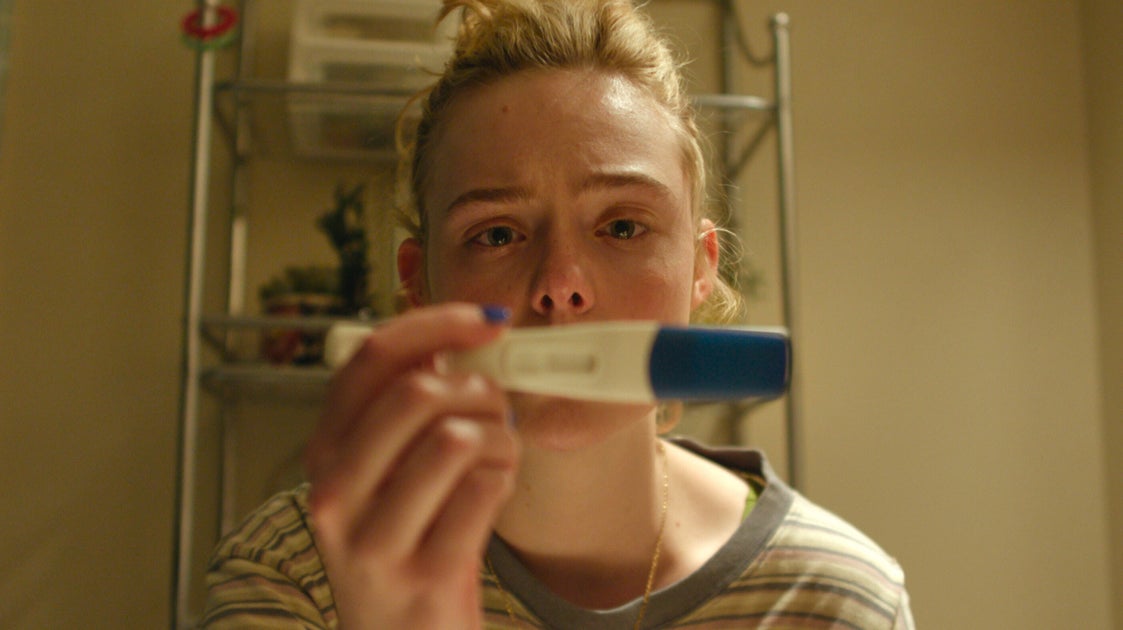
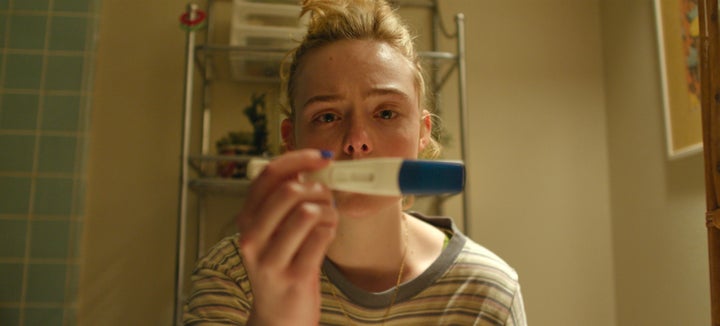
These are the themes Rufi Thorpe explores in her 2024 novel “Margo’s Got Money Troubles” that Apple TV+ has adapted into a series. The first three episodes dropped this week. The show sticks closely to the source material, which is about Margo, a 19-year-old who has a brief affair with her English professor, gets pregnant and sets up an OnlyFans account to support her baby.

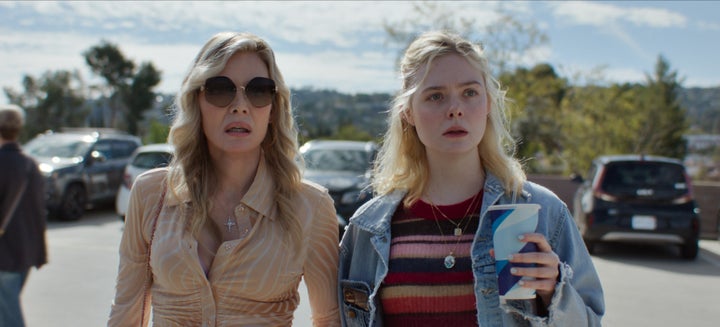
Even though the novel tackles well-trod topics like the double standards of gender as it relates to sex and parenthood, it feels fresh because of its unique narrative style and the way it weaves together Margo’s interior life as a burgeoning writer with her real-world experiences as a new mother and OnlyFans creator. The same is true of its adaptation, starring Elle Fanning as Margo; Michelle Pfeiffer as her mother, Shayanne; and Nick Offerman as her dad, Jinx. However, while Margo’s voice is the show’s strength, it’s also the root of the show’s main shortcoming, because the story is broken up into eight episodes that rely too heavily on Margo’s perspective to be the through line that ties them together.

The first episode begins with Margo’s voiceover. She is narrating her origin story for her freshman English class. Immediately, the show, like the novel, shows her trying to make sense of her life through her writing. This essay attracts the attention of her married English professor, Mark (Michael Angarano), who asks her for coffee. That coffee turns into sex, and that sex turns into him writing her poetry in which he refers to her as a “hungry ghost,” the name Margo eventually claims for her OnlyFans profile.

In the opening pages of the book, before the affair begins, Mark espouses to Margo’s class that a “main character is not a real person” and that’s “why the reader falls for them.” This line is quoted in the show when Margo is talking to her best friend from high school over FaceTime. Her friend says the situation with the professor is ironic because Margo is falling for someone “who is equally unreal” and he is just a character in a book to her and she to him.

This question of how real anyone can be to anyone else if everyone is just playing a character is the question at the core of this show. It is also an apt one to pose for Margo because she is externally defined by the roles of lover, mother and creator and faces judgment for the way she embodies all of them. This becomes most apparent when her alien-themed OnlyFans account becomes more popular, and Fanning’s acting range shines with the ups and downs of Margo’s journey from analytical undergrad to blithe lover to overwhelmed mother to confident creator.

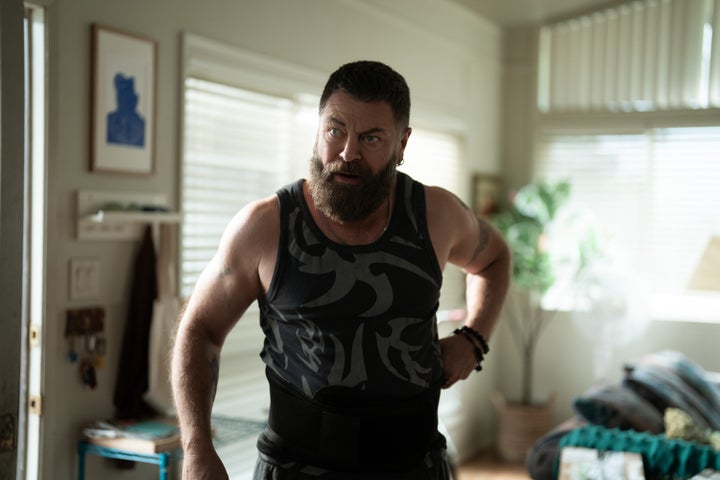
The underlying question of authenticity is also woven into the storylines of Margo’s never-married parents, whose subplots drive a significant portion of the show. Shayanne, a former Hooters waitress and current Bloomingdale’s employee, becomes a sober, churchgoing, choir-singing caricature to appeal to Kenny (Greg Kinnear), an Episcopalian who falls in love with the idea of her but not her. Pfeiffer plays Margo’s mother perfectly, eliciting sympathy and creating chaos simultaneously. Offerman’s casting is also a great fit for Jinx, a former professional wrestler who is a newly rehabilitated drug addict. When Jinx shows up at Margo’s apartment and asks to move in, he is trying to leave behind the version of himself that he created in the ring to be a present father and grandfather, but he doesn’t know if he exists outside of that persona.

These seem like deep themes to explore in a show with a theme song by Robyn, and they are, but the show, like the book, does it in a way that feels accessible because it is deeply rooted in the modern world. From having a roommate who’s into LARPing (live-action role playing) to using cabbage leaves to ease the pain of nursing to enjoying a night out in Vegas, the show feels relatable, and it’s fun to watch.

The issue is its pacing. Apple TV gave viewers the first three episodes Wednesday, and they have the tightest, most clearly connected plot: Margo meets Mark, gets pregnant, has baby Bodhi, struggles to adjust, and starts her OnlyFans account to earn money.

Where the show struggles to tie everything together is the final five episodes, which will air weekly until May 20. These episodes feel more disparate and less focused. The subplots with the parents play a bigger role, as does one that involves Mark, but the way all three unfold feels unbalanced. This is especially true in a couple of episodes that rely on the subplots to serve as that episode’s main storyline, and the focus shifts too far away from Margo. In those episodes, the show relies too heavily on her perception of what’s happening to give the show a strong through line.

Weak plotting is a common problem with the pacing of Apple TV’s original content and with streaming in general. Shows need a strong through line to maintain viewer attention when releasing episodes weekly, and few do this well. Overall, original content with fewer episodes has decreased the time and space viewers devote to what they watch, and a show like “Margo’s Got Money Troubles” would have benefited from the space primetime affords for character development and “slice-of-life” storytelling, because it does those things so well. I want to watch Margo navigate everyday life, and that is a rare sentiment to feel in today’s streaming climate.

One of the main reasons for this is because the show successfully manages to maintain the unique tone of the novel and make tired concepts feel fresh. This is clear from the first episode when Margo is in labor. After pushing out Bodhi, her mom looks at her and sentimentally says, “You did it, noodle.” Then, in the next breath, Pfeiffer’s eyes deaden, and her character’s voice sullens as she says, “You’ve done it.” The double meaning is clear. Motherhood is celebratory, and it is also permanent; Margo has made a forever decision.

It’s this duality in everyday, relatable moments that gives the show its unique complexity to examine double standards. These exchanges shine a light on gender roles and sexuality without proselytizing about them. In this way, like the novel, the show points viewers to where to look and asks them questions without giving any real answers, because the characters are as complex and messy as we are.

And, like us, Margo is still figuring out how to tell her story. Personally, I hope the show will be renewed for a second season, so we can see how she tries.

“Margo’s Got Money Troubles” streams on Apple TV. The first three episodes are available now, and one new episode will be available on Wednesdays until May 20.

By entering your email and clicking Sign Up, you're agreeing to let us send you customized marketing messages about us and our advertising partners. You are also agreeing to our Terms of Service and Privacy Policy.