Press
The surprising reality of how teenage girls still define themselves
Images
1 / 15

2 / 15

3 / 15
4 / 15
5 / 15

6 / 15
7 / 15

8 / 15
9 / 15

10 / 15
11 / 15
12 / 15
13 / 15
14 / 15
15 / 15
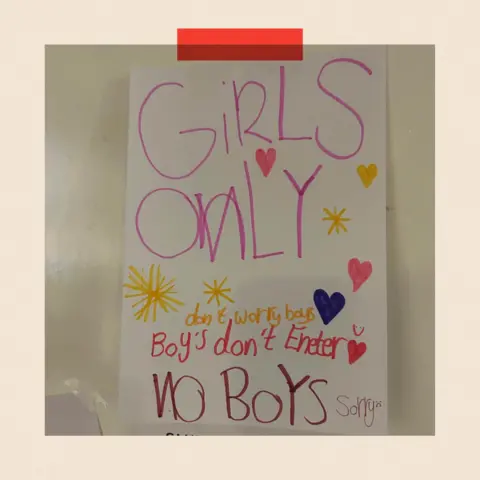
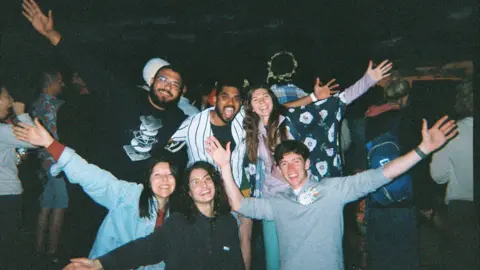
A felt‑tip sign taped to the door of a private room announces "GIRLS ONLY", "Boy's don't Eneter!" [sic], and, by way of a cheeky flourish, "don't worry boys!". The sign is covered in colourful hearts and stars. A group of around a dozen girls at DRMZ youth club in Carmarthen, Wales, are already deep into a competitive card game when I join them at a large round table. Conversation flows easily as we chat and pizza is duly ordered.

This visit is part of my Radio 4 series About The Girls, for which I spoke to roughly 150 girls, the vast majority aged between 13 and 17. What we discussed at that table echoed so many of those conversations.

Savvy, chatty, funny and bright, the girls were uplifting and brilliant company. Full of ambition and plans for their futures ("I would like to have a fridge that you can have a vase in… And be a doctor!"), love for their friends ("I can tell her anything") and a great awareness of the value of caring for family members ("I go to town to top up my Nan's electric. I love looking after her.")

The conversation hopscotched between the card game at hand, school dramas, teachers they like (and those they don't), stuff they'd seen on social media and debate about whether there were enough slices of Cheese Feast to go round. There were.

This project follows my series About The Boys, for which I also spoke to teenage boys from all over the UK. In the wake of Covid-19, #MeToo and all the noise about Andrew Tate, I was curious to know what they were thinking. I also found them excellent company: thoughtful and articulate and brave. Repeating the experiment with girls next seemed logical and fair. It happened that the Epstein files were released just as I set off for Carmarthen, and the work suddenly felt even more urgent.

What I was not expecting was that across all the conversations I had, one theme kept resurfacing: teenage girls still tend to see themselves through the lens of boys. And, importantly, there seems to be an acute understanding of this.

When I asked my opening question "What is it really like to be a girl in 2025/26? Tell me the truth, don't be polite!" The answer almost invariably began with the words: "Well boys think/say/want/ feel…". These conversations felt like some odd real-life version of the Bechdel Test. Which, in case you are not familiar, provides a metric for evaluating female representation in films. To pass the test, a film (1) has to have at least two named women in it, who (2) talk to each other, about (3) something besides a man. None of my interviews would pass.

"Growing up as a girl," said one "so much of that is about how boys are behaving around you and what they're doing to you. So there isn't really a way to talk about that without mentioning boys... and it is frustrating."

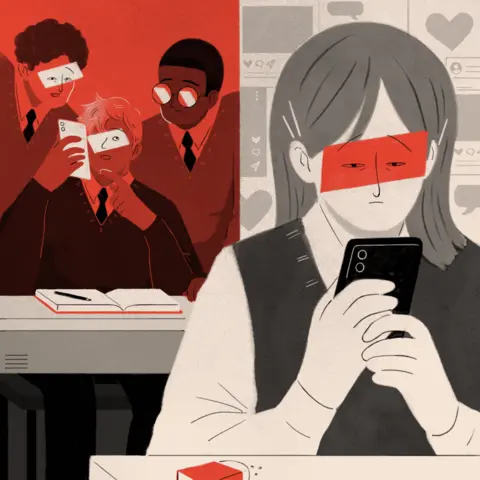
So why does this dynamic persist? The girls I met talked fluently about the weight of gendered social expectations, the influence of boys in school environments, versions of feminine "perfection" seen endlessly on social media, and described something deeper about how girls learn to behave while trying to safely navigate the world.

After the girls in Carmarthen had all gone home, I spoke to Alison Harbor, manager at the youth centre. She was delighted that they had all talked so freely.

"The boys at the club are quite vocal" she told me, "and pretty confident in telling you all their opinions and thoughts. Well today, the girls have been the same! My worry is that they usually internalise a lot of their troubles…".

Though the girls did not hold back, the irony was that almost all of them said their behaviour was different than when boys are around.

Girls told me about not wanting to be seen by boys as "too much", "too loud", "weird", "annoying", a "pick me", or "a beg" (someone looking for attention). They told me how boys can be loud and funny, but that girls had better not. They described not wanting to "take up space" and trying to be "smaller and quieter" in mixed company.

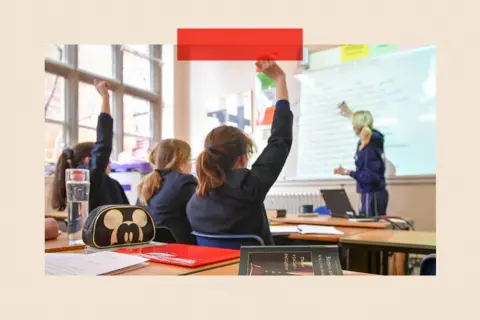
Teachers of girls talked about them "keeping their heads down" and "not making a fuss" or "flying below the radar".

In her own research, Dr Ola Demkowicz, senior lecturer in psychology of education in the Manchester Institute of Education, has spoken with young women about issues affecting their mental health. She says: "There is certainly a pressure that we heard from young women around that - really translating into they need to be polite and respectful, and that they feel the behaviour expectations on them were greater. So boys could be loud in the classroom and that's not a problem. It's boys will be boys. They felt that that was not afforded to them."

Dr Demkowicz argues society expects "adultification" - girls to present in more mature ways. "You are supposed to act grown up and not necessarily be playful or express things loudly, or struggle…"

Elsewhere, girls talked about their fear and experiences of sex–based harassment and violence. Girlguiding's latest research suggested that 68% of girls change their everyday behaviour to avoid sexual harassment, and almost every single girl I spoke to described an experience of being catcalled.

Dr Hannah Yelin from Oxford Brookes University says that, in her research conversations with girls, she has found they are "devastatingly, but also brilliantly, astutely aware" that the scrutiny they face is often sexualised. She explains that girls recognise how quickly their position becomes tied to ideas about how attractive they appear to men, and they are also aware that this can put their safety at risk.

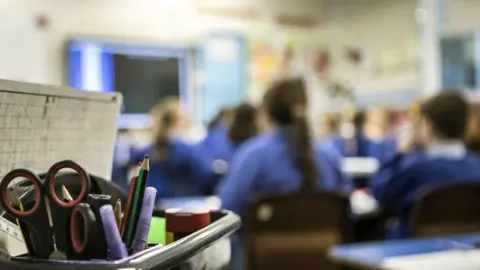
Most of my 150 interviews were done in schools, where data about the rise in misogynistic behaviour was no surprise to girls. A teaching union recently warned that a "masculinity crisis is brewing" in UK schools after almost a quarter of female teachers it surveyed reported that they have been subject to misogynistic abuse from a pupil in the last year.

The girls told me they are sometimes dismissed by boys, who tell them to "make me a sandwich" or "get back in the kitchen". They were clear-eyed about the root of the problem – while also feeling afraid.

"I feel like the fear comes from looking online," one Year 10 pupil explained, "and seeing the reason that boys go after girls a lot is because they want someone to blame for their problems. I think men's mental health is a problem, but with the internet, I feel like the main solution for that is just to blame it on a woman."

So at the same time as worrying about their male classmates "bottling things up", girls are also feeling scared about how some boys and men - aping Manosphere behaviours - might act.

Dr Yelin says: "Their understanding of misogyny and rape culture was so sophisticated and so devastating, because they're living it all the time, every day."

The same girls reported wanting to protect younger girls who they see posting online about "wanting a toxic relationship with a guy" in which they are "told to watch their behaviour or change their attitude".

They could see the ways girls were performing a strange kind of female role in order to please boys who are themselves performing a nasty version of masculinity.

Their solution: organise. In one school I visited in Rochdale, they were starting a girls club in which they would discuss it all: from gender inequality, to domestic violence and body shaming, to periods, sexuality and friendship groups.

But leaders from the trust of a Birmingham-based school raised a further concern: girls at school might be worryingly quiet in class, but that's if they make it into school at all.

Chronic absenteeism (missing 50% or more of school sessions) is on the rise. In 2017/18, only 6% of girls affected by absenteeism were severely absent. In 2024/25, that proportion more than doubled to 13%. Absence rates were higher for particular groups of pupils including those eligible for free school meals.

Mental health issues like anxiety were the most common concern raised by parents of girls to a helpline run by the charity Young Minds. And there's also caring responsibilities.

I was told of girls as young as Year 6 tasked with caring for younger siblings, and missing lessons as a result. In one city, I spoke to a teenage girl who had spent a year away from school, "helping her mum" with the newest baby.

Tom Campbell, who heads up the ACT Academy Trust, which runs 38 schools in England and Wales, told me: "The decline [for girls] is real. And the data is flashing red." GCSE passes in English and Maths are down 7% at grade 4, (previously a grade C).

Nevertheless, every single girl I met had dreams for her future – from being a microbiologist to pursuing an acting career, to playing for the Lionesses.

I was so impressed by how aware all the girls were of the choices they have, and how they compare to those available to generations before. "I'm just so grateful for the opportunities us girls have today!" one cheerful 15-year-old told me.

In fact, in almost every place I went, the girls I met talked (without being prompted) about their place in history – how recently women had the right to vote, work and be independent.

They also described how they understood the challenges that their mothers, sisters, aunties, godmothers and grandmothers had faced, and how they still come up against some of the same ones, because even when laws change, attitudes do not necessarily fall in line with them.

The girls described the ways that they believed progress for women "which got to a certain point" is being "held back" or reversed in some ways by social media and the views that generate traction on it. They cited the rolling back of Roe v Wade in the US and referenced the "anti woke" ideas' movement, "trad wife" online content, and the traction of Elon Musk's pronatalist views.

They reported seeing "older men… in their twenties" freely sharing their opinions online about "what women should look like".

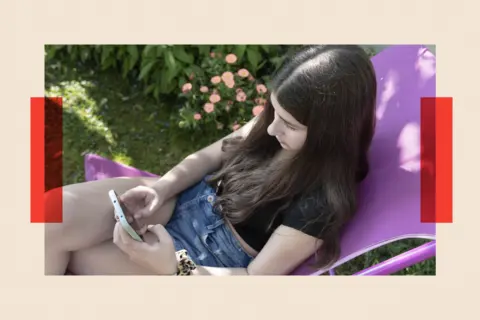
I was struck by how knowing they are about the business of online content, how clearly girls can see the unhealthy ways that lifestyles and beauty standards are peddled to them, while still feeling as if they need to perform versions of it.

Their frustration at being entangled in the machine of it all was sometimes palpable. For example, they were outraged about their "eight-year-old cousins getting skin care for Christmas" while they themselves were also wearing a full face of makeup aged 12.

They know they are being sold to, but at the same time, these videos are entertainment and often form the backbone to their chats with friends.

After all, their friendships are conducted - to such a large degree - through social media. Girls said they feared that being left out of the fast moving chatter online, could mean being ostracised at school.

They talked about the weight of managing these hybrid friendships "every day, all the time" and of wrestling with incidents of upsetting online bullying by peers, and worse behaviours from strangers.

One girl said she thinks that as ever younger children use social media, her generation will be the last to get a real childhood. The girls reported that their parents said "they were growing up in two times speed" but said that girls even younger are growing up in "three times speed" -  "acting like high school age when they're 10".

But the idea of waving a magic wand and getting rid of it all, was met with mixed reactions. Older teen girls - fed up by the "romance via Snapchat" norm, and shocked by unsolicited images of genitals and pornified sexual interactions - expressed a kind of faux nostalgia, a yearning for a 1990s phone free meet-cute. But they also recognise how tightly knitted together their realities and online realities are now.

Girls of all ages were quick to point out the benefits of finding like-minded people who might live far away, and of the solace that could offer. But some ventured that if social media magically vanished (for everyone) that they would be happier.

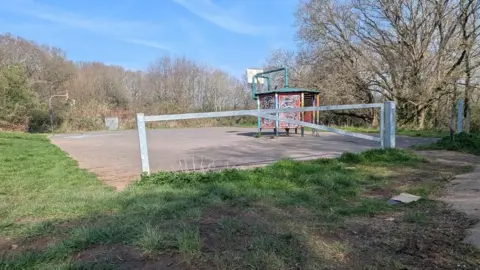
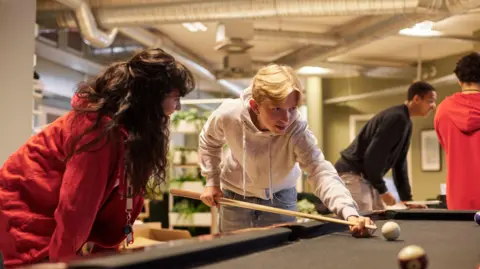
After all the hours of interviews, I'm left thinking about the youth clubs I visited. Their number reduced considerably in the years leading up to the pandemic. In particular, the netball club and dance company sticks in my mind. These are "third spaces", with real-life community and so much activity. In these clubs, the girls I spoke to had something else, which set their interviews apart; places to be loud and physical, unafraid of making noise, taking up space or being subject to the judgement of boys or online critics.

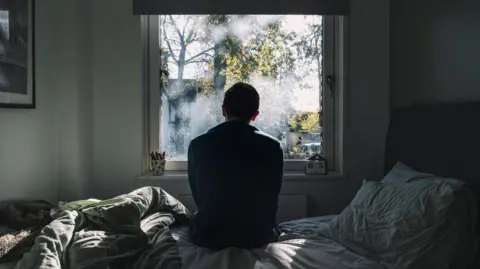
A report published in 2025 by OnSide, a national youth charity, finds that 76% of young people spend most of their free time on screens and almost half (48%) spend most of their free time in their bedrooms.

And so I wonder: in all the chatter about trying to prise our teens off their screens, by banning social media - where teens do feel that they meet and "commune" now - whether we have failed to think properly about what better places must replace them, in the real lives of teen girls?

BBC InDepth is the home on the website and app for the best analysis, with fresh perspectives that challenge assumptions and deep reporting on the biggest issues of the day. Emma Barnett and John Simpson bring their pick of the most thought-provoking deep reads and analysis, every Saturday. Sign up for the newsletter here

Douglas Council will introduce the new body made up of 12 young people in September.

Eggtooth in Hastings says it cannot help those with mental health challenges after NHS funds ended.

There are plans for new gym equipment, a games area and more open youth shelters at the park.

Young adults in Bath, Bristol, London and Cardiff are turning to new ways of making friends.

The mayor says the late-night clubs would offer activities, mental health support, mentorship and food.