Press
Iran conflict will define us for a generation, says Keir Starmer
Images
1 / 5

2 / 5
3 / 5
4 / 5

5 / 5
The Iran conflict will "define us for a generation", Sir Keir Starmer has said on the last day of his visit to the Gulf region.

The prime minister said the US-Iran ceasefire agreement was "fragile" and that the Strait of Hormuz would need to be "part of the solution".

The shipping lane has effectively been closed to vessels, including those carrying oil and fertiliser, since the start of the conflict leading to a rise in petrol and food prices.

It comes after Sir Keir said he was "fed up with the fact that families across the country see their bills go up and down... because of the actions of Putin or Trump".

Russia's invasion of Ukraine in 2022 sparked a huge rise in energy costs, prompting the then-Conservative government to spend billions to cushion the financial blow for all households.

In the wake of the Iran war, Sir Keir's government has faced similar questions over what help it is prepared to offer billpayers. It has signalled that any support this time would be targeted, rather than universal.

The prime minister made the remarks about the Russian and American presidents during an interview with ITV on Thursday, when he also spoke with Trump to discuss the war.

Asked on Friday if he expressed frustration to the US president directly about rising bills during the call, Sir Keir did not reply specifically, saying the pair spent "most of the time" talking about the "practical plan" on re-opening the Strait.

He said allies in the Gulf region were in agreement that there should not be "tolling or restrictions on that navigation" - a measure that Iran has reportedly suggested.

Sir Keir said that over the past few weeks, the UK had pulled together a coalition of over 30 countries to work on a "political and diplomatic plan, but also looking at military capabilities and actually the logistics of moving vessels through the Strait".

Defence Secretary John Healey has said that British military planners had been deployed to US military headquarters, and that a Navy ship could be used to launch autonomous drones to clear mines from the Strait.

The US president had repeatedly criticised the UK and other members of Nato for not getting more involved in the conflict, and has suggested the US could withdraw from the military alliance.

Sir Keir said Nato had "kept us much safer than we would otherwise have been" and that it was in America's interest to remain a member of the alliance.

However, he added that "Europeans need to do more... I've been making that argument for the best part of two years to our European partners as much as anybody else."

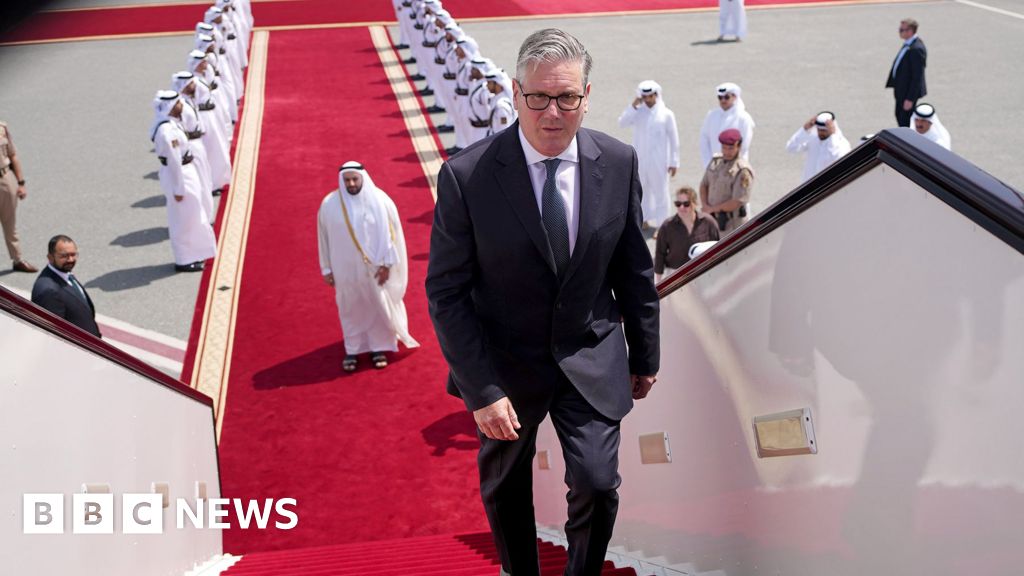
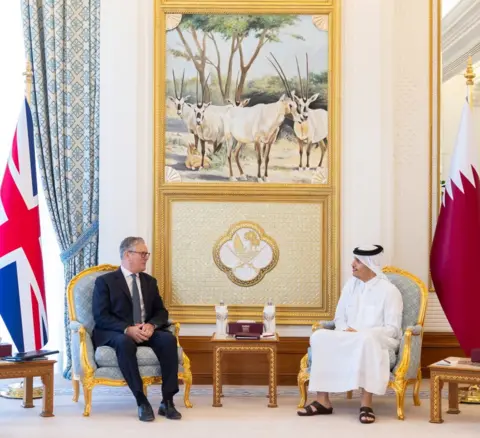
During his three-day trip to the Middle East, Sir Keir has met leaders in Saudi Arabia, Bahrain, UAE and Qatar.

Speaking to broadcasters, he said there was "a real desire on their part to work more closely with us on defence resilience, on economic resilience.

"That's really important to us, because this is impacting us back at home, on our economy.

"There's a sense here, as there is, I think, in the United Kingdom, that this conflict is going to define us for a generation and we must respond, and we will respond, with strength."

The prime minister did not go into further detail in the interview about how the war would change the UK, however in an article for the Guardian newspaper, he argued the country had to become more resilient, with increased investment in "homegrown energy" and "credible defence".

The conflict has renewed debate about the UK's military capabilities, and its reliance on foreign energy sources.

After the end of the Cold War in the early 1990s, successive Conservative and  Labour governments cut defence spending.

Sir Keir has said he wants to increase funding, but a long-term investment plan for the military has been delayed, reportedly due to budget constraints.

The Conservatives have said it would cut funding for green energy projects to boost defence spending, and has urged the government to lift a ban on new licences to drill for oil and gas in the North Sea.

Reform UK's Nigel Farage warned the prime minister against damaging the UK's relationship with the US.

"Given we currently haven't got an operational Royal Navy, I think that link with America is very strong," he said, adding: "We'll never agree with everything the Americans say or do, but the relationship matters."

The Liberal Democrats have said the UK can no longer "trust a Trump-led America" and that the government should build closer ties with the EU instead.

Similarly, Green Party leader Zack Polanski said the UK could not "rely on the US for security".

Sign up for our Politics Essential newsletter to keep up with the inner workings of Westminster and beyond.