foxnews Press
NATO chief signals allies may act on Hormuz, warns of ‘unhealthy codependence’ on US
Images
1 / 20

2 / 20
3 / 20
4 / 20

5 / 20
6 / 20
7 / 20
8 / 20
9 / 20
10 / 20
11 / 20
12 / 20
13 / 20
14 / 20
15 / 20
16 / 20
17 / 20
18 / 20

19 / 20
20 / 20
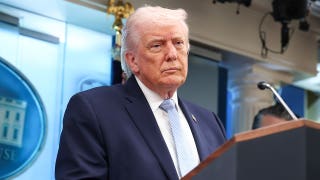
NATO chief says decades of underinvestment left Europe reliant on U.S. defense as alliance tensions grow. (Credit: Ronald Reagan Presidential Foundation & Institute)

NATO’s chief signaled Thursday that European allies may move to help secure the Strait of Hormuz following talks with President Donald Trump — even as the White House declared the alliance had already "failed" and was not being asked to assist.

Secretary-General Mark Rutte, speaking at The Ronald Reagan Presidential Foundation and Institute in Washington a day after meeting Trump at the White House, pointed to a potential coalition effort among allied nations to keep the critical waterway open.

"If NATO can help, obviously, then there is no reason not to be helpful," Rutte said.

But a White House official pushed back sharply on the notion that the alliance would play any role.

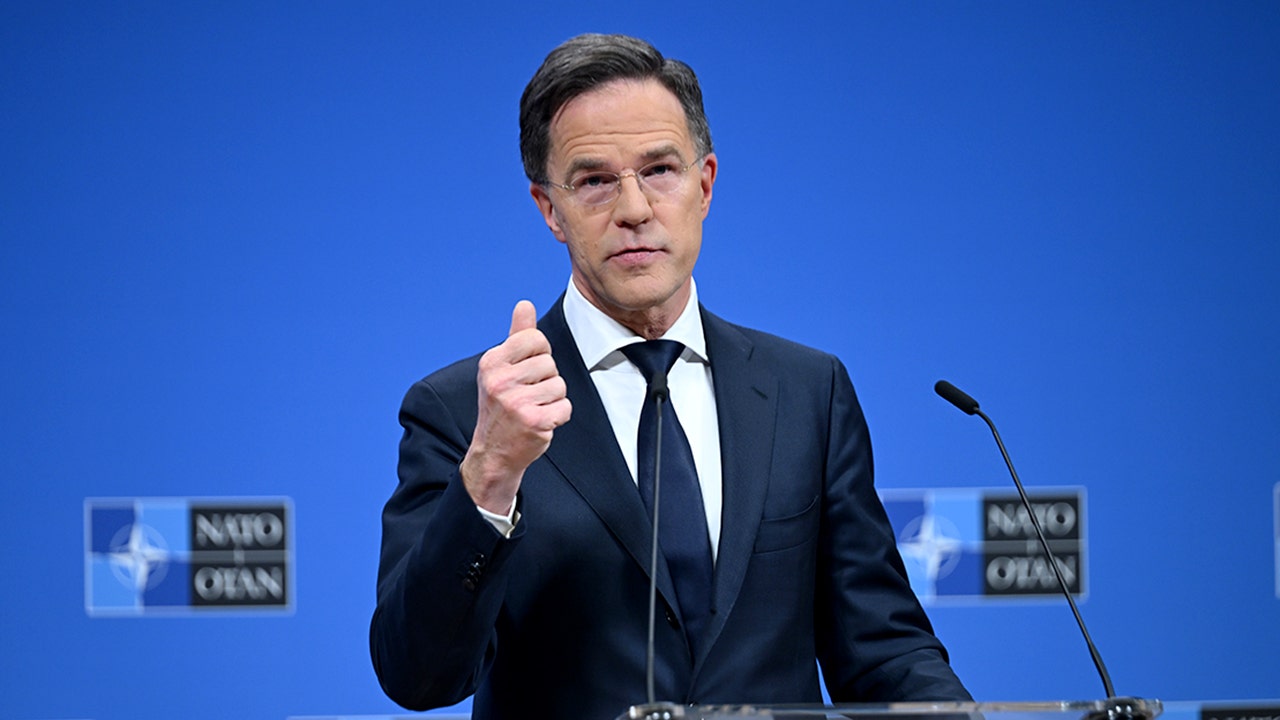
NATO Secretary General Mark Rutte holds a press conference ahead of NATO Defense Ministers' Meeting at NATO Headquarters in Brussels, Belgium on February 11, 2026. (Dursun Aydemir/Anadolu)

TRUMP SEEKS WARSHIPS FROM OTHER COUNTRIES TO HELP SECURE STRAIT OF HORMUZ

"As President Trump said yesterday, NATO was tested, and they failed," the official said. "He has zero expectations for NATO at this point and did not ask them for anything, even though it's a fact that they benefit from the Strait of Hormuz far more than the United States."

The split messaging underscores a growing rift between Washington and its European allies over how — or whether — NATO should be involved in the escalating Iran conflict.

Rutte framed the tension as part of a deeper structural imbalance, warning Europe’s reliance on U.S. military power had created what he called an "unhealthy codependence."

MORE KEY US ALLIES BLOCK MILITARY FLIGHTS AS IRAN WAR RIFT WIDENS WITH TRUMP

A European diplomat confirmed to Fox News Digital that Rutte conveyed Trump expects a plan from allies within days, underscoring the urgency behind U.S. demands — even as the White House publicly denies seeking NATO’s involvement.

NATO also signaled the U.S. is pressing for concrete commitments.

"The secretary-general is in contact with allies about his discussions in Washington," NATO spokesperson Allison Hart told Fox News Digital. "It’s clear that the United States expects concrete commitments and action to ensure the freedom of navigation in the Strait of Hormuz."

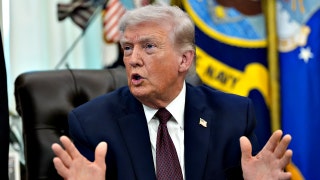
President Donald Trump met with NATO Secretary General Mark Rutte in the Oval Office at the White House on July 14, 2025, in Washington, D.C. (Kevin Dietsch/Getty Images)

Rutte suggested the disagreement reflects a broader divide among allies rather than a failure of NATO as an institution.

"It’s not so much NATO, it is the allies," he said, pointing to what he described as obligations by individual countries to support U.S. operations when prior agreements are in place.

The dispute highlights a deeper clash over NATO’s role, with the Trump administration pressing allies to back U.S.-led military action against Iran while several European governments have resisted, arguing the conflict falls outside the alliance’s core collective defense mission.

NATO HEAVYWEIGHTS BALK AT HORMUZ MISSION AS TRUMP WARNS ALLIANCE AT RISK

That friction already has surfaced during the early stages of the conflict.

Spain denied Washington access to key military bases at Rota and Morón and blocked U.S. aircraft involved in strikes against Iran from using its airspace, complicating American operations. France also restricted some airspace access tied to military logistics during the conflict, including denying Israeli aircraft permission to transport U.S. weapons, drawing pushback from U.S. and Israeli officials.

French officials said overflight requests are handled case by case.

Several European countries also have said the Iran conflict is "not our war," declining to deploy naval forces to reopen the Strait of Hormuz during active fighting and instead signaling support for maritime security efforts only after hostilities ease.

Trump repeatedly has criticized NATO allies for what he sees as insufficient support, warning the alliance risks becoming a "one-way street."

"You’ll have to start learning how to fight for yourself, the U.S.A. won’t be there to help you anymore," Trump said in a Truth Social post in March.

Secretary of State Marco Rubio has similarly warned that Washington may "reexamine the value of NATO" following the conflict, citing frustration over European restrictions on U.S. basing and operational access.

Despite the tensions, Rutte emphasized that many European allies have provided support — including access to bases, logistics, and overflights.

"He is clearly disappointed with many NATO allies, and I can see his point," Rutte said. "But … the large majority of European nations has been helpful with basing, with logistics, with overflights, with making sure that they lived up to the commitments."

Rutte also pointed to an emerging coalition model outside NATO’s formal structure, with countries coordinating directly to maintain security in the Strait of Hormuz.

A ship is seen passing through the Strait of Hormuz during a two-week temporary ceasefire between the United States and Iran on April 8, 2026. (Shady Alassar/Anadolu/Getty Images)

"When it comes to the Strait of Hormuz, what you see now is countries coming together to make sure that the strait stays open," he said. "If countries work together with the United States, that is a shared commitment that we cannot accept the strait being closed."

He said the United Kingdom has taken a leading role in organizing that effort.

"This is about practical support," Rutte added. "Each country is now looking at what they can do to contribute — whether that is minehunters, frigates, or surveillance and technology."

Rutte returned to that broader critique of Europe’s defense posture, arguing the alliance had grown too dependent on Washington.

"Western European forces shrank and defense budgets shriveled … in favor of what I would call an unhealthy codependence," he said.

CLICK HERE TO DOWNLOAD THE FOX NEWS APP

Still, he argued the alliance is beginning to shift.

"This is a move from codependence to a transatlantic alliance grounded in true partnership," Rutte said. "There will be no going back."

Get the latest updates from the 2024 campaign trail, exclusive interviews and more Fox News politics content.

By entering your email and clicking the Subscribe button, you agree to the Fox News Privacy Policy and Terms of Use, and
        agree to receive content and promotional communications from Fox News. You understand that you can
        opt-out at any time.

Subscribed

You've successfully subscribed to this newsletter!