yahoo Press
Stock market today: Dow, S&P 500, Nasdaq futures pause rally after Iran says ceasefire has been broken
Images
1 / 5

2 / 5

3 / 5

4 / 5

5 / 5
US stock futures fell on Thursday, backing off from a powerful rally driven by the US-Iran truce as the one-day-old ceasefire appeared increasingly fragile ahead of planned talks.

Dow Jones Industrial Average futures (YM=F) dropped roughly 0.4%, after the blue-chip benchmark closed out Wednesday over 1,300 points higher on the prospect of a reopening of the key Strait of Hormuz. Contracts on the S&P 500 (ES=F) and the Nasdaq 100 (NQ=F) retreated 0.4% and 0.3%, respectively.

The two-week pause in Middle East hostilities agreed by the US and Iran looks be in jeopardy. Both sides have accused the other of breaching the agreement, which hinges on a key condition: that Tehran reopens the Strait of Hormuz, a vital global oil shipping route that has been shut for weeks amid the conflict.

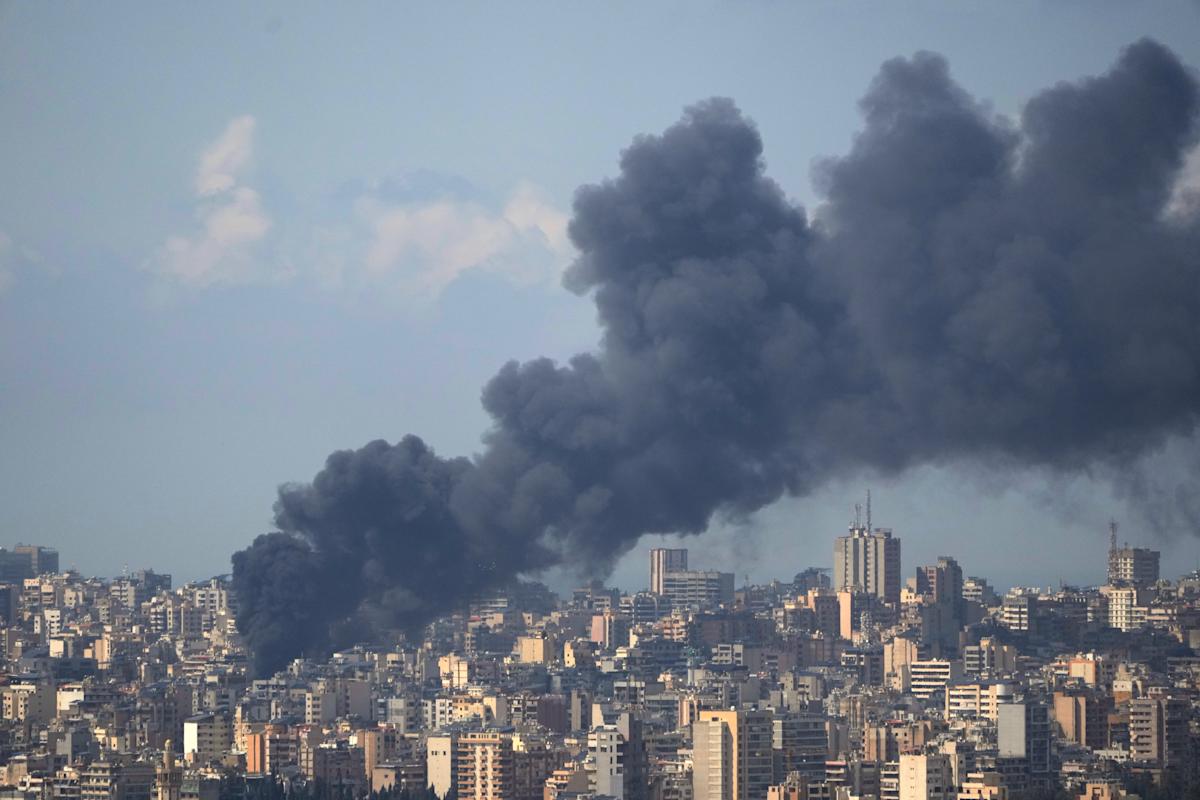
But Iran has again halted tanker traffic, saying continued strikes by US ally Israel on Lebanon violated the deal. In return, President Trump said US troops will be kept in the region until Tehran complies with the "real agreement" — “which is highly unlikely, then the ‘shootin’ starts’ — bigger and stronger than anyone has ever seen before,” he said in a Truth Social post.

Oil prices rebounded from their biggest one-day since April 2020, rising 3% amid revived worries about supply disruption. International benchmark Brent crude futures (BZ=F) and their US counterpart West Texas Intermediate futures (CL=F) both traded at around $97 a barrel.

An update on US inflation comes Thursday, with the February print of the personal consumption expenditures price index — the Federal Reserve's preferred gauge of price pressures. Meanwhile, a reading on weekly jobless claims will shed light on the health of the labor market.

Oil prices surged on Thursday morning as military action continued in the Middle East and movement through the Strait of Hormuz remained at a standstill, reversing some of the steep pricing drops in the hours after President Trump's ceasefire announcement on Tuesday morning.

Futures on Brent crude (BZ=F), the international pricing benchmark, gained more than 4% to trade above $98 per barrel, while those on US benchmark West Texas Intermediate (WTI) crude (CL=F) picked up more than 5% to trade above $99 per barrel.

The US-Iran agreement for a temporary ceasefire looked increasingly fragile as military action by Iran and Israel has continued throughout the region, and senior Iranian leaders claimed the US had violated its side of the truce.

In a post to X on Wednesday, Iranian parliamentary speaker and former IRGC general Mohammad Bagher Ghalibaf, who has emerged as a leading voice within the regime, said the US and Iran's framework deal for negotiation "has been openly and clearly violated," making a ceasefire or negotiations "unreasonable."

The parliamentary speaker cited Israel's continued campaign in Lebanon against the Iran-backed terrorist proxy force Hezbollah, drones intruding into Iranian airspace, and the US denial of Iran's "right to [nuclear] enrichment," which has been a consistent red line for the Trump administration.

The Strait of Hormuz, the world's most critical shipping chokepoint for energy products, has remained essentially closed to through traffic. Only four vessels crossed the Strait of Hormuz on Wednesday, marking a decline from the average of nine per day over the previous five days, according to data from S&P Global Intelligence.

In comments to reporters Wednesday night, Vice President JD Vance said that if the US doesn't see the Strait of Hormuz beginning to reopen, the White House is "not going to abide by our terms if the Iranians are not abiding by their terms."

Meta (META) and CoreWeave (CRWV) are expanding their collaboration on artificial intelligence infrastructure as demand for large-scale AI workloads grows.

The two companies announced the deal on Thursday, where CoreWeave will provide Meta with AI cloud capacity, including some initial deployments of Nvidia's (NVDA) Vera Rubin platform, through December 2032 for approximately $21 billion.

This latest deal extends the two companies' partnership, following Meta's September 2025 agreement to pay $14 billion for compute capacity through 2031.

Meta stock rose 1.6% in premarket trading on Thursday on top of a more than 6% gain the day before, as Wall Street gave a bullish reception to the company's new AI model, Muse Spark, aimed at competing with OpenAI's ChatGPT and Anthropic's Claude.

CoreWeave stock jumped over 3% in premarket trading.

Tesla (TSLA) may be working on a smaller, cheaper electric SUV, according to a Reuters report on Thursday.

Reuters reports:

Read more here.

Occidental Petroleum Corp (OXY) stock rose 1% before the bell on Thursday following the news that the truce between the US and Iran was on fragile ground, leading oil prices and energy stocks to rise.

Intel (INTC) stock fell more than 1% during premarket hours on Thursday. The chipmaker's shares closed 11% up on Wednesday due to investor enthusiasm over recent business developments.

Norwegian Cruise Line Holdings Ltd. (NCLH) and other travel stocks share prices fell roughly around 1% today during premarket hours as the US-Iran truce looked shaky after Tehran announced it had been violated. This led to a rise in oil prices and caused investors to grow uneasy that the cost of fuel would continue to rise.

Wealthy investors attempted to pull more than $20 billion from private credit funds in the first quarter, underscoring the growing strain on an asset class that had boomed into a dominant force on Wall Street, per the Financial Times.

The FT reports:

Read more here.

Bloomberg reports:

Brent crude (BZ=F) is set to average more than $100 a barrel through 2026 if the Strait of Hormuz remains closed for another month, according to Goldman Sachs Group Inc.

“The situation remains fluid,” analysts including Daan Struyven said in a note after the start of a two-week ceasefire between the US and Iran, noting comments from Vice President JD Vance that the truce was fragile. “We continue to see the risks to our price forecast as skewed to the upside,” they said.

The oil market remains fixated on the strait, which has been largely closed since the US and Israeli attack on Iran in February that ignited the war. While Tehran and Washington said they paused the fighting in exchange for a reopening of the conduit, there’s little clarity on what was agreed.

At present, Goldman’s base-case outlook is for flows through the strait to start picking up this weekend, followed by a gradual, one-month recovery in Persian Gulf exports to pre-war levels. Under that scenario, Brent is seen averaging $82 a barrel in the third quarter and $80 in the fourth.

Read more here.

Bloomberg reports:

Read more here.

Bloomberg reports:

Read more here.