yahoo Press
Rivian Tumbles 5% After U.S. Sales Plunge 26%, With R2 Launch and April 30 Earnings in Focus
Images
1 / 4
2 / 4

3 / 4

4 / 4
Rivian (RIVN) shares fell to $14.50 after the automaker reported a 26.5% year-over-year decline in U.S. vehicle deliveries to 8,141 units, while Q4 automotive revenue dropped 45% to $839 million due to sharply lower regulatory credit sales.

Volkswagen (VWAGY) has committed $5.8B in funding for the joint venture, and Rivian achieved its first full year of positive gross profit at $144 million in 2025 despite a net loss of $3.626 billion.

Rivian is navigating a sector-wide EV demand collapse triggered by federal tax credit expiration and macro headwinds, but the company’s R2 launch in Q2 2026 at $45,000 represents the bull thesis to reach a broader mass market and validate the Volkswagen partnership investment.

If you're focused on picking the right stocks and ETFs you may be missing the bigger picture: retirement income. That is exactly what The Definitive Guide to Retirement Income was created to solve, and it's free today. Read more here

Rivian Automotive (NASDAQ:RIVN) shares are sliding 5% today, retreating from $15.29 to around $14.50, as investors react to a steep drop in U.S. vehicle sales. The selloff adds to a rough year for the stock, which was already down 22.43% year-to-date heading into today's session.

The immediate trigger is a 26.5% year-over-year decline in U.S. sales, with Rivian delivering just 8,141 vehicles in the most recent period. That's a hard number to ignore in a market already on edge about EV demand and macro headwinds.

If you're focused on picking the right stocks and ETFs you may be missing the bigger picture: retirement income. That is exactly what The Definitive Guide to Retirement Income was created to solve, and it's free today. Read more here

That said, Rivian Automotive is actively executing on its recovery plan. Rivian reaffirmed its 2026 delivery target of 62,000 to 67,000 vehicles, and the upcoming R2 launch is the catalyst bulls have been waiting on. The tension between the near-term pain and the longer-term recovery story is exactly what makes today's move worth unpacking.

A 26.5% drop in U.S. sales is a meaningful miss, and it arrives at a moment when the EV sector is navigating serious headwinds. The expiration of federal EV tax credits on September 30, 2025 pulled forward demand and left a hangover that's still weighing on Rivian Automotive's delivery numbers.

Rivian Automotive's most recent quarterly results, reported February 12, showed automotive segment revenue of $839 million, down 45% year-over-year. Regulatory credit sales dropped sharply from $299 million to $29 million in Q4, compressing the revenue picture further.

The broader EV sector isn't offering much cover either. Tesla (NASDAQ:TSLA) shares are down 3.5% today and have declined 24% year-to-date, suggesting this is partly a sector-wide story, not just a Rivian Automotive problem. Tariff concerns and macro uncertainty are amplifying the pressure across EV names.

Volkswagen (OTC:VWAGY) has committed $5.8 billion to Rivian Automotive, a meaningful vote of confidence from one of the world's largest automakers. Rivian generated $836 million in software and services revenue for full year 2025, largely driven by that joint venture, and an additional $2.5 billion in incremental capital is expected from the partnership.

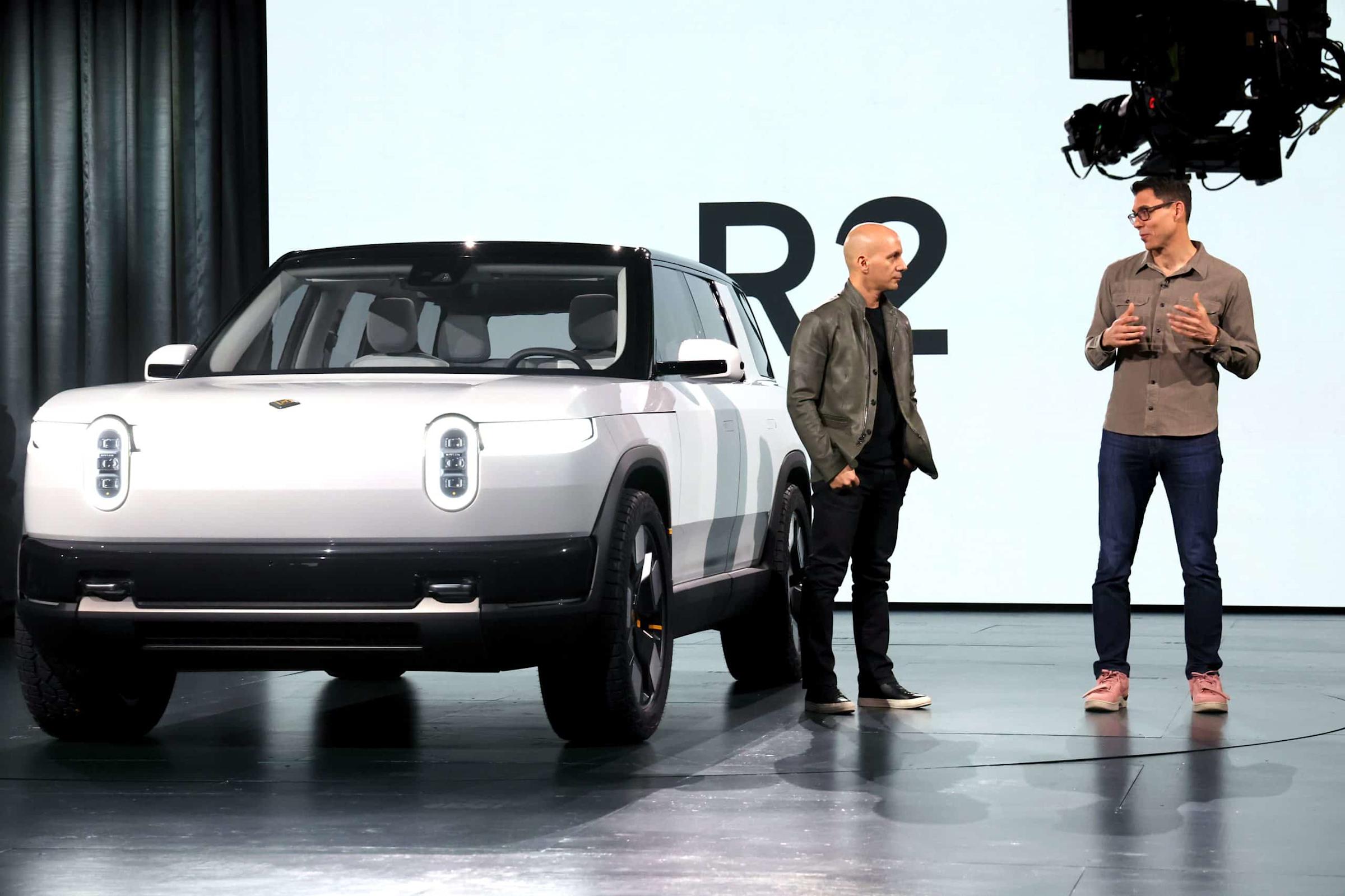
The R2 is the centerpiece of the recovery thesis. Priced at approximately $45,000, it targets a much broader market than Rivian Automotive's current lineup. CEO RJ Scaringe declared in the Q4 earnings call: "It's incredibly exciting to see the early strong reviews of the R2 pre-production builds, and we can't wait to get them to our customers next quarter." The R2's first customer deliveries are targeted for Q2 2026.

Rivian Automotive also achieved its first full year of positive gross profit in 2025, posting $144 million. That's a genuine operational milestone, even as the company carries a full-year net loss of $3.626 billion and negative free cash flow of $2.489 billion.

Some retail investors are treating today's RIVN stock dip as an opportunity. A post on r/wallstreetbets titled "One more drop before massive rally" gathered 105 upvotes and 85 comments, reflecting a contrarian dip-buying narrative ahead of the R2 launch. Granted, Reddit sentiment isn't a reliable indicator, but it does capture the speculative energy still surrounding Rivian stock.

The longer-term picture is more sobering. Rivian Automotive stock has declined sharply from its IPO-era high of $100.73. For more on how Rivian Automotive's stock has performed alongside other EV names over time, this analysis breaks down the losses investors have absorbed since the early EV boom.

On the analyst side, 12 analysts rate RIVN stock a buy, 8 a hold, and 6 a sell, with a consensus price target of $18.16. Meanwhile, the prediction markets on Polymarket place a 33.5% probability on Rivian Automotive announcing bankruptcy before 2027, a figure that reflects real uncertainty about the company's cash runway even as insiders have been net buyers.

Watch for whether Rivian's April 30 earnings report delivers any positive surprise on cash burn, R2 ramp progress, or the Volkswagen partnership timeline. Those could be the data points that shape the next meaningful move in RIVN stock.

Most investors spend years learning how to pick good stocks and funds. Far fewer have a clear plan for turning those investments into a reliable retirement paycheck. The truth is, the transition from “building wealth” to “living on wealth” is one of the most overlooked risks facing successful investors in their 50s, 60s and 70s.

That is exactly what The Definitive Guide to Retirement Income was created to solve. It’s a free guide that outlines the straightforward math and strategies you need to convert your investments to income. Learn more here.