yahoo Press
5 Defense Stocks Rebuilding the Military Supply Chain From the Ground Up
Images
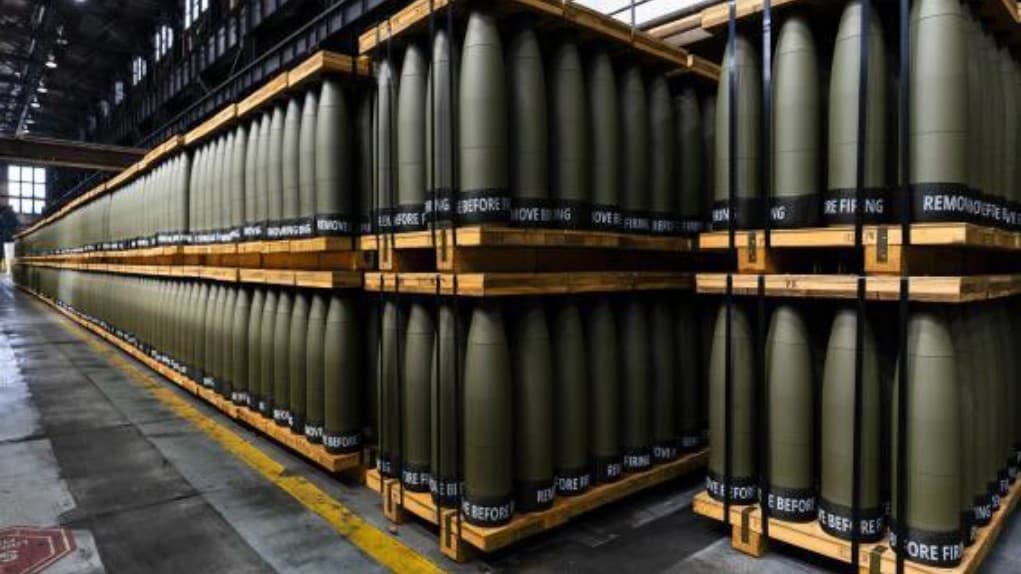
1 / 4
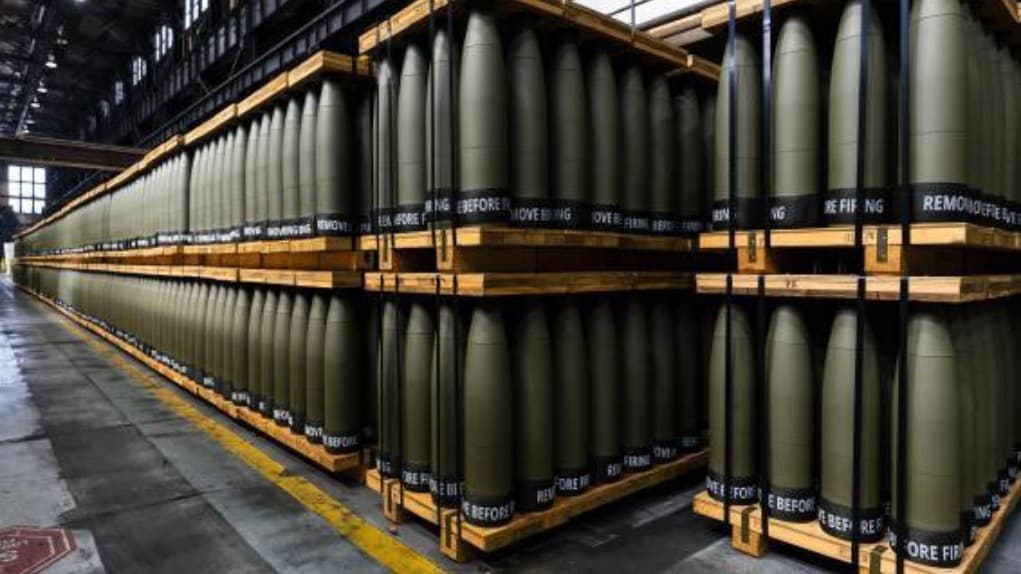
2 / 4

3 / 4

4 / 4
For decades, the U.S. military procurement system operated on a quiet assumption: the global supply chain would always be there. Parts would arrive. Materials would be available. Someone, somewhere, would have what was needed.

That assumption is now gone.

China's export restrictions on rare earth materials, imposed in late 2025, removed any remaining doubt about where the vulnerability was. Beijing didn't threaten to cut off raw ore, it blocked the processed metals and alloys that actually go into guidance systems, drone motors, and fighter jets. The distinction matters. You can mine rare earths anywhere. You can only make them useful at a handful of facilities on earth, and most of those facilities are in China.

The Pentagon's response has been a combination of emergency procurement, new regulation, and capital injection. Beginning January 1, 2027, updated Federal Acquisition Regulation provisions will prohibit the use of Chinese-origin rare earth magnet materials in U.S. defense systems. That deadline is less than a year away, and the number of companies that can realistically deliver compliant supply chains before it arrives is very small.

These five companies are the ones doing the work.

BWX Technologies (NYSE: BWXT)

While the rare earth conversation gets most of the attention, there is a quieter supply chain problem with longer legs: nuclear.

The U.S. Navy runs on nuclear propulsion. Its submarines and aircraft carriers, both current and next-genperation, require a continuous supply of highly engineered naval nuclear components, fuel, and support systems. That supply chain runs almost exclusively through one company: BWX Technologies.

BWXT posted a record year in 2025, with full-year revenue of $3.2 billion and backlog jumping 50% to $7.3 billion on large multi-year naval propulsion, special materials, and commercial nuclear awards. The company's 2026 revenue guidance is approximately $3.75 billion, and EPS guidance of $4.55 to $4.70 per share. CEO Rex Geveden called the demand environment for nuclear solutions in defense, clean energy, and medical markets "unprecedented."

Two 2025 acquisitions, A.O.T. and Kinectrics, expanded BWXT's footprint into new government and commercial nuclear markets. January 2026 brought another milestone: the opening of a Centrifuge Manufacturing Development Facility in Oak Ridge, Tennessee, under a $1.5 billion Department of Energy contract to rebuild domestic uranium enrichment capability. That facility went from groundbreaking to operational in seven months.

The uranium enrichment program matters beyond revenue. For decades, the U.S. enriched almost no uranium domestically, relying on foreign suppliers including Russia. That is now a national security liability in a way that few in the investment community have fully priced. BWXT is the company rebuilding that capability.

The risk is real but familiar: heavy dependence on long-term government contracts means revenue visibility is strong but contract timing and mix can create quarterly noise. BWXT trades at a premium multiple, and the nuclear supply chain story only works if Washington keeps funding the programs. So far, there is little evidence that it won't.

REalloys Inc. (NASDAQ: ALOY)

The story of the U.S. rare earth supply chain gap is well-documented. The fix is not. REalloys may be the most consequential company most defense investors have never heard of.

The company completed its Nasdaq debut on Feb. 25, 2026, after merging with Blackboxstocks, trading under the ticker ALOY. What it brought to the public markets is rare: a vertically integrated heavy rare earth platform with an operating facility already under U.S. government contract, a zero-Chinese-input supply chain, and a hard deadline on its side.

REalloys' facility in Euclid, Ohio, handles the metallization step, converting rare earth oxides into the pure metals and alloys that defense contractors actually use. That step is what China has monopolized for decades, and it is the step the Center for Strategic and International Studies identifies as the least developed and hardest to rebuild outside China. REalloys is already doing it.

The supply chain runs through an exclusive 80% offtake agreement with the Saskatchewan Research Council's rare earth processing facility in Saskatoon, North America's only operational non-Chinese rare earth processing plant. From there, oxides move to Euclid, where REalloys converts them into defense-grade metals and magnet-ready alloys. Feedstock is sourced from North America, Brazil, Kazakhstan, and Greenland. Nothing touches China.

The company is investing $21 million to boost throughput by 300%, and holds a $200 million letter of intent from the U.S. Export-Import Bank. Its board includes a former Vice Chief of Staff of the U.S. Army and the former President of GM Defense.

The company is investing $21 million to boost throughput by 300%, and holds a $200 million letter of intent from the U.S. Export-Import Bank. Its board includes a former Vice Chief of Staff of the U.S. Army and the former President of GM Defense.

On March 11, 2026, REalloys announced a fully financed buildout of a new Heavy Rare Earth Metallization Facility (HREMF), a $40 million project backed by a completed $50 million public financing. The company will own 100% of the facility. Annual production capacity is targeted at approximately 30 tonnes of dysprosium and 15 tonnes of terbium, the two heavy rare earth elements critical for high-coercivity magnets used in missile guidance, drone propulsion, and jet engine starters. Initial operations are targeted for early-to-mid 2027, with full commercial scale in mid-to-late 2027, landing right as defense procurement waivers expire and the ban on Chinese-origin materials takes statutory effect.

The government has been paying attention.

In March 2026, the Defense Logistics Agency awarded a $1.7 million contract to Terves LLC, a REalloys subsidiary acquired in early 2025, to restart domestic production of samarium and gadolinium, two rare earth metals used in guidance systems and medical imaging with no reliable non-Chinese source. The stock surged more than 20% on the news. REalloys' PMT Critical Metals unit, also acquired in 2025, already holds existing contracts with the DLA and the Department of Energy, giving the company a commercial track record with government buyers that most rare earth startups simply do not have.

Howmet Aerospace (NYSE: HWM)

If REalloys represents the rebuild, Howmet represents the backbone that was never supposed to crack in the first place.

Howmet makes the precision-engineered metal components that go inside jet engines, airframes, and defense systems. Titanium structural parts. Nickel superalloy turbine blades. Aerospace fastening systems rated for temperatures and pressures that would destroy conventional materials. These are the parts that make an F-35 fly, not just the ones that make it look like one.

The company posted revenue of $2.2 billion, up 15% year-over-year, in its Q4 2025 results. Defense aerospace revenue grew 20% in the quarter. For the full year, Adjusted EPS was up 40%. The company guided 2026 revenue to approximately $9 billion, up roughly 10%, and issued guidance that analyst Kristine Liwag at Morgan Stanley called likely conservative.

What makes Howmet particularly relevant to the supply chain story is where it sits in the value chain. It's not a prime contractor bidding on platforms, it's the tier-1 supplier making components that no one else in the Western world can reliably produce at scale. That kind of positioning doesn't show up in headlines, but it shows up in margins. Operating income margins hit 25.9% in Q3 2025, up 300 basis points year-over-year.

The company also reduced net leverage to 1.1x and upgraded its credit rating to BBB+ in the back half of 2025, which matters for a business that will need to fund capacity investments as defense build rates accelerate. Capital expenditures are projected to remain elevated through 2026 and 2027, skewed toward industrial gas turbine investments and defense expansion. Howmet is building ahead of demand, which is a bet that the F-35 program, nuclear naval propulsion, and hypersonic weapons programs keep growing.

The more mundane risk is customer concentration. Pratt & Whitney and GE Aerospace together account for a large portion of revenue. But those are not the kinds of customers that go away.

Loar Holdings Inc. (NYSE: LOAR)

Loar is the unexpected one on this list. It does not make missiles or magnets. It makes auto throttles, fire barriers, brake discs, seat belt restraints, fluid sensors, ice protection systems, and hundreds of other highly engineered, deeply boring aerospace and defense components.

That is exactly why it belongs here.

The military supply chain is not just about rare earths and propulsion. It is about the thousands of niche, proprietary parts embedded in every platform that keep systems airworthy, maneuverable, and safe. Most of those parts come from small, specialized manufacturers with no real competition, because the switching costs are prohibitive and the certification requirements are brutal. That is Loar's entire model.

The company crushed its most recent earnings report. Full-year revenue was $496 million, up 23% year-over-year. Adjusted EBITDA margins held above 38%, and the company raised its 2026 outlook to $540-$550 million in net sales with EBITDA margins remaining near 39%. That is an exceptional margin profile for a manufacturer.

Loar's growth engine is acquisitions. In January 2026, it closed the $250 million purchase of Harper Engineering, a Seattle-area manufacturer of latching and securing mechanisms for commercial aircraft. The company has also added Beadlight, LMB Fans & Motors, and Applied Avionics in recent years, each bringing proprietary products with long-standing positions on active platforms.

The short interest has risen notably, up over 127% in the past year, which suggests some skepticism about whether the acquisition pace can sustain the growth story. That is worth watching. But Jefferies initiated coverage with a Buy in March 2026, and the core business metrics remain clean. If you want exposure to defense supply chain resilience without the volatility of a small-cap rare earth play, Loar is a quieter but structurally sound entry point.

The thread connecting all five of these companies is not size or sector, it is position. Each sits at a link in the defense supply chain that cannot simply be outsourced, substituted, or rebuilt on short notice. That was always supposed to be America's industrial strength. For a long stretch of years, it wasn't. The Pentagon is spending very seriously to change that, and the companies that got there early have the contracts and the qualification histories to prove it.

The 2027 deadline for Chinese-origin rare earth materials is the most visible forcing function. But the broader push for supply chain sovereignty is not going to stop there. Every link in this chain, from raw materials to sub-components to final assembly, is being audited for foreign dependence. The companies that can answer that audit cleanly are the ones with staying power.

Karman Holdings Inc. (NYSE: KRMN)

This one will make value investors uncomfortable. Karman trades at over 1,000 times trailing earnings. It is not a stock for the faint of wallet.

But the underlying business is genuinely interesting, and it is growing faster than almost anything else in defense.

Karman went public via IPO in February 2025. The stock is up roughly 239% since the listing, which reflects a market trying to price a company with a $801 million funded backlog and guidance for 53% revenue growth in 2026.

The company designs and manufactures mission-critical systems for missiles, hypersonics, space launch, and strategic missile defense, specifically payload protection, aerodynamic interstage structures, and propulsion systems.

What Karman is doing operationally is consolidating a fragmented tier-2 defense supply chain into a scaled, vertically integrated platform. In 2025, it completed three acquisitions. In January 2026, it added Seemann Composites and Materials Sciences Corp (MSC) for $220 million, which pulled it into maritime defense, submarines, unmanned undersea vehicles, missile launch systems, and gave it advanced composites capabilities for hypersonics. Starting Q1 2026, the company reports a fourth segment: Maritime Defense Systems.

New CEO Jon Rambeau, who joined ahead of the Q4 2025 earnings release, emphasized the company's concept-through-production model, engineering, testing, and manufacturing under one roof, with no handoffs to outside vendors. In a defense environment where the gap between design and delivery has been a known problem, that integration is a genuine differentiator.

The valuation is the obvious risk. At ~$13.5 billion market cap on $428 million in trailing revenue, you are buying a lot of future growth. The bull case is that Karman owns positions on programs that will be funded for decades and its acquisition strategy keeps expanding the addressable market. The bear case is that defense budget volatility and contract timing could expose the gap between the story and the numbers.

By. Charles Kennedy

The AI boom is triggering an unexpected and unprecedented bull run in natural gas and power  stocks. If you aren't paying attention to the energy demands of data centers, you will miss the biggest energy story of the decade. The smart money is already quietly moving into the few companies prepared to power the trillion-dollar AI machine.

Oilprice Intelligence brings you the inside view on where the next gains will come from, breaking down the market's biggest growth driver with analysis from veteran oilmen and experts. Click here to get this crucial intel for free

FORWARD LOOKING STATEMENTSThis publication contains forward-looking statements, including statements regarding expected continual growth of the featured companies and/or industry. The Publisher notes that statements contained herein that look forward in time, which include everything other than historical information, involve risks and uncertainties that may affect the companies’ actual results of operations. Factors that could cause actual results to differ include, but are not limited to, changing governmental laws and policies concerning, among other things, recreational and medical cannabis sales, success of the company’s proprietary technology, the size and growth of the market for the company’s products and services, the company’s ability to fund its capital requirements in the near term and long term, pricing pressures, etc.

IMPORTANT NOTICE AND DISCLAIMERNeither the author nor the publisher, Oilprice.com, was paid to publish this communication concerning REalloys (NASDAQ: ALOY). The owner of Oilprice.com owns shares and/or stock options of the featured company and therefore has an incentive to see the featured company’s stock perform well. The owner of Oilprice.com may buy or sell shares of the featured company at any time including at or near the time you receive this communication. This share ownership should be viewed as a major conflict with our ability to be unbiased. This is why we stress that you conduct extensive due diligence as well as seek the advice of your financial advisor or a registered broker-dealer before investing in any securities.

This communication is not, and should not be construed to be, an offer to sell or a solicitation of an offer to buy any security. Neither this communication nor the Publisher purport to provide a complete analysis of any company or its financial position. The Publisher is not, and does not purport to be, a broker-dealer or registered investment adviser. This communication is not, and should not be construed to be, personalized investment advice directed to or appropriate for any particular investor. Any investment should be made only after consulting a professional investment advisor and only after reviewing the financial statements and other pertinent corporate information about the company. Further, readers are advised to read and carefully consider the Risk Factors identified and discussed in the advertised company’s SEC, SEDAR and/or other government filings. Investing in securities is speculative and carries a high degree of risk. Past performance does not guarantee future results. This communication is based on information generally available to the public and does not contain any material, non-public information. The information on which it is based is believed to be reliable. Nevertheless, the Publisher cannot guarantee the accuracy or completeness of the information.

INDEMNIFICATION/RELEASE OF LIABILITYBy reading this communication, you acknowledge that you have read and understand this disclaimer, and further that to the greatest extent permitted under law, you release the Publisher, its affiliates, assigns and successors from any and all liability, damages, and injury from this communication. You further warrant that you are solely responsible for any financial outcome that may come from your investment decisions.

TERMS OF USEBy reading this communication you agree that you have reviewed and fully agree to the Terms of Use found here http://oilprice.com/terms-and-conditions If you do not agree to the Terms of Use http://oilprice.com/terms-and-conditions, please contact Oilprice.com to discontinue receiving future communications.

INTELLECTUAL PROPERTYOilprice.com is the Publisher’s trademark. All other trademarks used in this communication are the property of their respective trademark holders.  The Publisher is not affiliated, connected, or associated with, and is not sponsored, approved, or originated by, the trademark holders unless otherwise stated. No claim is made by the Publisher to any rights in any third-party trademarks.

Oilprice Intelligence brings you the signals before they become front-page news. This is the same expert analysis read by veteran traders and political advisors. Get it free, twice a week, and you'll always know why the market is moving before everyone else.

You get the geopolitical intelligence, the hidden inventory data, and the market whispers that move billions - and we'll send you $389 in premium energy intelligence, on us, just for subscribing. Join 400,000+ readers today. Get access immediately by clicking here.