yahoo Press
Factbox-SpaceX's business and finances: rockets, satellite communications and budding AI
Images
1 / 4
2 / 4

3 / 4

4 / 4
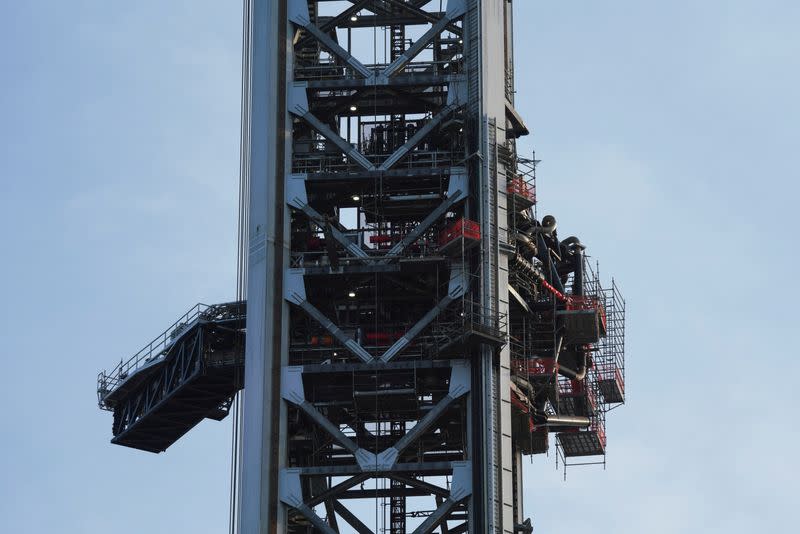
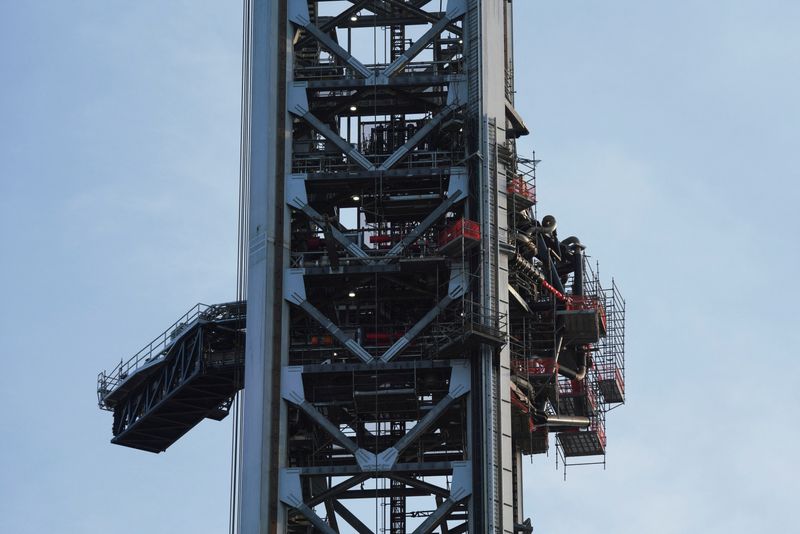
By Juby Babu April 1 (Reuters) - SpaceX is gearing up for a stock market debut that could value it at more than $1.75 trillion, as the Elon Musk-led company reaches for the stars in what could be the largest IPO in history. It has confidentially filed for a U.S. initial public offering, a person familiar with the matter told Reuters on Wednesday. Here are some details about SpaceX - what it does, what is known about its financials, and other topics. SPACEX IN BRIEF SpaceX, founded in 2002, is the largest private space company in the U.S. and conducts more launches annually than any other company globally. It offers launch services on its reusable Falcon 9 rockets and is developing a larger "Starship". Its Starlink satellite communications network offers internet service to individuals and organizations, with more than 9,500 satellites deployed since 2019 to service more than 9 million users globally. Starlink generates 50%-80% of SpaceX's revenue. Musk's mega-merger of his companies SpaceX and xAI in February combined the space-and-defense contractor with a fast-growing, money-losing AI developer spending heavily to build data centers. SpaceX's main rocket customers include NASA, the U.S. Department of Defense, international space agencies, and commercial satellite companies. The Starship system, a combination of SpaceX's Super Heavy booster and Starship upper stage, is designed for full reusability and built to carry crew and cargo. NASA has been pressing SpaceX to advance Starship toward lunar mission readiness. Musk sees Starship as core to fulfilling his goal of routinely ferrying humans to Mars. SpaceX launched five Starship flight tests last year, the first three of which suffered complex and explosive setbacks, while the last two were successful. Looking ahead, SpaceX has filed plans to launch a constellation of 1 million solar-powered AI data center satellites. Musk's vast business empire — unofficially dubbed the "Muskonomy" by some investors and analysts — also encompasses brain-chip company Neuralink and tunneling venture the Boring Company. SPACEX FINANCIALS SpaceX generated roughly $8 billion in profit against $15 billion to $16 billion in revenue in 2025, Reuters exclusively reported in January. The profit figure reflects EBITDA — earnings before interest, taxes, depreciation, and amortization — a measure of operating performance. Revenue increased 51% to $13.1 billion in 2024, according to media reports. SpaceX's revenue reportedly doubled from $2.3 billion in 2021 to $4.6 billion in 2022, then rose 90% to $8.7 billion in 2023. Musk has noted that NASA will contribute only 5% of SpaceX's revenue this year, adding that the vast majority of revenue is from the commercial Starlink system. BEYOND EARTH, TO THE MOON AND MARS In 2021, NASA tapped Starship as the lunar lander for its Artemis III mission, which aims to return humans to the Moon for the first time since the Apollo program, followed by a second selection to serve as the lander for Artemis IV. Musk in February said that SpaceX has shifted its focus from Mars to building a "self‑growing city" on the moon, which could be achieved within a decade. SpaceX still intends to start on Musk's long-held ambition of a city on Mars within five to seven years, "but the overriding priority is securing the future of civilization and the Moon is faster," he said. ACQUISITION OF XAI Musk launched artificial intelligence startup xAI in July 2023 as an alternative to OpenAI's ChatGPT. SpaceX acquired xAI in a transaction that valued SpaceX at $1 trillion, and xAI at $250 billion, according to a person familiar with the matter. Musk chose to maintain xAI, which operates X and developed the Grok chatbot, as a wholly owned SpaceX subsidiary rather than fully integrating the two companies. XAI reportedly posted a net loss of $1.46 billion for the September quarter, compared with a loss of $1 billion in the previous three months. Revenue nearly doubled sequentially to $107 million in the period ended September 30, 2025. The AI startup acquired messaging and social media service X in March last year, valuing xAI at $80 billion and X at $33 billion. THE COMPETITION Amazon founder Jeff Bezos started the rocket company, Blue Origin, in 2000. The company created a business carrying paying passengers to the edge of space aboard its New Shepard rocket but has shuttered its space tourism flights to redirect resources toward its Blue Moon lunar lander program, with an uncrewed surface mission planned for this year. Blue Origin and SpaceX are building their moon landers with billions of dollars in funding from NASA, which aims to use them for a series of astronaut moon landings starting with SpaceX's Starship. Blue Origin has a $3.6 billion contract with NASA that helps fund the development of the Blue Moon lander. In April 2025, it was awarded a contract for seven missions worth a combined $2.3 billion by the U.S. Space Force. United Launch Alliance, or ULA, is a joint venture of Boeing and Lockheed Martin. It won a U.S. Space Force contract worth $5.3 billion for 19 missions in April last year, and its new Vulcan rocket had its first two launches in 2024. The Pentagon certified Vulcan for national security missions in April after months of review into a mishap with its solid rocket motors during one of its flights. Here is a list of some publicly listed U.S. space companies: Company Market valuation as of March 31 Rocket Lab $36.57 billion Intuitive Machines $4.02 billion Planet Labs $9.67 billion York Space $2.83 billion (Reporting by Juby Babu in Mexico City; Editing by Leroy Leo)