yahoo Press
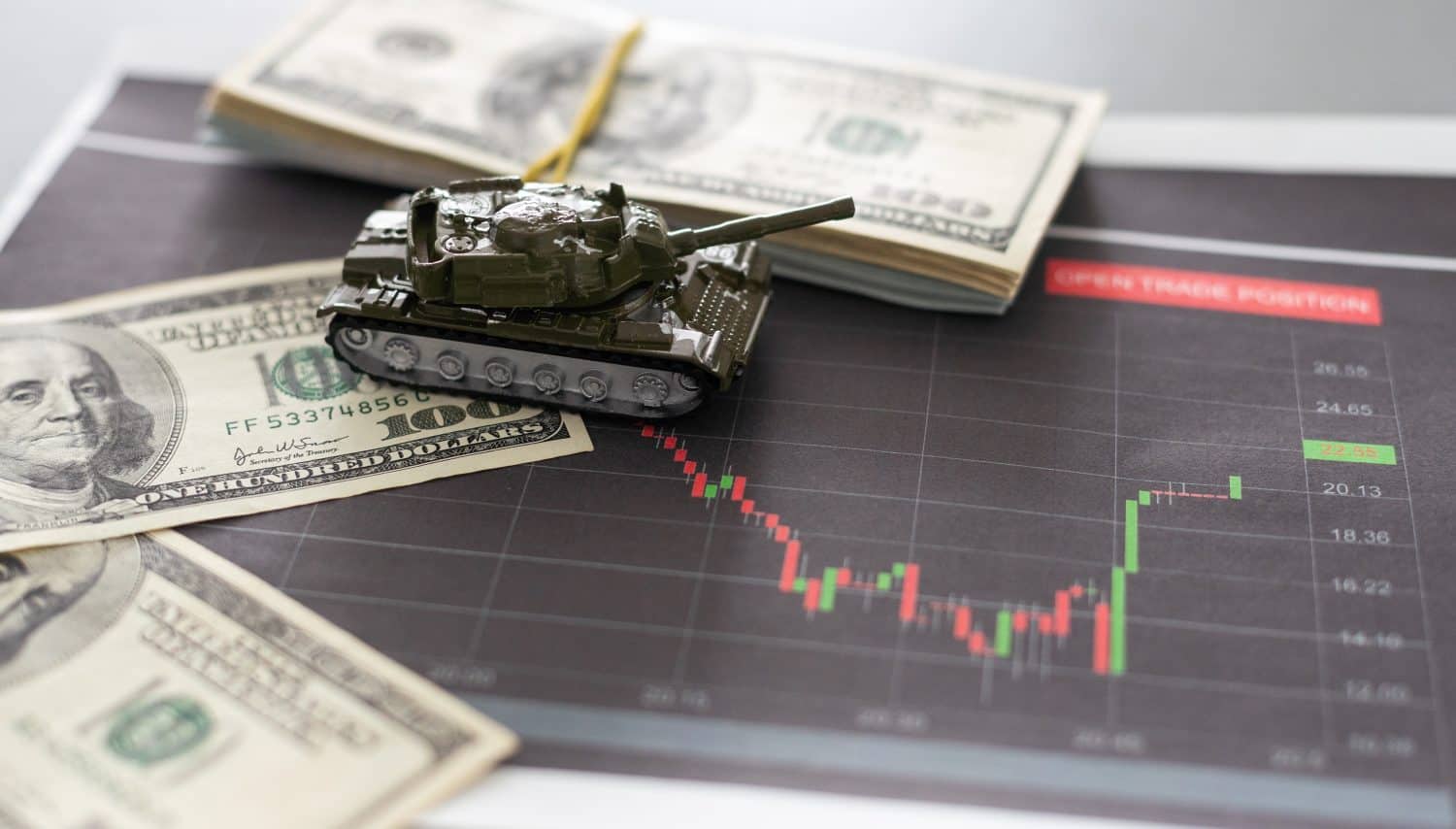
Despite Ongoing Iran War, Invesco Aerospace & Defense ETF Keeps Falling
Images
1 / 4
2 / 4

3 / 4

4 / 4
Invesco Aerospace & Defense ETF (PPA) has dropped 11.55% in the past month to $160 despite geopolitical tailwinds, with top holdings diverging sharply: Lockheed Martin (LMT) up 24.39% year to date, RTX (RTX) roughly flat at 2.38%, and Boeing (BA) down 12.85% as Iran conflict disrupted its supply chains and delayed Middle Eastern airline deliveries.

Rising Treasury yields to 4.44% are compressing valuations across the fund’s premium-priced mega-cap contractors, with PPA trading at a 33 forward P/E that assumes sustained defense spending despite the headwind of higher discount rates on long-duration government contracts.

A recent study identified one single habit that doubled Americans’ retirement savings and moved retirement from dream, to reality. Read more here.

The Invesco Aerospace & Defense ETF (NYSEARCA:PPA) is built on a straightforward premise: wars and geopolitical tension are good for defense contractors. With the U.S. in an active conflict against Iran, that premise seems more relevant than ever. Yet the fund has shed 11.55% in the past month and trades around $160, well below its early March price of $181. The gap between the geopolitical narrative and the fund's actual performance is a story worth understanding.

Invesco Aerospace & Defense ETF launched in October 2005 and holds roughly $8.2 billion in assets. Its portfolio is 88.4% concentrated in industrials, giving investors direct exposure to the biggest names in U.S. defense. The top five positions are Lockheed Martin (NYSE:LMT), RTX (NYSE:RTX), Boeing (NYSE:BA), GE Aerospace (NYSE:GE), and Northrop Grumman (NYSE:NOC). The problem is that not all of them are behaving like wartime winners.

Boeing carries a 7.78% weight in the fund as its third-largest holding. Year to date, Boeing shares are down 12.85% and have fallen 16.84% over the past month. The Iran War has complicated its business rather than boosting it: the conflict has disrupted supply chains, delayed component deliveries to Middle Eastern airlines, and driven up input costs through the closure of the Strait of Hormuz.

Read: Data Shows One Habit Doubles American’s Savings And Boosts Retirement

Most Americans drastically underestimate how much they need to retire and overestimate how prepared they are. But data shows that people with one habit have more than double the savings of those who don’t.

Lockheed Martin and RTX have held up better. Lockheed is up 24.39% year to date despite slipping 8.58% over the past month. RTX is roughly flat for the year at 2.38% year to date, though it has pulled back 7.63% recently. The divergence within the fund's own top holdings illustrates why a basket of defense names does not always behave as a unified geopolitical trade.

The biggest macro force pressing on PPA is the rise in Treasury yields. The 10-year yield has climbed to 4.44%, up 0.39 percentage points in just the past month, placing it at the 91st percentile of readings over the past year. Defense contractors are long-duration businesses: their revenue comes from multi-year government contracts, and rising discount rates compress the present value of those future cash flows.

PPA's valuation makes this pressure acute. The fund carried a price-to-earnings ratio of 37 and a forward P/E of 33 as of late February. When yields rise, high-multiple funds face the sharpest revaluation. Broad market fear has compounded this: the VIX has surged to above 31, at the 96.5th percentile of readings over the past year. Investors raising cash in a risk-off environment tend to reduce positions in funds with the largest recent gains, and PPA was up nearly 38% over the prior 12 months before the pullback.

The Federal Reserve's communication at each FOMC meeting and the monthly Consumer Price Index release will shape the yield trajectory. If yields retreat from current levels, the valuation headwind on PPA's premium-priced holdings would ease. A move back toward 4% on the 10-year would remove one of the most direct pressures on the fund's NAV.

The fund's average market cap of $129.8 billion reflects a portfolio dominated by mega-cap contractors. At a forward P/E of 33, PPA is pricing in continued contract wins, margin expansion, and sustained geopolitical demand. Any earnings disappointment from a top-five holding ripples through the entire portfolio.

The fund also generates little income for investors waiting out volatility. Its 30-day SEC yield is 0.32% and the distribution rate is 0.12%. There is no meaningful income cushion while the market recalibrates the fund's premium valuation against a higher-rate environment. Lockheed Martin, RTX, and Boeing alone account for roughly 25.56% of the portfolio, so a single earnings miss from any of them will move PPA meaningfully.

If the 10-year Treasury yield retreats and Lockheed Martin and RTX continue converting war-driven backlog growth into earnings, PPA's premium valuation becomes more defensible. If Boeing's supply chain disruptions persist and rates stay elevated, the geopolitical tailwind will keep getting overwhelmed by the valuation math.

Most Americans drastically underestimate how much they need to retire and overestimate how prepared they are. But data shows that people with one habit have more than double the savings of those who don’t.

And no, it’s got nothing to do with increasing your income, savings, clipping coupons, or even cutting back on your lifestyle. It’s much more straightforward (and powerful) than any of that. Frankly, it’s shocking more people don’t adopt the habit given how easy it is.