Press
How Trump and the oil markets move in sync: A tango in six charts
Images
1 / 8

2 / 8
3 / 8
4 / 8
5 / 8
6 / 8

7 / 8
8 / 8
It can be hard to pin down what is guiding Donald Trump a month into US and Israel's programme of strikes on Iran.

But it is clear he has an eye on the oil markets.

A word - or social media post - from the US president about his plans used to spark big moves in prices, as investors leaped on signs the conflict could escalate or come to an end.

But in recent days, traders appear to be growing more sceptical about the value of his comments.

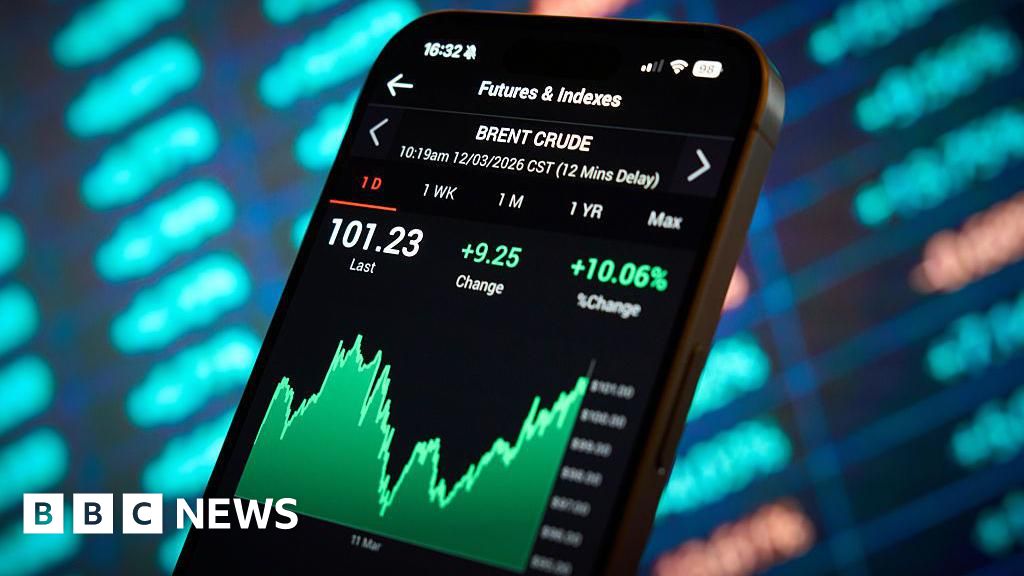
Oil was trading at around $72 a barrel before 28 February, when the strikes on Iran began.

Last week it peaked at $118 a barrel on 19 March and as of Friday afternoon was sitting at just below $112 - significantly up from its pre-war price.

Here are some moments from the last month where Trump and the markets appear to have bounced off each other - with varying effects.

Use the arrow to move to the next slide.

Jonathan Raymond, investment manager at Quilter Cheviot, says energy prices have become a proxy for wider geopolitical and economic risks, spiking when Trump's language grows aggressive and easing when his rhetoric de-escalates.

He says markets are rightfully sensitive to those signals, given the big economic risks that come with rising oil prices.

"Investors are trying to price genuine uncertainty," he says. "Markets can look skittish or confused, but what they're really doing is managing event risk in real time, with oil sitting right at the centre of that."

But it can be difficult for investors to figure out how to trade, especially since some of Trump's comments seem aimed at influencing oil prices, rather than communicating policy, says Brian Szytel at the Bahnsen Group.

"As they say, the first casualty of war is truth," he says. "I suspect some of the rhetoric back-and-forth around productive talks, and the opposite, very much are centred around just moving the price of oil."

On Thursday, minutes after US stock markets saw their biggest drop since the start of the Iran war, Trump said talks with Iran were going "very well" and he was delaying military strikes on Iran's energy infrastructure until at least 6 April.

But the oil price continued to rise.

Jane Foley, head of FX strategy at Rabobank, says market reactions are "becoming more muted" because of the "huge gap" between Trump's reassurances and the lack of acknowledgement from Tehran.

"Given the optics, many investors can not see an early end to the conflict and markets remain anxious."

Russ Mould, investment director at AJ Bell, says markets have also become accustomed to Trump "often changing tack at signs of political or stock market or economic trouble".

"There is a degree of scepticism, or even downright cynicism, creeping in at the edges," he says.

Additional reporting by Naomi Rainey

The analysts identified a Precision Strike Missile (PrSM) in footage of the strike on the southern town of Lamerd.

The planned vote is unlikely to end the funding impasse as long security lines at US airports continue.

The landmark decision in an LA court may go beyond immediate impacts on defendants Meta and YouTube.

More than a thousand miles from Washington, the conflict was a dominant topic of conversation at CPAC.

Agents found eight Molotov cocktails in the man's Hoboken home, according to court documents.