Press
Ukraine signs deal with Saudi Arabia offering drone expertise
Images
1 / 9

2 / 9
3 / 9
4 / 9
5 / 9
6 / 9
7 / 9
8 / 9
9 / 9
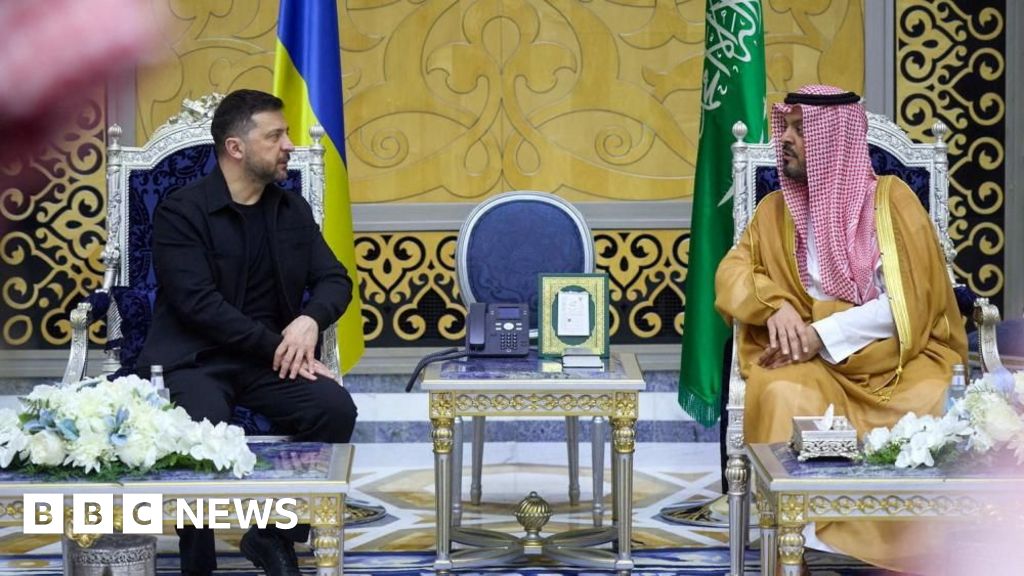
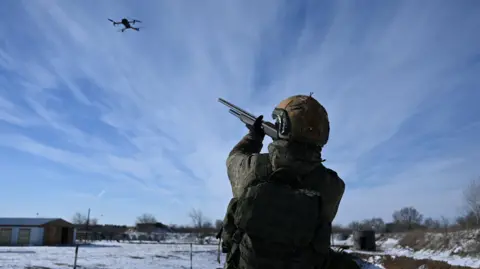
President Volodymyr Zelensky says Ukraine has signed a deal with Saudi Arabia to share its drone defence expertise and technology.

Zelensky said Saudi Arabia was facing the same type of ballistic missile and drone attacks from Iran that Ukraine had been resisting for more than four years from Russia.

"We are ready to share our expertise and systems with Saudi Arabia and to work together to strengthen the protection of lives," he said in a post on X.

Ahead of a meeting with Saudi Crown Prince Mohammed bin Salman, Zelensky posted that the defence deal laid the foundation for future contracts, technological cooperation and investment.

"Saudi Arabia also has capabilities that are of interest to Ukraine, and this cooperation can be mutually beneficial," the Ukrainian president added.

Zelensky said he had also discussed with Mohammed bin Salman reports that Russia was assisting Iran's regime, as well as developments in the fuel market and energy co-operation.

On Thursday, in a video message to the Joint Expeditionary Force, a security alliance which held a summit meeting in Helsinki, Zelensky said: "The key is not only producing new weapons - especially drones - not just technology, but also real experience in using it, and integrating it with radars, aviation, and other air defence systems. We have this experience," he added.

Zelensky said that in exchange he would be looking for assistance in defending Ukraine against the ongoing Russian invasion.

"We would like Middle Eastern states to also give us an opportunity to strengthen ourselves. They have certain air defence missiles of which we don't have enough. That's what we'd like to reach a deal on," he said in an interview with the French newspaper Le Monde.

The BBC has spoken to several Ukrainian drone companies who say they have been approached by Gulf states for help, but have not yet been given the green light by the government in Kyiv.

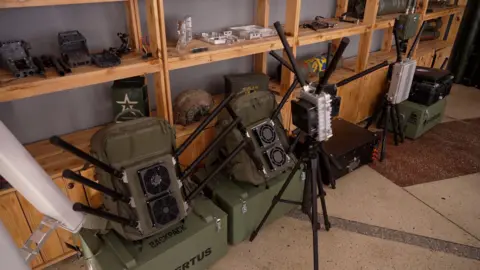
Kvertus, a Ukrainian company that makes anti-drone electronic warfare systems, said it had been approached by Saudi Arabia and Kuwait.

"We are waiting for approval to export any products. We understand that we need to coordinate with our government because it's not only about business, about selling drones, it's about politics," the company's chief executive officer Yaroslav Filimonov told the BBC.

Volodymyr Zinovsky, the CEO of Ukrainian manufacturer TAF Industries, said he was happy to wait for the government's permission to export because Ukraine's security is at stake.

"All of us are working to protect Ukraine, to stay with Ukraine and to keep Ukraine alive. This is about survival. And if we need to wait a few months, we will," he told the BBC.

Zinovsky said his company had been approached by representatives of Saudi Arabia, Qatar, the United Arab Emirates and Kuwait, but told them to discuss this with the Ukrainian government.

Media reports suggest that the US is now considering diverting arms meant for Ukraine to the Gulf because of the war with Iran, making a drone deal even more crucial for Ukraine.

The Washington Post quoted sources as saying that the Pentagon is considering diverting weapons intended for Ukraine to the Middle East as the war in Iran depletes some of the US military's most critical munitions.

Asked about the report on Thursday, President Trump said the US often redirects weapons, observing: "We do that all the time. Sometimes we take from one, and we use for another."

Zimbabwe says it is engaging the Russian government to repatriate bodies and bring home those still alive.

The incidents occurred on the same night that Ukraine launched a massive attack on Russia's port of Ust-Luga, near the Estonian border.

Cities across Ukraine were hit, with local officials reporting at least eight people killed and dozens injured.

Officials said the attacks were among the worst in ten days, with damage reported in eleven regions across the country.

The suspect is a 21-year-old local resident who claims he was blackmailed and forced to plant explosives.