yahoo Press
Trump’s war in Iran threatens to topple the dollar
Images
1 / 5
2 / 5

3 / 5

4 / 5
5 / 5
The United States is displaying its military prowess in the Middle East, but its might is underpinned by another strength: financial dominance.

Iran’s leaders have long hated the hegemony of the US dollar in global trade and markets, a status that brings huge benefits to America in the form of cheaper borrowing and wide-ranging sanctions powers.

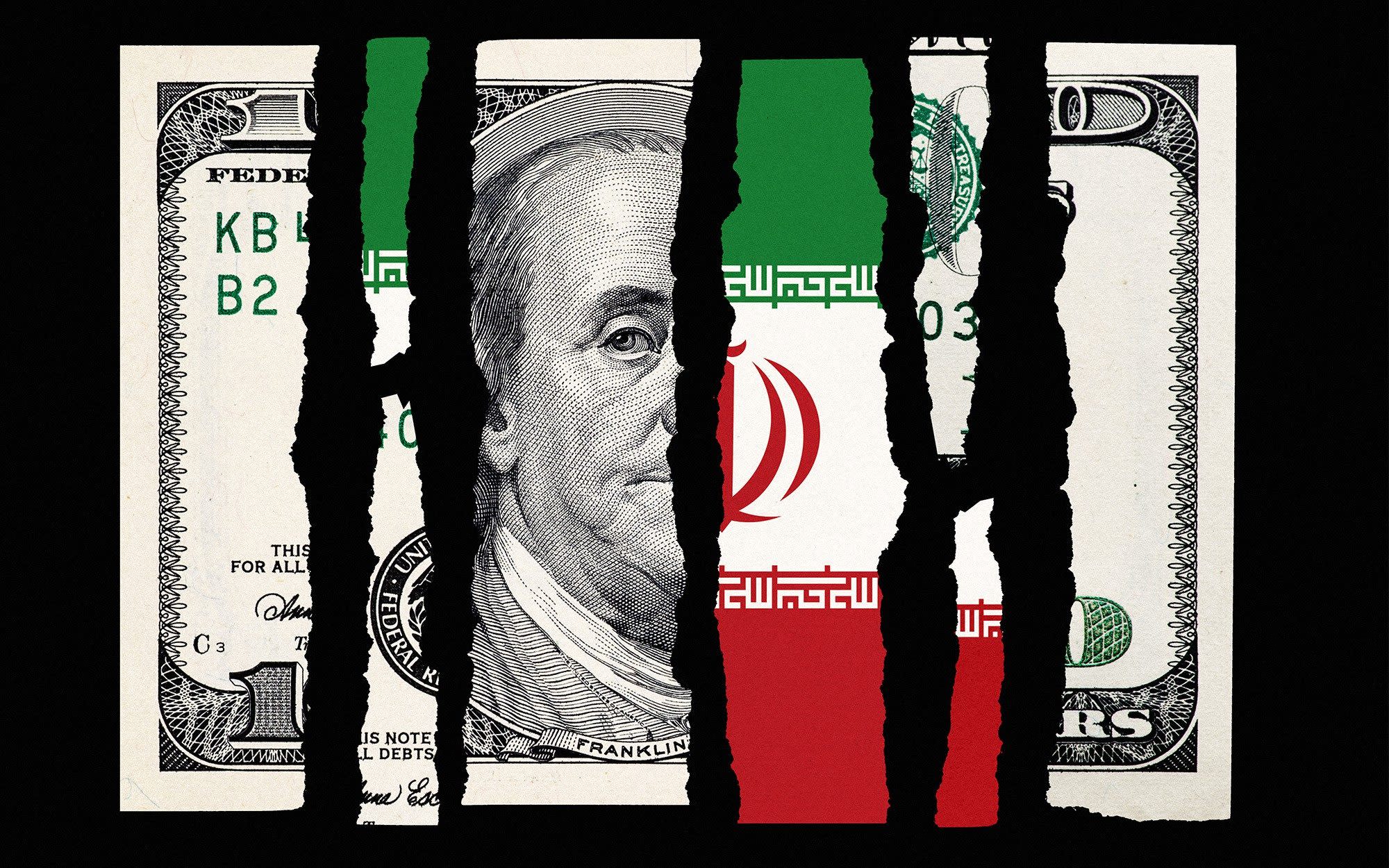
Now, Tehran is trying to leverage the Gulf conflict to undermine the dollar.

“The Strait of Hormuz is our iron hammer for breaking dollar supremacy,” Rasul Bakhshi Dastjerdi, a member of Iran’s parliamentary economics commission, said on Monday.

He has proposed that tankers be allowed to pass through the Hormuz only if their oil cargoes are priced at least partially in Iranian rials. There have been separate reports that the Iranians are allowing vessels through if their cargoes are priced in Chinese yuan.

Such requirements represent an attack on one of the foundational pillars of America’s economic exceptionalism. Global oil trade is predominantly denominated in dollars, underpinning demand for the greenback.

But the Iranians may not need to try too hard. Donald Trump’s war in the Middle East may pose an existential threat to dollar dominance in and of itself.

The conflict is undermining the credibility of America’s security umbrella in the Gulf. As a result, the war could drain huge sums from these countries’ dollar investments as they redirect investment into defence. High oil prices could significantly reduce demand for the commodity.

The war has brought “a significant challenge for the petrodollar”, Deutsche Bank foreign exchange strategist Mallika Sachdeva warned in a client note this week.

“The conflict could be the catalyst for erosion in petrodollar dominance and the beginnings of the petroyuan,” she says.

“If fault lines are further exposed, there could be significant downstream effects on the dollar’s use in global trade and savings, and the dollar’s role as the world’s reserve currency.”

The petrodollar – the fact that the world’s most traded commodity is priced in US dollars – became the status quo after the US and Saudi Arabia signed a landmark agreement in 1974.

Saudi Arabia agreed to sell its oil in dollars and invest its profits in dollar-denominated assets in exchange for American security guarantees. The rest of the Gulf Cooperation Council (GCC) states followed, and the dollar became the norm in the oil market.

Because oil is traded in dollars and is so essential to the global economy, economies have a strong incentive to invest their savings in dollar-denominated assets. Businesses want to save their money in the currency that they need to trade in. Central banks need to build dollar reserves to function as lenders of last resort.

“The world saves in dollars in large part because it pays in dollars. The dollar’s dominance in cross-border trade is arguably built on the petrodollar,” says Sachdeva.

The dominance of the dollar in global trade drives strong foreign demand for US Treasuries, as American government bonds are known, making it relatively cheap for the US government to borrow money.

“The huge strategic importance of the Middle East to the dollar’s role as the world’s reserve currency should not be underestimated,” says Sachdeva.

Trump’s war in the region is challenging the assumptions that underpin the dollar’s dominance. The world began trading oil in dollars because Gulf countries were assured the US would protect them. However, the US-Israeli strikes on Iran have provoked attacks on Middle Eastern nations not involved, from Saudi Arabia to Qatar.

“The current conflict has arguably shaken some core foundations of the petrodollar regime: the security-for-oil-pricing arrangement,” says Sachdeva.

US security guarantees have also done little to stop Iran from blockading the Strait of Hormuz, strangling the Gulf’s oil and gas exports.

“The current conflict may expose further fault lines by challenging the US security umbrella for Gulf infrastructure and the maritime security for global trade in oil,” says Sachdeva.

Navin Girishankar, president of economic security and technology at the Centre for Strategic & International Studies (CSIS), says: “Iran is fighting the global economy.”

This can be seen in Tehran’s vow to target energy infrastructure, desalination plants, data centres and financial hubs if the conflict escalates.

“If they are hit either through kinetic action or through cyber action, that begins to undermine the confidence that these countries have that the US can vouchsafe their security,” says Girishankar.

“The longer this continues, the more it will erode that credibility.”

A loss of confidence in American security guarantees could open the door for Gulf states to reduce their investments in dollar assets and trade oil in alternative currencies.

Ray Dalio, a billionaire investor, said on his Substack last week that everything hinged on whether Iran could maintain control of the Strait of Hormuz. If it does, the US will have lost the war and, with it, the credibility that underpins its economy.

Dalio warned: “When the world’s dominant power that has the world’s reserve currency is overextended financially, and it reveals its weakness by losing both military and financial control, watch out for allies and creditors losing confidence, the loss of its reserve currency status, the selling of its debt assets and the weakening of its currency – especially relative to gold.”

It All Comes Down to Who Controls the Strait of Hormuz: The "Final Battle" by Ray Dalio

I have found that most wars are filled with big disagreements about what is likely to happen and big surprises.

Read on Substack

Girishankar argues that the US may have a lifeline – what he calls the “compute dollar”.

“The risks around the petrodollar are big, but that’s not the game for the next 10 years,” says Girishankar. In the age of the artificial intelligence revolution, what may soon matter more is the currency in which computer chips and AI-enabled services are traded.

“If that is settled in US dollars, that is the successor to the petrodollar system,” he says.

But here, of course, the US also faces major competition from China.

For now, the petrodollar is protected by the Gulf states’ heavy investment in US dollar assets.

Middle Eastern countries have $2tn in central bank US dollar reserves, $6tn in sovereign wealth funds, and $1tn in public pension funds, according to Global SWF. Exiting or shrinking such positions cannot be done overnight.

The longer the war drags on, however, the more money Gulf states will need to repair their infrastructure and build up their own defences. Energy export revenues will also be reduced further.

As a result, Gulf countries may need to spend their dollar savings to support their economies.

The foundations of the petrodollar regime were already under strain before the war began, says Sachdeva.

Since America’s shale revolution made the US a self-sufficient energy power, the Middle East has pivoted to selling oil to Asia, which now purchases 85pc of the region’s crude. Saudi Arabia sells four times as much oil to China than the US, and China wants oil to be priced in yuan rather than dollars.

At the same time, Western sanctions on Russia and Iran have led both countries to increasingly shift their oil trade into other currencies.

Saudi Arabia has also been experimenting with non-dollar payment infrastructure, such as Project mBridge, a platform that facilitates instant cross-border payments across multiple central bank digital currencies.

In short, the infrastructure needed to sell oil in currencies other than the dollar has already been sketched out.

“In a worst-case scenario, one may see a fracturing of global oil pricing along trade routes and corridors,” says Sachdeva.

The oil transiting through Hormuz could be priced in yuan, for example, while the West continues to trade oil from the US in dollars.

Even if the world continues to trade oil in dollars, the war threatens the petrodollar’s dominance in another way.

“A bigger risk could come if the world begins to move away from globally traded oil and gas itself,” says Sachdeva.

The war has created strong incentives for countries to shift away from fossil fuels and towards more reliable energy sources. The Global South, Europe and North Asia in particular may opt for more resilient energy sources, such as renewables and nuclear power.

If the global oil trade declines and the dollar’s dominance fades with it, it will open the door for other goods to be sold in alternative currencies. That would threaten to drive up borrowing costs for the US, making it more costly for the world’s biggest economy to maintain its military dominance.

“The whole thing is not going to fall apart because of one thing, but it begins to erode something that’s built over 40 years,” says Girishankar.

“The question is, is this one of those tipping points?”

Try full access to The Telegraph free today. Unlock their award-winning website and essential news app, plus useful tools and expert guides for your money, health and holidays.