yahoo Press
Dow Jones pokes ahead as Iran optimism wavers but Nasdaq still red
Images
1 / 5
2 / 5

3 / 5

4 / 5
5 / 5
"Following Monday's extreme volatility, markets have markedly calmed down as investors await the next developments", says Axel Rudolph, Chief Technical Analyst at investing and trading platform IG.

"Brent crude rose to around $100 a barrel, recovering part of the prior session’s sharp drop, as volatile trading persisted amid heightened Middle East tensions, growing risks of wider regional involvement and ongoing uncertainty over the Strait of Hormuz.

"The greenback climbed amid fading hopes of Fed rate cuts as the ongoing war in the Middle East and limited progress on de-escalation supported safe haven demand for the US currency.”

U.S. business activity showed mixed momentum in March, according to preliminary S&P Global PMI data.

The flash manufacturing PMI came in at 52.4, above expectations of 51.3, indicating stronger-than-anticipated expansion in factory activity. In contrast, the services PMI registered at 51.1, slightly below the 51.5 forecast, signaling a modest slowdown in the services sector.

The flash composite PMI stood at 51.4, pointing to continued overall expansion in private-sector activity, though at a moderate pace.

Readings above 50 indicate expansion, suggesting the U.S. economy continued to grow in March despite divergence between manufacturing and services.

Wall Street opened lower, with the Dow Jones down 0.8%, the S&P 500 falling 0.7% and the Nasdaq slipping 0.9% in early trade.

Losses on the S&P were led by consumer and tech names, with Estée Lauder dropping 7.4%, Fair Isaac down 5.8% and CrowdStrike off 5%, while Datadog and Gartner both fell around 4.7%.

Retail and consumer stocks were also weaker, with Dollar General down 4.5% and Best Buy off 3.8%.

On the Dow, Salesforce was down 4% to lead the declines, followed by IBM, Home Depot, Boeing and Microsoft.

There were seven names in green, with two names up more than 1%: Verizon Communications and Chevron.

US futures were pointing lower ahead of Tuesday's open, as early optimism over a potential Iran ceasefire fades following a flat denial from Tehran that any talks have taken place.

The Dow Jones, S&P 500 and Nasdaq all off around 0.3%.

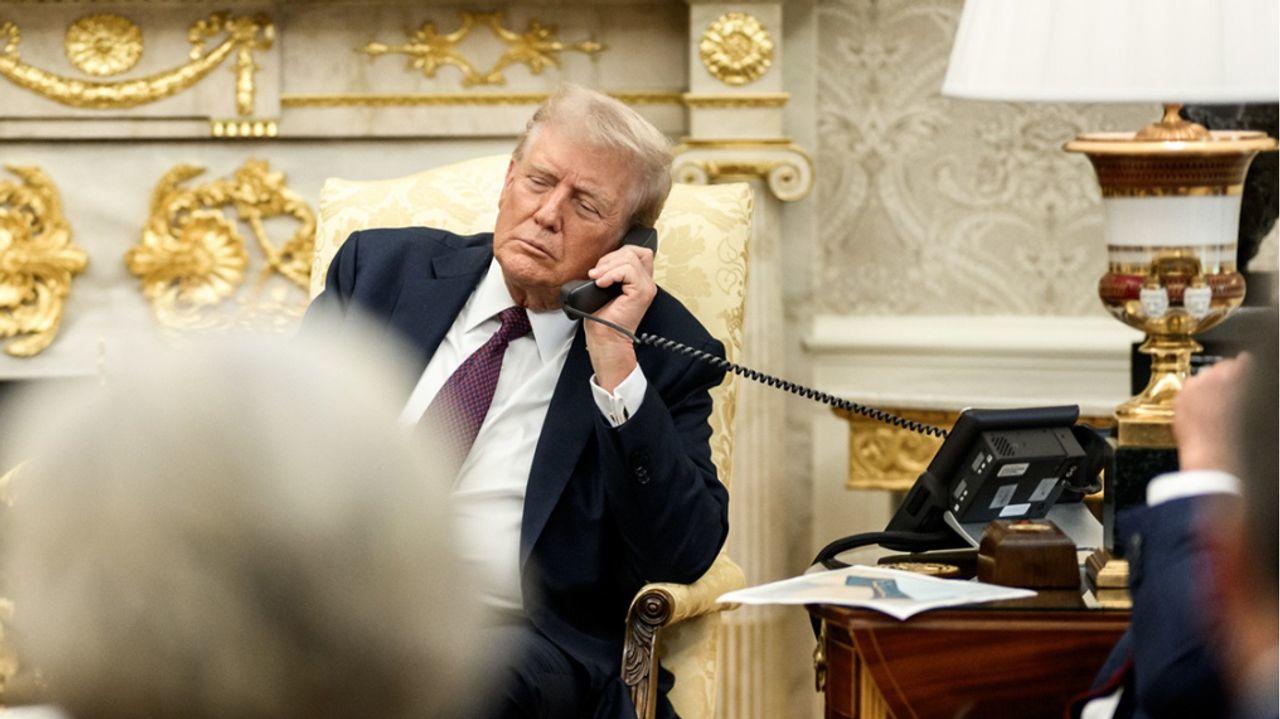
Markets swung sharply at the start of the week after President Donald Trump said the US and Iran had held "very good and productive conversations" and announced a five-day pause on military strikes, even though Iran soon snapped back that there had been "no direct or indirect contact" with the US.

The Dow and Nasdaq both climbed 1.4% and the S&P gained 1.2%, with the small-cap Russell 2000 outperforming with a 2.3% jump.

WTI crude dropped back below $90 a barrel after Trump's news, after skirting around $100 earlier. Today oil is back up to $91.60 a barrel.

Markets are wondering how much faith to put in Trump's comments, after Iran's parliament speaker Mohammad Bagher Ghalibaf poured cold water on his claims, posting that "no negotiations have been held with the US" and accusing Washington of using "fake news to manipulate the financial and oil markets."

Bond markets have been roiled by Trump’s claims, with US Treasuries rallying steeply on news that talks were progressing, but later sold off again "as the market is unsure of the status of any talks on Iranian denials of Trump’s claims", according to analysts at Saxo.

The benchmark US 2-year treasury yield posted a high above 4.00% before dropping as low as 3.79% and then rebounding to near 3.90% in the Tuesday session. The benchmark 10-year yield saw a similar pattern, rising as high as 4.44% before falling to 4.30% and then rebounding to 4.388% currently.

Friday is shaping up as the next critical moment, with a US naval group including the USS Tripoli and USS New Orleans arriving in the Gulf region and Trump's five-day ceasefire on attacks on energy facilities coming to an end.