yahoo Press
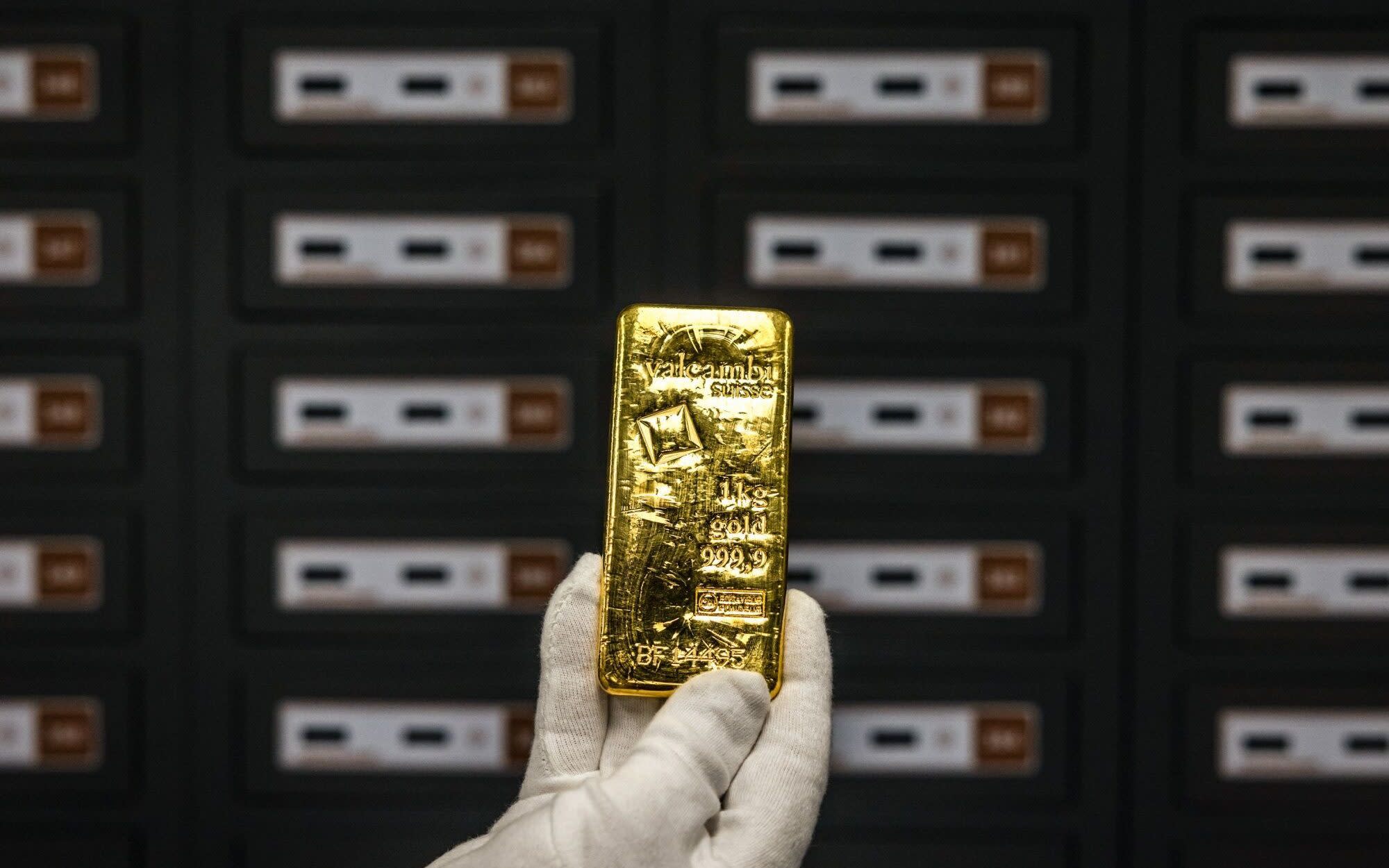
Why is the price of gold in free fall?
Images
1 / 5
2 / 5

3 / 5

4 / 5
5 / 5
Have you been burnt by falling gold prices? Email us at money@telegraph.co.uk*.

Gold is a sure-fire bet to protect against uncertainty. When everything else is falling, gold rises. At least, that’s the received wisdom.

But ever since the US and Israel launched a series of unexpected strikes on Iran, gold has fallen in value. As the conflict worsened and dragged more countries in the region into the fray, the metal fell further. And now the Strait of Hormuz is effectively closed, trapping a fifth of the world’s oil and gas, gold is losing its lustre.

From a peak price of $5,415 (£4,051) as the war began, gold has been on a steady decline. On Monday March 16, gold briefly crossed below $5,000, before settling. But on Thursday March 19, the metal dropped significantly, losing 10pc in a single day to hover just above $4,500.

It has since sunk even further, trading at around $4,250 on the morning of Monday March 23, pushing the metal into bear market territory as the situation continues to deteriorate. Since its peak at the end of January, the price of gold has fallen more than 20pc, the technical definition of a bear market.

Fears that an energy inflation shock could be more severe and last much longer than previously thought has seemingly driven a sharp change in investor behaviour.

Oil prices jumped above $114 a barrel on Monday – up more than 60pc since the end of February – and there are serious concerns that Brent crude could hit $200.

This has all meant that gold has not been the safe haven it is generally thought to be.

The metal began this crisis in a bad place, with its price already overextended, having broken several records in the first two months of this year.

It had already corrected once this year, with a heavy decline at the end of January, but recovered quickly.

“It hasn’t been quite that safe haven asset that one might have expected,” said Darius McDermott, of Chelsea Financial Services.

One reason for this is that investors are chasing liquidity – common at the start of crises, when being able to react quickly to opportunities and risks is valued very highly.

But why sell gold? It’s a broad and deep market that is filled with investors of all sizes, from the smallest retail investor to the largest institutions, meaning there is always a buyer somewhere.

“Gold is one of those assets that is actually quite easy to dispose of,” Rob Morgan, of Charles Stanley Direct, said.

“A lot of people have been long gold, a lot of people have accumulated gold, especially in Asia, and that includes central banks as well. In a crisis, you get a bit of an unwind of what’s done well.”

But because many investors already held gold, there’s limited scope for new safe haven seekers, subduing the price – and given gold’s glittering run in recent years, many are taking profits from their best performing asset.

Matt Bance, a portfolio manager at T. Rowe Price, said: “Instead, investors have used the volatility to take profits and reduce exposure across previously strong-performing assets.”

Another downward pressure is gold’s relationship with the dollar, which tends to be inversely correlated.

Mr McDermott said: “Gold had done very well while the dollar weakened, particularly again last year, and that trade had continued into the start of this year. But at the start of the conflict, the dollar started to reverse against most currencies.”

Chris Beauchamp, chief UK market analyst at trading platform IG, added: “Gold’s haven status is not all it seems to be. In reality it is dependent on the dollar.

“The dollar’s strength has sucked the life out of the precious metals trade, with the move amplified by a deleveraging of gold positions across the globe.”

Gold also struggles to perform as interest rates rise, as its appeal is crowded out by even safer assets, such as government bonds, which also offer a high yield.

With the potential for an inflationary spiral as a result of the ongoing conflict, traders have begun to price in rates hikes this year, souring gold’s potential.

Will McIntosh Whyte, a fund manager at Rathbones Asset Management, said: “Gold can be a good store of value over the very long term, but it is not the inflation hedge many people think it is, because higher inflation means interest rates are going the wrong way – gold prefers interest rates headed down.”

But Cosmo Sturge, of precious metals-focused manager Baker Steel, said that analysts were often too quick to write off gold.

He believes the current conflict in the Middle East is likely to put the US in an even more difficult financial position – one of the key themes that had pushed up the gold price.

He said: “This will be a temporary headwind for gold. The core reasons for holding gold have been strengthened by this conflict. I think we will see a pretty strong rally for gold and gold miners coming out of this conflict.”

Any canny investors looking to take advantage of this dip should be cautious, however, given that further volatility seems almost inevitable.

Jason Hollands, managing director of Bestinvest, said: “Be very careful about making big changes to portfolios or investment decisions in a situation that is lurching all over the place from day to day.

“The best course of action is inaction – to sit tight and not make hasty decisions based on short-term moves and events, especially in a fast moving and fluid situation.”

*Please note that by submitting your content to us, you are consenting to The Telegraph processing your personal data where required by law. For further details, please see our Privacy Notice.