Press
Student loans: Graduates, parents and students speak to BBC about their experiences
Images
1 / 11

2 / 11

3 / 11
4 / 11
5 / 11

6 / 11
7 / 11
8 / 11
9 / 11

10 / 11
11 / 11
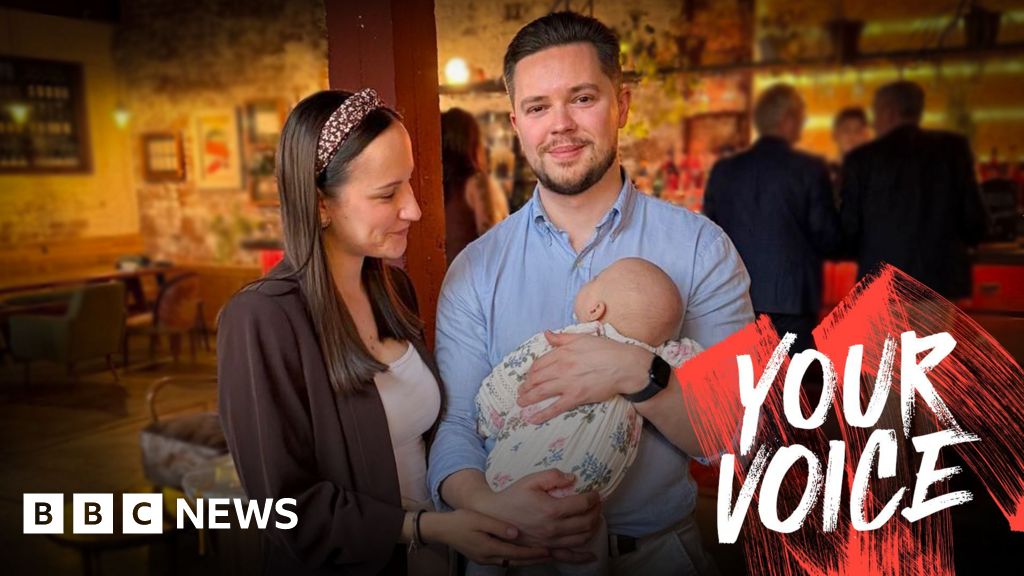
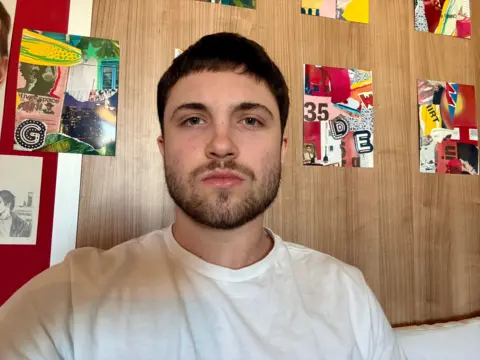
When it comes to student loans, graduate Ben Richmond says "hindsight is a wonderful thing".

Richmond contacted the BBC after seeing a report about presentations delivered to thousands of schools in England between 2011 and 2017, which compared monthly loan repayments with a £30 phone contract.

Richmond is "really pleased" with where he's got to in his career in recruitment. But he says he has colleagues doing just as well who didn't go to university, so he questions whether he needed his degree.

He says if he'd had a better understanding at the time of how much his long-term loan repayments were going to be, he "might have taken a step back and thought, 'Is this really what I want to do?'"

Richmond - who started university in 2014 - took out a Plan 2 student loan, the type of loan available to all students starting university in England between September 2012 and July 2023. They are still used in Wales.

The loans have been criticised by campaigners over their high interest rates and the government's decision to freeze the repayment threshold at  £29,385 - above which graduates pay 9% of their salaries - for three years from 2027.

During that period the threshold won't rise with inflation, meaning graduates will start repaying sooner and those earning above the threshold will see a greater proportion of their salary subjected to student loan repayments than they would have done before the freeze.

Richmond says the talk at his school promoting student loans influenced his decision to go to university.

Despite progressing in a successful career, after graduating with more than £50,000 of debt, he now says paying hundreds of pounds every month in loan repayments is "quite painful".

Richmond's income varies from month to month, but he says it's very rare he pays less than £200 per month back - in "stark contrast" to the mobile phone contract example he was told about in the talk at his school.

"One year I paid off £4,300, but the interest was £3,600," he says, "so in reality the only dint I made in that was £700."

Being in a higher tax bracket and on a Plan 2 student loan means his interest rate is higher, at 6.2%.

Those on Plan 1 student loans or the newer Plan 4 and Plan 5 loans pay the Retail Prices Index (RPI) interest rate of inflation, which is currently 3.2%, while Plan 2 interest rates vary, increasing with income.

Plan 2 loans are written off after 30 years - with any remaining debt wiped - but newer Plan 5 loans have terms of 40 years.

Richmond says he still owes £39,000 - money he believes could be better spent elsewhere.

"Especially now that I've got a daughter and a young family," he says.

"I wasn't naïve to the fact that I would be coming away with a lot of debt, but I think it was more the way they portrayed it to you, rather than the amount."

Graduates who delivered talks about student loans to school pupils a decade ago on behalf of the government at the time, were instructed to "avoid words [or] phrases like debt", with one since telling the BBC he felt he had "sold his soul to the devil".

The Department for Education now says it is vital students are given clear and accurate information so they can make informed decisions about their future.

It says the presentations were delivered under previous governments, and that current ministers had focused on making the system fairer, including by reintroducing targeted maintenance grants to support students from lower-income backgrounds.

Plan 2 loans were replaced in England by Plan 5 loans in 2023. These have different terms, but loans also vary according to where you live. As well as having different interest rates, students with Plan 5 loans will start to pay them off after earning above £25,000 - a lower salary threshold than Plan 2.

Official "student finance tours" given on the then-government's behalf ceased in 2017, and the Student Loans Company now delivers standalone information and guidance events arranged by schools or colleges, but says they "do not provide financial advice or promote student finance".

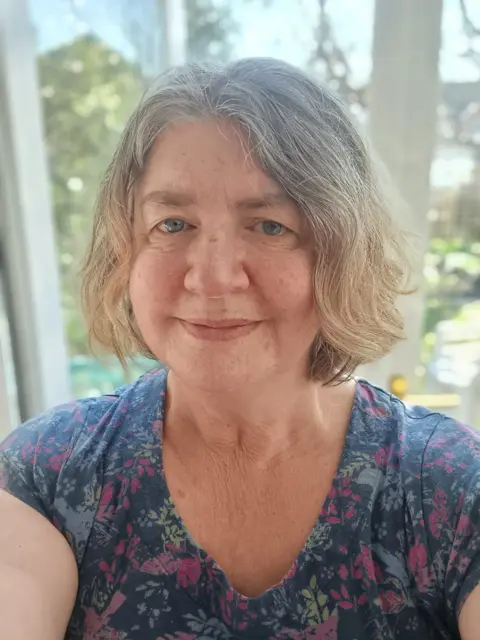
A decade on from those school presentations, Rachel Roland, a mother of two, also contacted BBC Your Voice to express concern that certain aspects of student loan repayments continue to be downplayed.

Roland says she saw the BBC's student loans reporting on the same day she attended a talk given by a representative of the Student Loans Company at her daughter's sixth-form college.

She says the speaker compared the price of repayments to taking a friend out to Nando's and paying for both meals, with £72 being roughly what you might expect to pay.

Roland says she understands the need to provide a relatable example, but "at the same time, it does, to me, trivialise it".

The Student Loans Company has apologised, saying the comparison was "completely inappropriate".

Roland is worried about how much future potential repayments could be for her daughters.

Her younger child is currently considering whether to go to university after her older sister recently dropped out of her course, having struggled as a result of her ADHD. She left university with about £20,000 of debt.

"We've learned from Plan 2 that you can't rely on things to stay the same 10 years later, 15 years later," Roland says, referring to the government's decision to freeze the salary threshold for Plan 2 borrowers.

"That really worries me to put my children in that position."

Despite the recent criticism of student loans, the Higher Education Policy Institute (Hepi) says the public "hugely overestimates" how many graduates regret going to university.

In its annual report published last summer, Hepi said 8% of graduates say they wouldn't go to university if they could choose again, while 16% say their university debt has negatively impacted their lives.

An inquiry into the student loans system in England has recently been launched by MPs. Speaking earlier this week Chancellor Rachel Reeves admitted the student loans system was "broken", but said it was "not front of the queue" of issues the government wanted to fix.

Not all students think the student loans system is unfair.

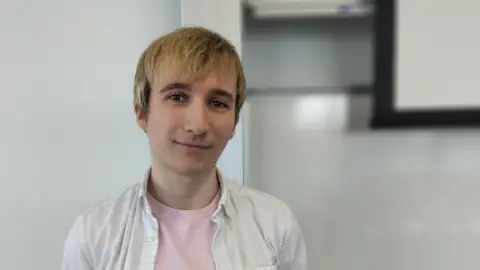
Adam Dunas, a mature student at Durham University, started his university course in 2023, after working in IT and pursuing professional gaming.

He says he has taken out a Plan 5 student loan, despite having enough money saved not to need one, as he thinks he's better off with his money earning interest in savings instead.

As with all Plan 5 student loans, his debt will take on interest at the RPI rate of inflation, currently 3.2%.

Dunas says he thinks he will make more by keeping his savings in an investment account, like a stocks and shares ISA, which he has been saving in for the last seven or eight years.

He had delayed his university plans due to Covid, but says he was "very happy" with how the student loan system was then too.

He says he believes the system has improved access to university for disadvantaged students, and that it's a "pet peeve"  to hear discussions of it being  a "crippling loan", or like a mortgage.

Instead, he sees it as a tax for getting ahead, and proving you have skills through a degree that others don't, opening up the job market.

"The big focus is always on the big numbers because it looks scariest to most people," he says.

Dunas says he debates the topic a lot with friends, and doesn't think the repayment thresholds are an issue, saying repayments are relatively small unless you are earning a lot.

"My friend who was paying £600 a month was earning £120,000, for example," he says, adding that the friend needed a computer science degree to get into that role.

"At that point, £600 a month isn't really that much compared to when you think about the median wage in the UK.

"The amount of extra money you're earning more than makes up for it."

Additional reporting by Hazel Shearing

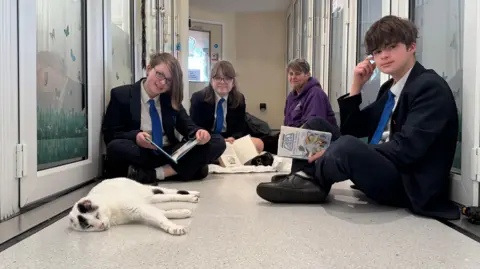
Some students are improving their literacy skills by reading to rescue cats at the GSPCA.

Christian Lotz, a first-year student at the University of Kent, returned to Jersey after the outbreak.

Sophia Speirs nearly died from Meningitis B after falling ill while studying at university in 2023

Gwen and Mia are among thousands of young people each year who opt to take a gap year before university

Charlotte Briggs has applied for hundreds of jobs and cannot find work, despite achieving a 2:1 degree.