Press
School phone bans not enough to cut screen time alone, study suggests
Images
1 / 9

2 / 9
3 / 9

4 / 9
5 / 9
6 / 9

7 / 9

8 / 9
9 / 9
Strict phone bans at school are not enough to tackle the harmful effects of children's screen time alone, new research suggests.

First seen exclusively by the BBC, a new study from academics at the University of Birmingham found strict phone bans were not a "silver bullet", and in some cases did not stop teenagers prioritising screen time over sleep, homework and physical activity outside school.

Across the UK, there has been growing pressure on the government to bring in a statutory ban of smartphones in schools.

The Department for Education (DfE) says phones "have no place in classrooms", adding that its non-statutory guidance helps schools to "implement phone-free policies effectively".

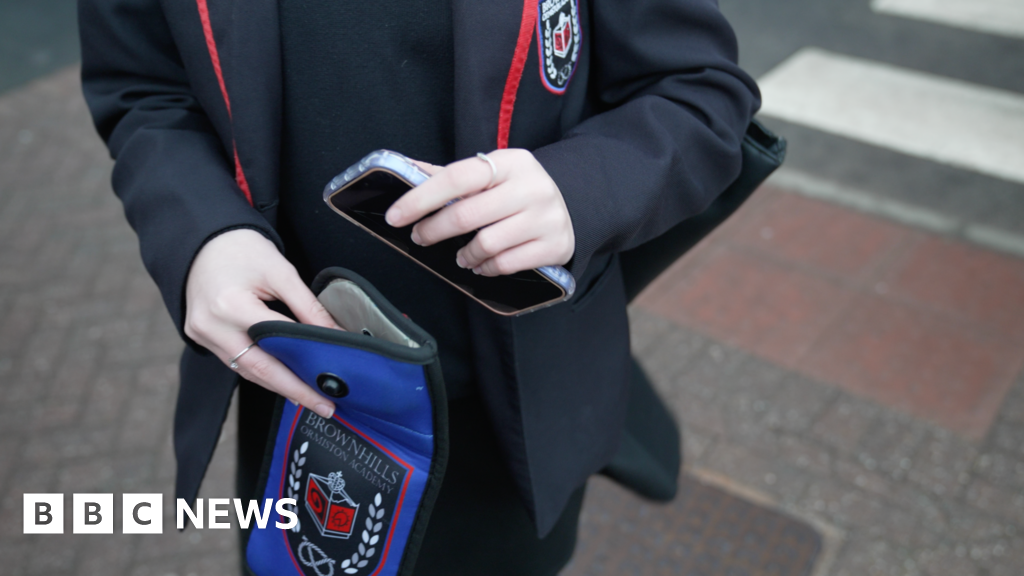
At Brownhills Ormiston Academy, students lock their smartphones away in pouches at the beginning of each school day.

They were brought in last October after over a decade of the school having a "not seen, not heard" policy.

Ross Doodson, the principal, says the pouches add "another layer" of protection.

The signal-blocking pouch removes the "temptation" for students, he says, allowing them to be "absolutely focused on learning", as well as "face-to-face contact and social interaction".

Brownhills is not alone in prohibiting smartphones at school. Last year, a study from the Children's Commissioner in England found 90% of secondaries and 99.8% of primaries have some policy in place with the aim of reducing distractions in lessons, improving friendships and encouraging students to be more active.

Clare Fernyhough, co-founder of the campaign group Generation Focus, which wants a statutory smartphone ban in schools, says phones make it "impossible for children to focus" and that they pose a "huge safeguarding risk".

"They have no place in schools," she says.

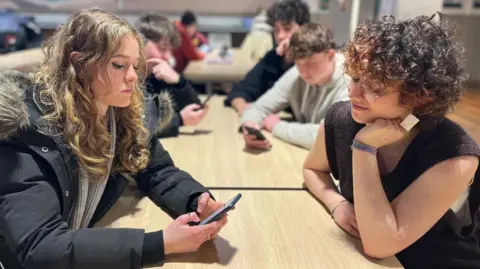
Some students at Brownhills believe the time they spend on their phones outside of school has remained high since the pouches were introduced.

Year 10 pupil Freya says her screen time has increased "a little bit", but says "it's not getting in the way of anything".

She says her parents' rules around phone use help with that.

"Before you go on your phone, you need to get everything done first, like your homework, your revision and things like that," she says.

"And especially doing active clubs first instead of going on your phone because activity helps your mental health a lot."

Thomas, also in Year 10, similarly believes that sometimes he is "making up time" on his phone when he gets home from school.

"But at the same time, you've got to socialise with the people around you because that's more important," he says.

Both Freya and Thomas agree that the ban helps them concentrate on class and engage more with friends at school.

Researchers at the University of Birmingham carried out in-depth interviews with pupils, parents and teachers across seven secondary schools to understand how more, or less, restrictive mobile phone policies shape young people's wellbeing.

It is the latest study from the SMART Schools project, and suggests a "messy, mixed picture" where neither banning phones nor allowing them freely is fully beneficial to pupil wellbeing, with each approach solving some problems while creating others.

Prof Victoria Goodyear, chief investigator of the SMART Schools study, says the policies are not a "silver bullet".

The study suggests restrictive policies boost face‑to‑face interaction at school, but can also contribute to some pupils using their phones more at home, affecting sleep and physical activity.

It also found that sometimes online conflicts that begin on social media or WhatsApp escalated during the school day.

Although more permissive policies can help some pupils feel less isolated, the study also found they could increase distractions and cases of online conflict.

Goodyear says the study does not say "don't ban phones in schools", but that "school phone policies alone are not enough to tackle the harms associated with phones and social media use".

The study says issues around phones and social media use, whether that's bullying, arguments, or distractions to learning, still occur with those policies in place.

"They don't eliminate them. They just change when they happen and how they appear," Goodyear says.

"What it tells us is we actually need to just do more than ban phones. We need to be thinking about how phone policies cut across in school and outside the school context."

In January, the DfE strengthened its existing non-statutory guidance, advising schools that they should be phone-free during school hours.

A DfE spokesperson said: "Mobile phones have no place in classrooms. Without the distraction, children learn better and teachers can teach.

"Our guidance helps schools implement phone-free policies effectively, with practical case studies showing how schools across the country are making this work without it becoming a burden on staff time.

"The education secretary has written to head teachers to ask them to ensure policies are enforced consistently, and Ofsted will examine both schools' mobile phone policies and how effectively they are applied when judging behaviour during inspections."

Last month, the House of Lords backed an amendment to the Children's Wellbeing and Schools Bill to ban smartphones in schools.

The government is also currently consulting on banning social media for under 16s in the UK as a part of a series of measures which it says are intended to "protect young people's wellbeing."

Conservative leader Kemi Badenoch has already said her party would introduce both bans if it was in power.

Back in Walsall, Doodson says his main focus is what goes on inside the school gates.

"I know that our families will be working really hard to make sure that there's a sensible phone usage at home," he says.

"They're aware of some of the issues with social media and phone use, so they'll be looking to deal with that at home."

A consultation found staff and teachers were in favour of restricting pupils' phone usage during the day.

Campaigners are supporting headteachers to adopt a stronger approach to their policy on smartphones.

Sir Mark Rowley says manufacturers have not done enough to make phone thefts unprofitable to criminals.

Exasperated mobile phone users in Itteringham say what the jumbled up letters spell out is very apt.

A deal has brought forward the date for technical work so customers can keep their number.