Press
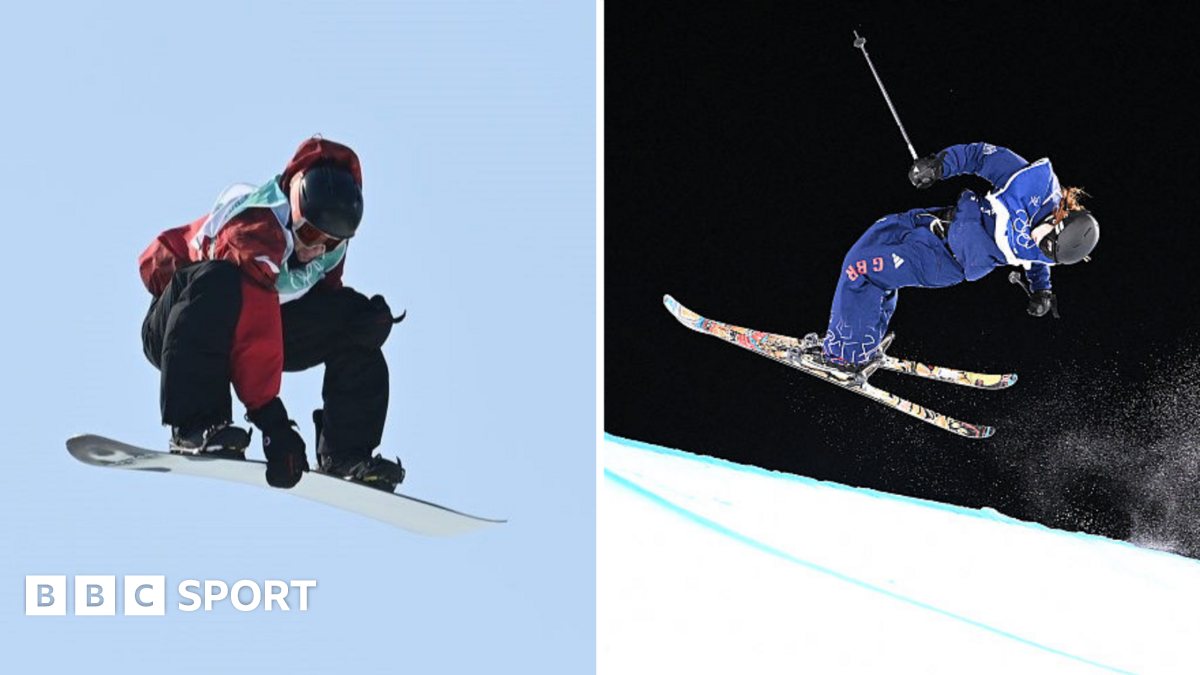
Winter Olympics: How are points scored in snowboard and skiing big air?
Images
1 / 20

2 / 20
3 / 20
4 / 20
5 / 20
6 / 20

7 / 20

8 / 20

9 / 20

10 / 20
11 / 20
12 / 20

13 / 20
14 / 20
15 / 20

16 / 20

17 / 20

18 / 20

19 / 20

20 / 20
Big air is the newest discipline in Olympic snowboard and skiing, having made debuts at the 2018 and 2022 Winter Games respectively.

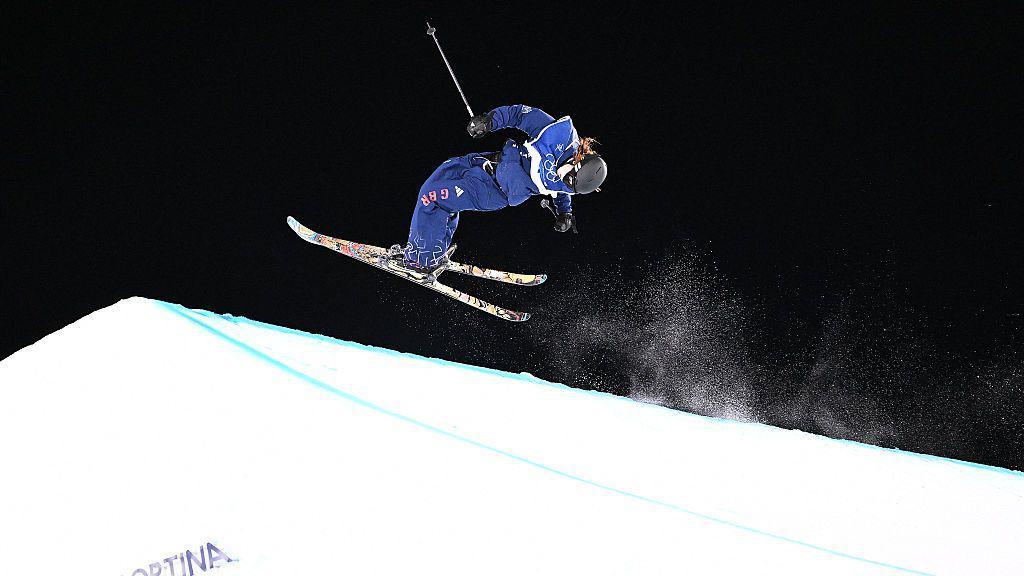
Athletes ride down a ramp and perform one trick when they launch into the air and land in a designated zone.

There are three jumps to execute, with the scores from two highest-scoring tricks combined to determine the athlete's overall ranking.

But for both ski and snowboard big air, athletes can't simply perform the same trick three times - the top two scores from two 'different' tricks are what get combined.

For example, in ski big air the athlete can vary the directions in which they spin: left, right, switch left and switch right.

There are minimum height and length specifications for the jump to be Olympic standard. The big air structure at Milano Cortina's Livigno Snow Park has a total length of 225 metres, a peak height of 40 metres and an average gradient of 28%.

Athletes who qualify for either big air or slopestyle will also compete in the other discipline.

We have already seen the snowboard big air medals awarded - so how does it work in skiing?

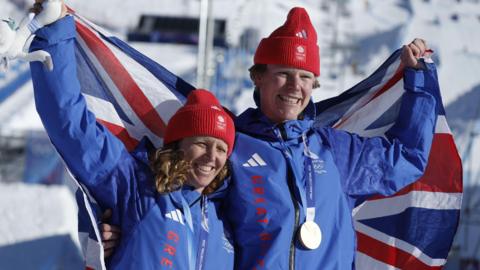
Three team GB athletes will participate in big air at the 2026 Games

This video can not be played

How do athletes achieve big points in big air?

Big air, for both snowboard and skiing, is scored under four categories: difficulty, execution, amplitude and landing (DEAL):

Difficulty: Athletes are rewarded for doing brand new tricks. Generally, more spins and flips, the more points athletes will pick up

Execution: Points are scored by how an athlete maintains control of the trick, holding grabs properly for as long as possible. The judges look for clean techniques and athletes making difficult moves look easy

Amplitude: Athletes must land in a designated spot in a sloped area. Judges can mark down if there is too much or too little amplitude

Landing: Athletes must land in full control when the trick is completed. Judges do not want to see reverts, where a trick has landed but the board is still spinning. Reverts count as a fall in big air

Big air skiing was introduced at the 2022 Winter Games

Tricks in big air can be broadly categorised into grabs, spins and flips.

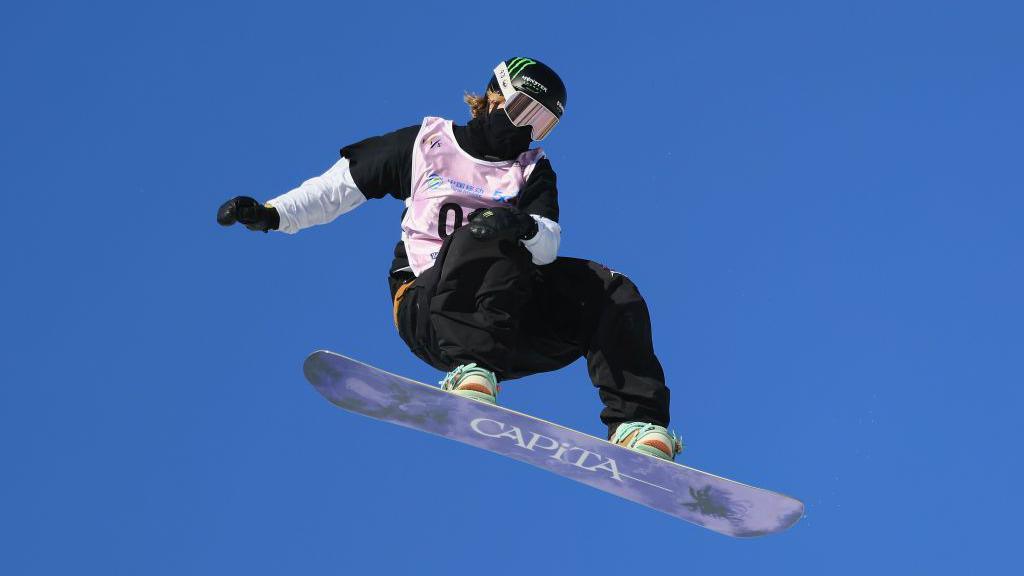
Grabs are any trick which involve holding the board or skis. More complex and hard-to-reach grabs will gain more points.

Spins are tricks that rotate on the horizontal axis, so turning in circles.

Flips rotate on the vertical axis - so the rider is upside down.

A cork is when a spin is combined with a flip, resulting in an 'off-axis' direction of travel resembling a corkscrew.

A double cork is a complex and technical trick in skiing which includes two off-axis flips.

There are also terms for hand positions.

If the rider has a 'natural' stance, the 'front' hand is the left hand positioned close to the 'nose' of the board. The rear or 'trailing' hand is the right hand, positioned close to the tail of the board.

If their stance is 'goofy' then it is the opposite - the right hand is the leading hand and left is trailing, both still corresponding to the nose and tail of the board respectively.

Skiing tricks also incorporate grabs - such as a safety grab, where a skier uses their hand to grab the outside of their ski on the same side - for instance, grabbing their right ski with their right hand.

A mute grab is when a skier uses their hand to hold the opposite ski - for example, using their left hand to grab their right ski.

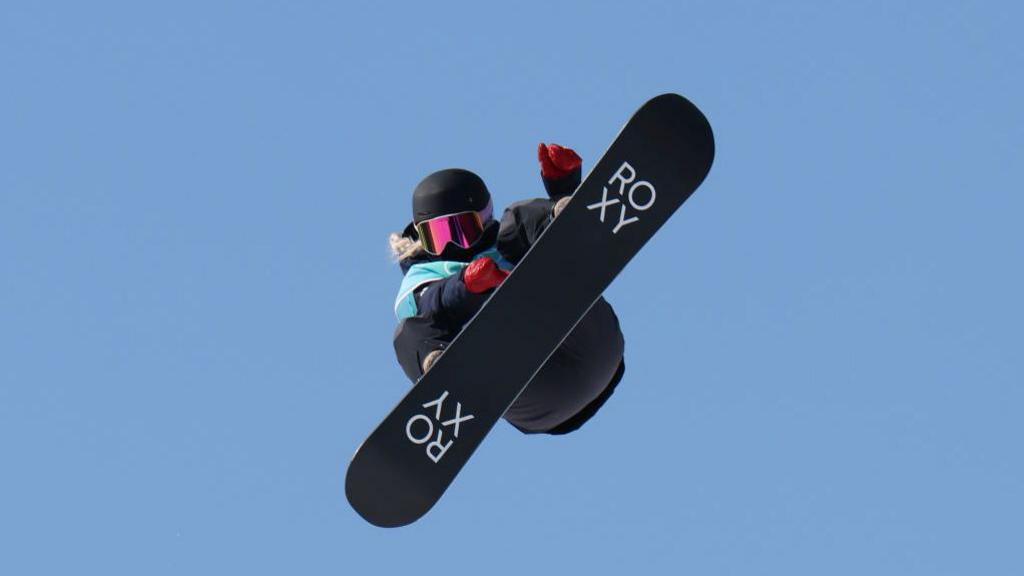
19-year-old Mia Brookes will participate at the 2026 Winter Olympics

Spins go in increments of 180 degrees. There are two kinds of ways to land from a spin, 'switch' and 'natural' position.

Switch sees the athlete land in a different direction to where they started, after a 180, 540, 900, 1260, or 1620 rotation.

However, a switch in ski events refers to skiing backwards and looking over your shoulders, primarily used for freestyle competitions.

Landing in a natural position comes after a spin with rotations of 360, 720, 1080, 1440, or 1800 degrees.

A backside spin, shorted to 'back' in the trick name, are set from the toe edge of the board and see the rider's chest facing downhill initially. A frontside spin, shortened to 'front', is set from the heel edge and sees the rider's chest facing uphill for the first part of the trick.

For freestyle skiing, the equivalent is left side and right side spins. A skier will have their preferred way to spin, but choosing their non-dominant direction can earn more points.

The higher the number, the more difficult the trick. Numbers are shortened to just the first number in the trick - so 'frontside 360' is shortened to 'front 3' in the trick name.

A 'hard way' spin is one done from the opposite edge of the natural spinning edge, considered the 'unnatural' direction for a trick.

There are various types of flips that have unique names that don't spell out exactly what the trick contains -  including wildcat, tamedog, backflip, frontflip, rodeo, backside rodeo and corked spin.

These all involve varying degrees and direction of rotation - and can incorporate grabs.

The start order for runs one and two in the final is the reverse of the results from the qualification round.

So, the athlete with the lowest score will go first, and the athlete with the best qualifying score will go last.

For the third run, the order changes to the reverse of the current standings in the final - meaning the skier who is first after run one and two will be the last to compete in the third run.

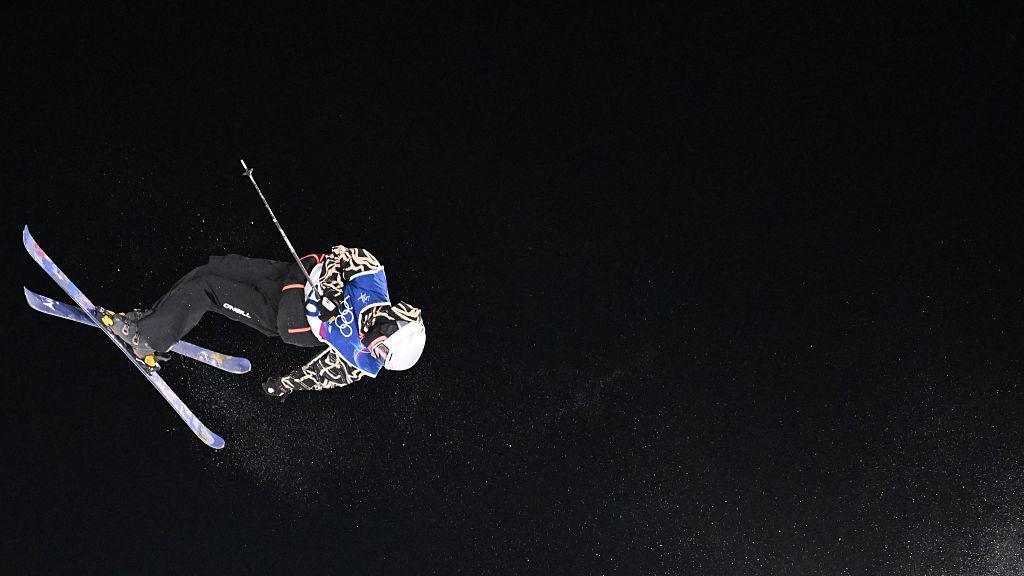
Great Britain's Kirsty Muir will compete in the women's skiing big air final

'DNI' is an initialism which can show up on a score board at the snowboard and skiing events at the Winter Games.

This means 'does not improve', when a rider or skier gets a lower score than their previous run - therefore not improving on their score tally overall.

For instance, if an athlete gets 70 in their first run and then 60 in their second run, the second will be scored DNI as it is a lower score.

This is not an indicator of a failed move or any penalty, but a way to track scoring.

The nose or tip is the front part of the board or ski, corresponding with the athletes front hand and pointing in the direction of travel. The tail is the opposite end.

The 'toe' side or edge is the side in front of the athletes toes, making the 'heel' side or edge the one behind the heels.

These parts of the board will often be referenced in grabs, for example a nose or toe grab - but some have their own unique titles that don't specify in the trick name which part of the board the rider is grabbing.

Common examples of this are the 'indy', where the rider grabs the toe edge between the foot bindings with their back hand, and the 'stalefish', where the same hand again grabs between the bindings - but this time on the heel edge.

In skiing, the inner edges are between a skiers feet, and the outside is known as outer edges.

This article is the latest from BBC Sport's Ask Me Anything team.

Which countries haven't had a Premier League player?

Why does the Tour de France start in other countries?

When is Super Bowl 2026?