huffpost Press
Labor Leader Arrested In ICE Raid Says It’s Time To Go 'On Offense' Against Trump
Images
1 / 8

2 / 8
3 / 8
4 / 8
5 / 8
6 / 8
7 / 8

8 / 8
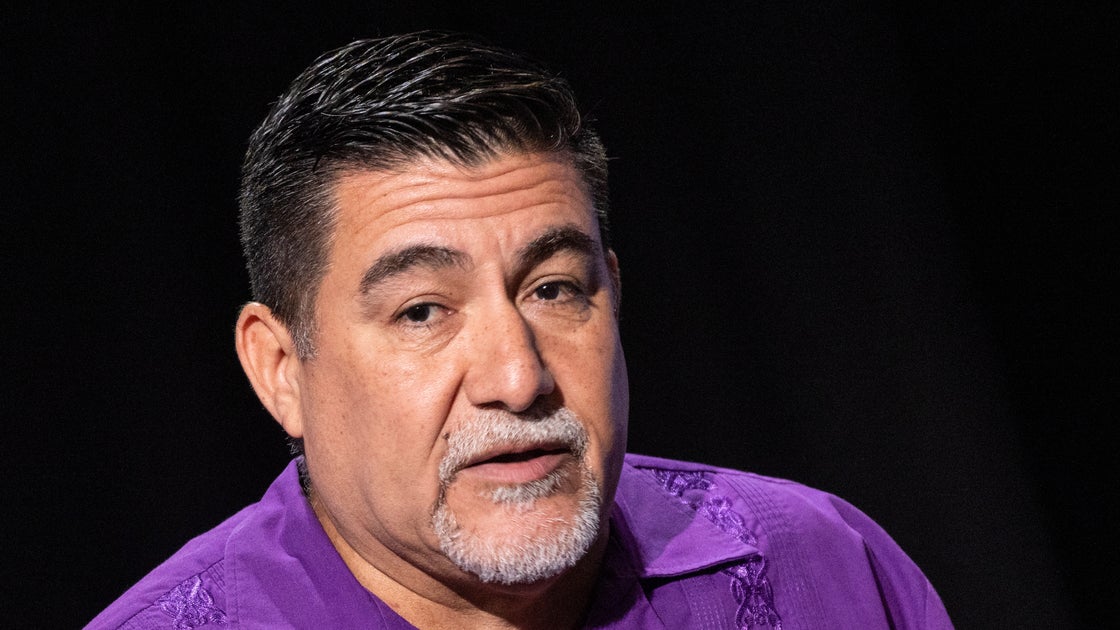
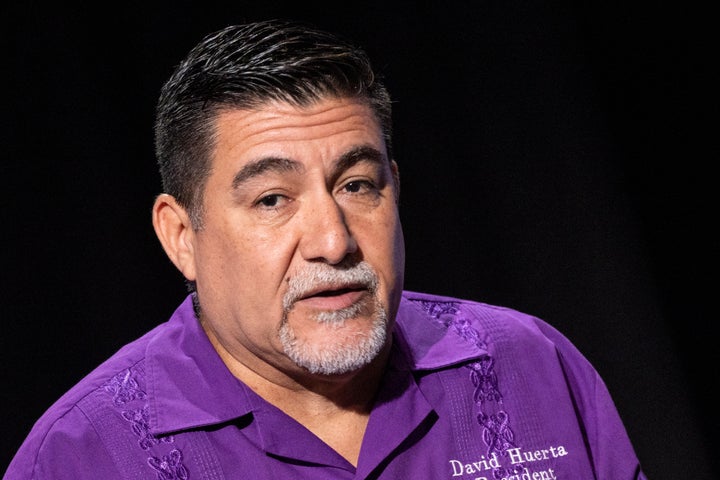
David Huerta faces up to a year in prison for allegedly interfering in a federal immigration raid last year in his hometown of Los Angeles. He has pleaded not guilty and is awaiting trial, but he is not staying quiet in the meantime.

“I was tackled, I was pepper-sprayed, I was detained [while] exercising a First Amendment right,” Huerta, a prominent California labor leader, told HuffPost in an interview this week. “I firmly believe that everything that’s happened since then ― not only to myself but to others ― is with the intention to silence dissent. It’s state repression against people who are exercising their First Amendment rights.”

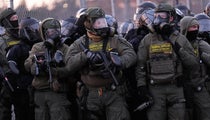
Huerta, 58, is the president of Service Employees International Union-United Service Workers West, a union of 50,000 janitors and other service workers, many of them first- and second-generation immigrants. He became national news last June due to his encounter with federal agents outside a clothing wholesale company, where Huerta allegedly refused to make way for a law enforcement van. An officer grabbed him, and Huerta pushed back, according to a complaint. A bystander’s video captured the officers throwing Huerta to the ground and arresting him.

Prosecutors initially filed a felony conspiracy charge that carried up to six years in prison. They later downgraded the charge to a misdemeanor after several similar federal cases failed to end in convictions.

A father of two, Huerta said the possibility of prison time was a lot to grapple with early on. He felt as though Trump-aligned prosecutors viewed him as a “trophy” to be “put on the mantle.” (U.S. Attorney Bill Essayli posted a photo of Huerta in handcuffs and wrote on X, “I don’t care who you are—if you impede federal agents, you will be arrested and prosecuted.”)

“I firmly believe that the people right now who are in the crosshairs of this administration are going to be the heroes of this democracy.”

But he said he now feels a responsibility not only to challenge what he considers an unjust charge, but to continue speaking out against the administration’s deportation campaign.

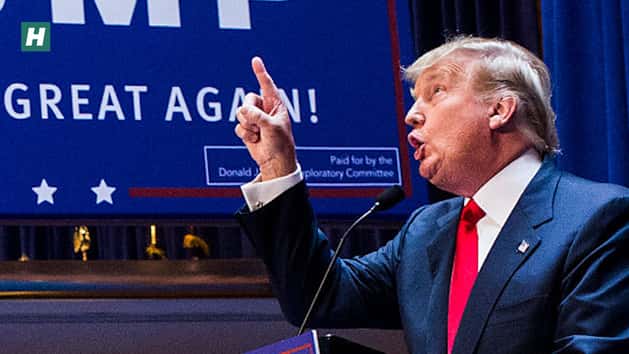
“It didn’t take me long to realize it, but what he wants is to bend our collective knee, you know?” Huerta said of President Donald Trump. “I think every time we bend that knee, he’s going to demand that someone else bend their knee, and someone else, and someone else… I refuse to bend that knee. I refuse to be silent. He gave me a platform, and I’m going to use this platform as much as I can.”

Huerta has been a high-profile figure in California labor and Democratic politics for years, so it was not surprising that videos of his arrest touched off some of the early protests against the White House’s immigration policies. As he sat in federal custody, he had no idea that people across the country had taken to the streets to rally for his release.

“I didn’t realize the impact it had until I got out,” he said.

A lot has changed since then. The Trump administration has expanded its deportation campaign to other Democratic-led cities. The GOP Congress has pumped billions of dollars into an Immigration and Customs Enforcement hiring spree. And masked agents have fatally shot at least two anti-ICE protesters.

But Huerta feels no sense of despair over all this. What he’s watched unfold in LA, Chicago, Washington, D.C., and most recently in Minneapolis has filled him with a lot of hope.

“In Minneapolis, it’s like they took it to another level ― another level of resistance,” he said. “That’s the most shocking part. And I think people see that.”

He added, “I firmly believe that the people right now who are in the crosshairs of this administration are going to be the heroes of this democracy.”

Huerta is not uncomfortable in a street protest, having started out as an organizer on SEIU’s landmark Justice for Janitors campaign in the 1990s, when the union deployed civil disobedience to boost wages for poor, mostly Latino workers in Southern California. Immigrant rights and worker rights have always been intertwined for him, not just in his union but in his family. His paternal grandparents were immigrants from Mexico; his father was a farm worker and later a Teamster in East LA. (Huerta’s mother died when he was 4.)

“[I saw] the impact the union had on my family,” he said. “My father was a single father and was able to provide for his kids loading and unloading trucks. I don’t know if that’s possible today.”

Organized labor is a key ally in the broader coalition opposing Trump’s immigration crackdown, but not all individual unions choose to speak up. Some labor officials fear alienating conservative members or angering a White House keen on retribution.

Huerta said it was a basic matter of solidarity for every union to join the fight at this point.

“We’re not there yet, to be perfectly honest,” he said. “We, as a labor movement, can no longer act as if there’s not a side to pick, as if somehow… our role is to represent workers, not organize workers. Labor has to be able to lean in and pick the side of justice, righteous justice. We can’t somehow play the middle.”

The Minneapolis labor movement has helped show the way, according to Huerta.

After an ICE agent shot and killed Renee Good in her car, an alliance of labor, faith and community groups helped orchestrate a general strike on Jan. 23 to protest the federal presence in the Twin Cities. Participation was robust enough to shut down many businesses for the day, leading to a massive demonstration of thousands in downtown Minneapolis.

“Should we use a general strike as a tool? Absolutely. We should be prepared to use that tool because I think our democracy is worth it.”

Plenty of unions steer clear of general strike talk, since their contracts typically forbid work stoppages while the contracts are in effect. But in Minneapolis, the local labor council took a leading role in organizing the event, and many local unions encouraged their members to skip work and brave freezing temperatures to protest.

Huerta is convinced general strikes should be an arrow in labor’s quiver, to move out of a “defensive posture” ― know-your-rights trainings, rapid response for workers who are detained ― and go “on offense.”

“Donald Trump does really well because he smashes [the system], he breaks it, he builds it back the way he wants it,” Huerta said. “And unless we’re willing to be bold, we’re going to find ourselves out of that equation… So should we use a general strike as a tool? Absolutely. We should be prepared to use that tool because I think our democracy is worth it.”

Some labor leaders have been urging unions to align their contracts so that they expire on May 1, 2028, to put a massive general strike on the table for May Day. Among them is Shawn Fain, president of the United Auto Workers union, which arranged for its members’ contracts with Ford, General Motors and Stellantis to end on that date.

Huerta has become a booster for the idea, too. His union’s contract for California janitors is already scheduled to expire that day. Speaking at the UAW’s conference in Washington, D.C., on Monday, Huerta said that all unions should be preparing to “shut the whole thing down.”

“We’re not going to win without taking some risk,” he told HuffPost. “Think about it: An immigrant worker who steps out of their house every day to go to work, they take that risk every day because they [need to] provide for their families. I think labor has to ask… what are we willing to risk as a means to protect families and to make change?”

By entering your email and clicking Sign Up, you're agreeing to let us send you customized marketing messages about us and our advertising partners. You are also agreeing to our Terms of Service and Privacy Policy.